Daily care · Stain prevention · Sealing
Travertine sink care and maintenance
A practical care guide for honed, antiqued and textured travertine bathroom sinks, including safe cleaning, drying, stain prevention and sealing checks.
 Prepared by MarbleSinkCo · Updated September 4, 2026
Use a stone-safe daily routine
Travertine is a calcium-based natural stone with visible pores and tonal variation. For routine cleaning, use a soft cloth or non-abrasive sponge with a pH-neutral cleaner labeled for natural stone. Rinse away cleaner residue and dry the surface so water and soap deposits do not build up.
Avoid acids and harsh abrasives
Acidic products can etch travertine. Avoid vinegar, lemon, acidic bathroom cleaners and aggressive limescale removers. Abrasive powders, rough pads and metal scrubbers can change the finish. Bleach and mixed household chemicals can also discolor surfaces or damage sealers. Test any new product in an inconspicuous area first.
Respond to spills quickly
Remove cosmetics, oils, colored liquids and soap residue promptly. Blot rather than spreading a spill, then clean with a stone-safe product. A sealer slows absorption but does not make travertine stain-proof or maintenance-free.
Check the sealer instead of following a fixed calendar
Resealing frequency depends on the stone, finish, sealer, water, cleaning routine and intensity of use. Ask the sealer manufacturer or a local stone-care professional for the correct product and application method. A small water-drop test on a discreet area can help show whether water is darkening the surface quickly, but follow professional guidance before applying a new coating.
Respect textured finishes
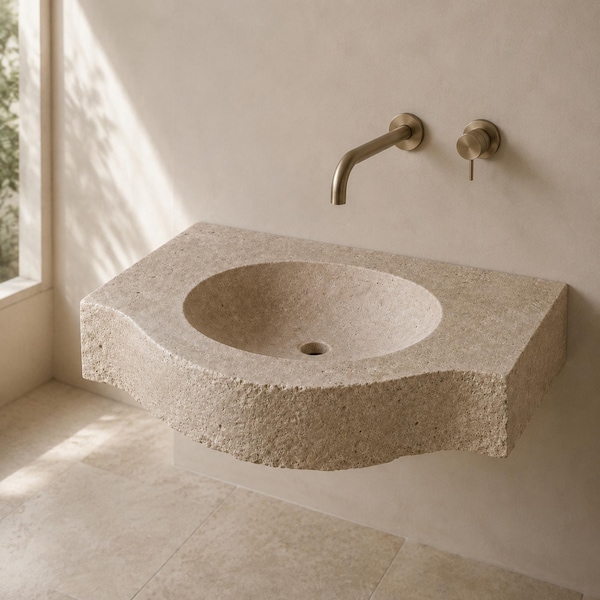
Split-face, chiseled and deeply fluted surfaces hold more moisture and residue than a flat honed surface. Use a soft brush approved for stone to reach grooves, rinse thoroughly and dry where practical. Do not fill natural pores or alter a textured face without first confirming how the treatment will affect color and appearance.
Keep the installation dry and serviceable
Maintain sound sealant joints where the sink meets walls, countertops or plumbing penetrations. Repair leaking faucets and drains promptly. Standing water around joints can affect both the stone appearance and the surrounding construction.
Care checklist
- Use pH-neutral natural-stone cleaner
- Choose soft cloths, sponges and brushes
- Rinse and dry after cleaning
- Remove colored or oily spills promptly
- Avoid acids, abrasives and unverified chemicals
- Review sealing with a stone-care professional