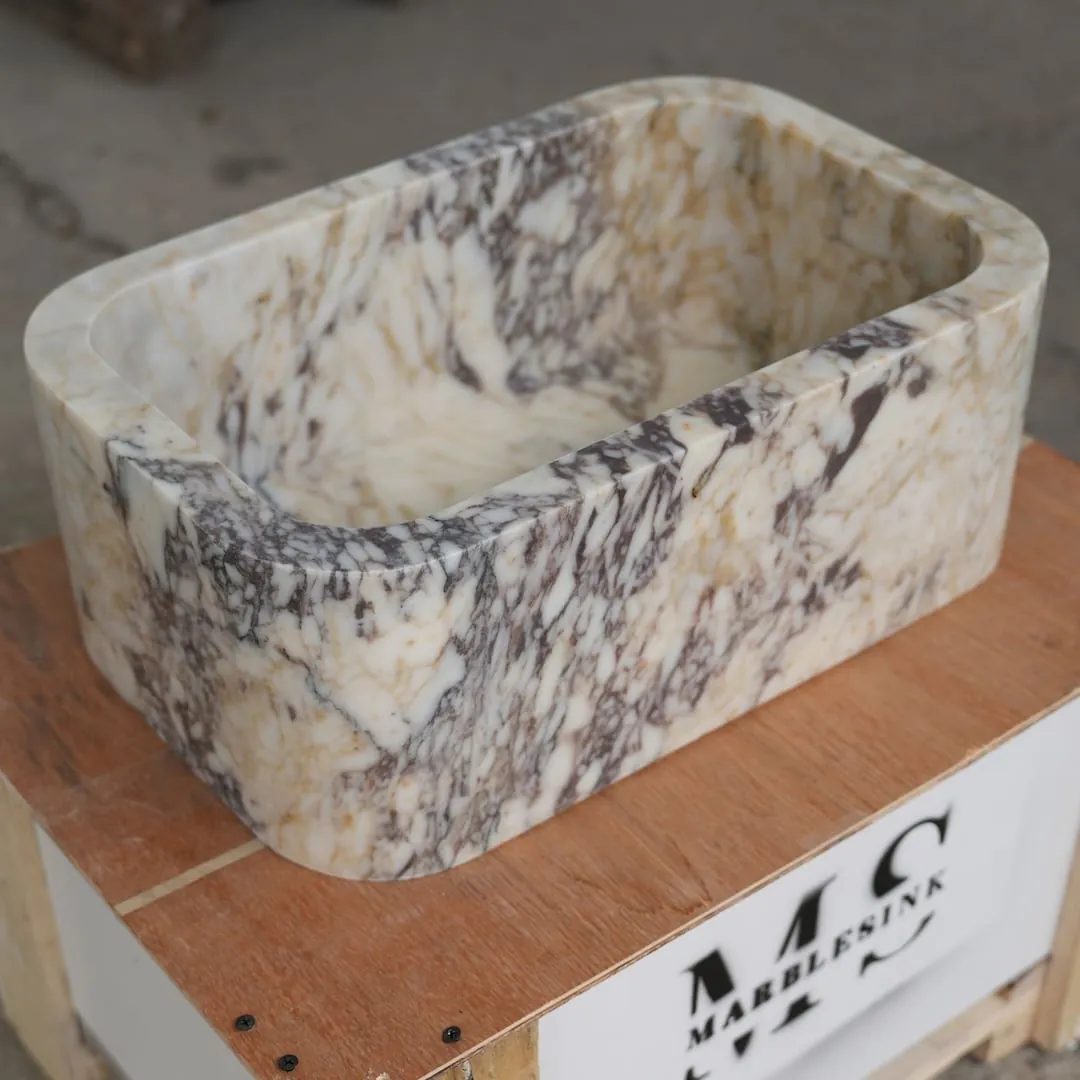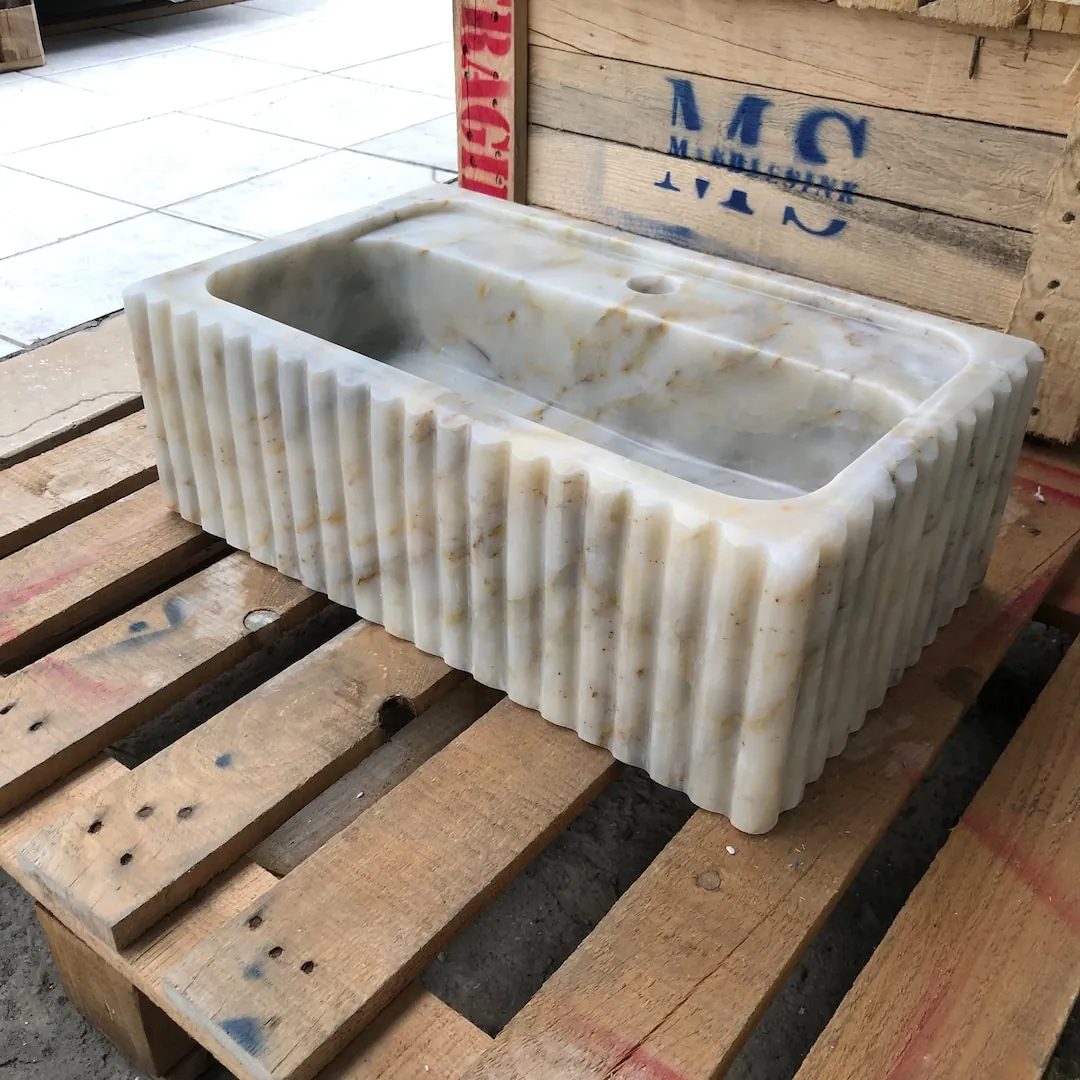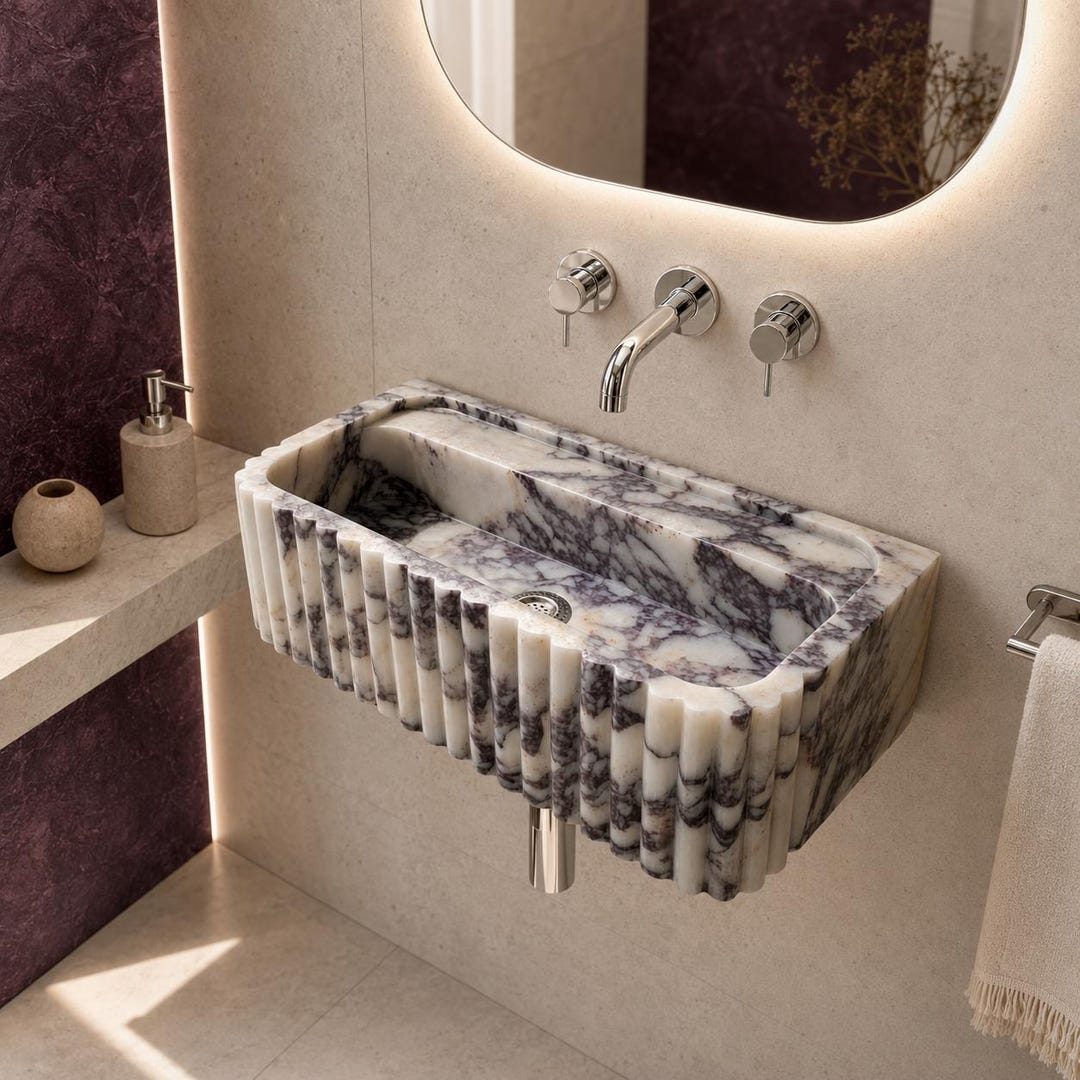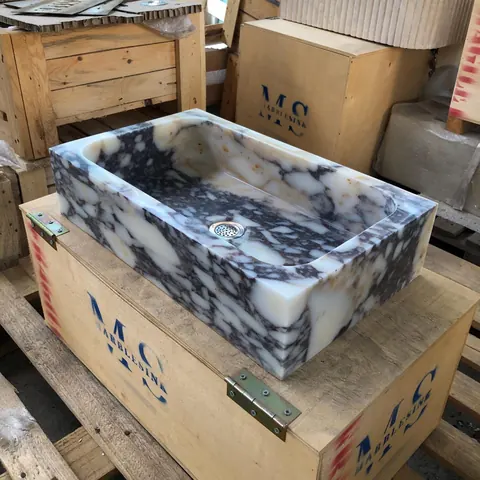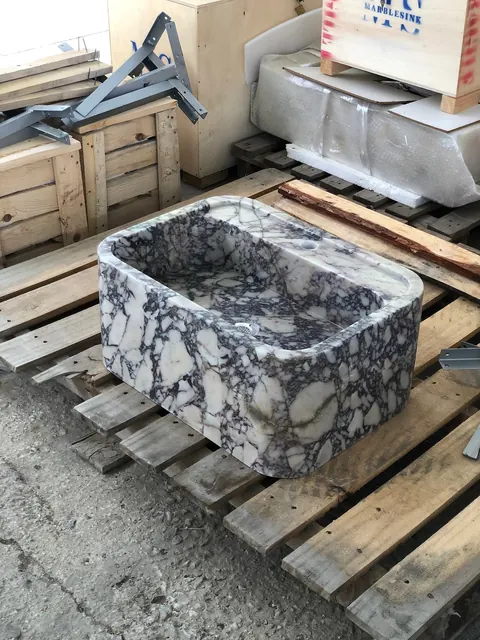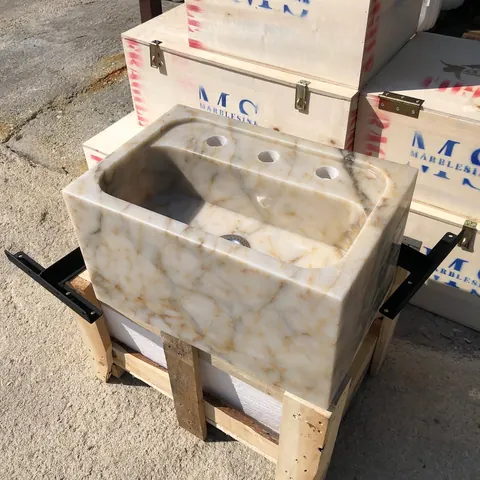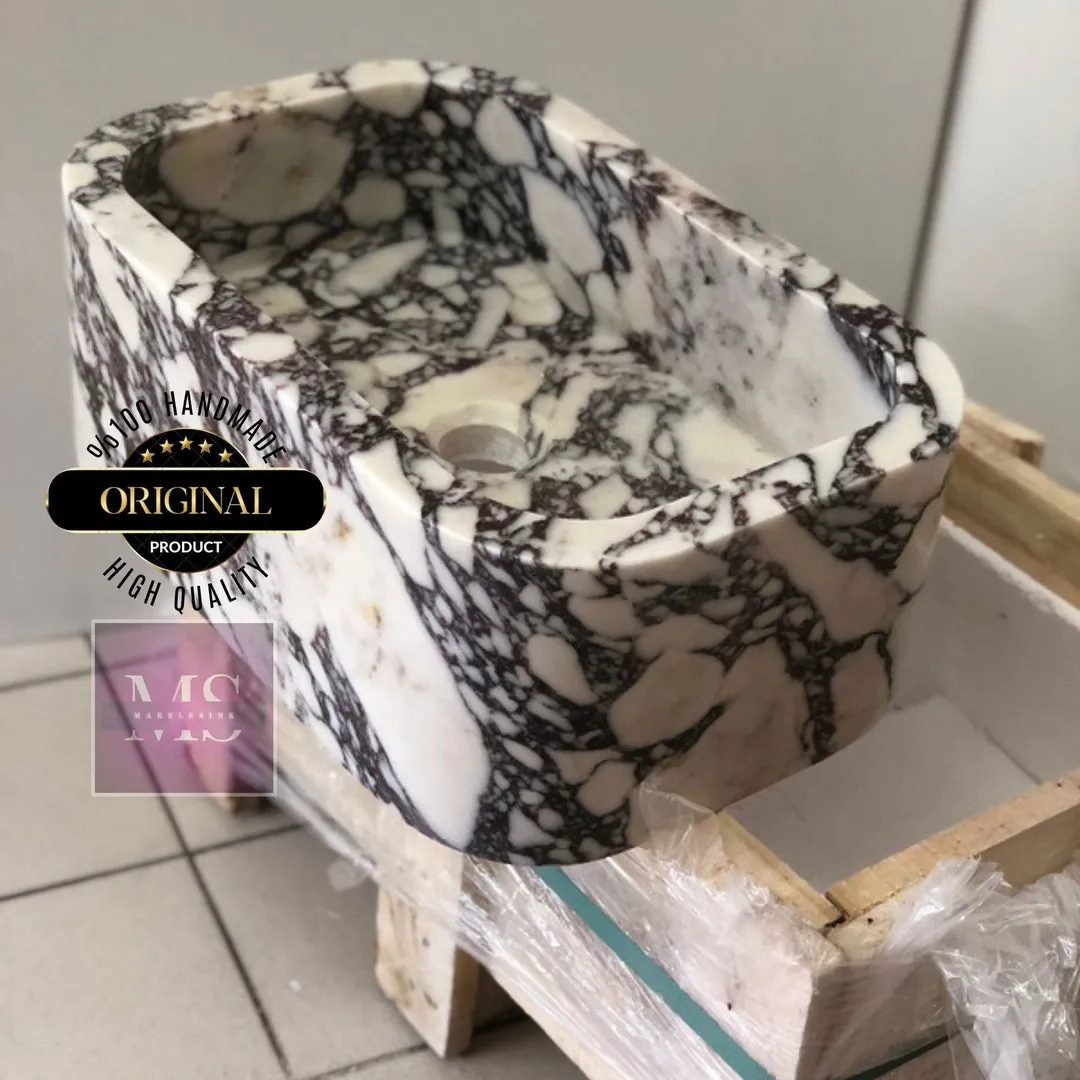
Calacatta is a white marble with bold, widely spaced veins in grey, gold or beige, named after quarries in the Carrara area of Tuscany, Italy. It is scarcer than Carrara marble, so it costs more. The main types are Calacatta Gold (Oro), Borghini, Viola, Macchia Vecchia and Vagli, which differ mostly in vein colour.
What is Calacatta marble?
Calacatta is a metamorphic stone made almost entirely of calcite. The background runs from clean white to warm ivory, and the veins are thick and irregular, usually grey with gold, honey or beige tones. Large areas of open white between the veins are what set it apart.
Its physical properties are the same as other marbles:
- About 3 to 4 on the Mohs scale, so softer than granite or quartz
- Etched by acids such as vinegar, citrus and limescale removers
- Porous enough to need a penetrating sealer
“Calacatta” is a trade name, not a protected one. Engineered quartz, porcelain tile and white marbles quarried in other countries are all sold with Calacatta in the name because of the look. If Italian origin matters for your project, ask the seller where the block or slab was quarried.
What are the types of Calacatta marble?
The varieties are named after a quarry, a locality or the colour of the veining.
| Variety | Background | Veining | Notes |
|---|---|---|---|
| Calacatta Gold (Oro) | White | Grey with gold to honey tones | The best-known type and the usual reference for the name |
| Calacatta Borghini | Bright white | Thick grey veins with touches of gold | Named after the Borghini quarry above Carrara, among the most expensive selections |
| Calacatta Viola | White to ivory | Burgundy to deep purple | A breccia: pale fragments in a dark wine-coloured matrix, the boldest pattern |
| Calacatta Macchia Vecchia | Warm ivory white | Gold, brown and grey | The name means “old stain”, and the look is warmer and more aged |
| Calacatta Vagli | White to cream | Gold-brown | From the Vagli area on the Garfagnana side of the Apuan Alps |
Statuario is often listed next to these, but it is a separate marble, not a type of Calacatta.
Viola behaves differently in a room from the other four because the veining is a colour, not a neutral. It needs plainer walls and fewer competing materials. The Calacatta Viola sink design guide covers pairing and care, and the Calacatta Viola sink collection shows how much the pattern changes from piece to piece.
Calacatta vs Carrara vs Statuario
All three are white marbles from the same part of Tuscany. Background colour and vein character tell them apart.
| Carrara | Statuario | Calacatta | |
|---|---|---|---|
| Background | Grey-white to blue-grey | Bright white | White to warm ivory |
| Veining | Fine, feathery, closely spaced | Fewer, bolder veins | Thick, widely spaced, irregular |
| Vein colour | Soft grey | Grey | Grey with gold, beige or brown |
| Supply | Plentiful | Scarce | Scarce |
| Relative slab price | Lowest of the three | High, in the same range as Calacatta | High |
A quick way to read a slab: soft grey veins all over a greyish background is Carrara. A bright white field with a few strong grey veins and no gold is Statuario. Wide white areas with thick veins that include gold or beige is Calacatta. The boundaries are not strict, and stone yards do not always label the same block the same way. Slab prices vary by yard, lot and thickness, so ask for a quote on the actual lot.
For comparison in sink form, see the Carrara marble sinks.
What drives the price of Calacatta marble?
Scarcity sets the baseline, and selection sets the final figure.
- Whiteness of the background. The cleaner the white, the higher the price.
- Vein colour and pattern. Gold tones and well-defined veins cost more than muddy or broken ones.
- Named selection. Borghini and strongly coloured Viola command premiums over standard Calacatta Gold.
- Block size and soundness. Large slabs without fissures or filled repairs are rarer.
- Bookmatching. Mirrored slabs must come from one block, in sequence.
- Fabrication. For a carved object such as a sink, most of the block is cut away, so labour and waste weigh more than the raw stone area.
Where is Calacatta marble used?
Calacatta is used for bathroom vanity tops, wall cladding, shower walls, floors, fireplace surrounds, sinks and bathtubs. It is most effective where a large uninterrupted face shows the veining, such as a bookmatched wall or a one-piece vanity.
Kitchen countertops are the demanding case. Lemon juice, wine, vinegar and tomato all etch marble, and a polished kitchen worktop will show it. Many owners choose a honed finish there and accept that the surface will change with use.
White marble can also contain traces of iron-bearing minerals. If the stone stays wet for long periods, these can show as yellowing or rust-coloured spots, so standing water is worth avoiding in showers and around drains.
Is Calacatta marble good for a sink?
Calacatta suits a bathroom sink well, because bathroom use is gentle compared with a kitchen. Three points are specific to sinks:
- Scale of the veining. Calacatta veins are large. A 16 in basin may catch one bold vein or mostly white stone, so two sinks from the same block can look quite different. Ask for photos of the finished piece, or of the block before carving.
- Finish. Honed surfaces hide etching and water marks better than polished ones. The honed vs polished finish guide compares them.
- Weight. A solid marble sink is heavy. A wall-mounted one must be fixed into studs or solid blocking, never drywall anchors.
White marble shows hair dye, makeup and rust rings from metal cans more than dark stone does, so keep it sealed and keep products on a tray.
For reference, MarbleSinkCo sinks start at $727, the Calacatta wall-mounted sink is listed from $1,012, and the median starting price of its Calacatta designs is $1,192 in the stone sink price index. Each piece is carved to order in about 2 weeks and ships free by insured express courier. Orders are not returnable and carry no warranty, so settle size, drain position and finish before ordering. MarbleSinkCo’s stone blocks are selected from quarries around the world, so ask by message before ordering if the quarry origin of a piece matters to you. The Calacatta marble sink collection shows current designs, and they are sold through the MarbleSinkCo Etsy shop.
How do you check you are getting real Calacatta marble?
- Ask for the stone’s origin in writing. A seller of Italian Calacatta should be able to name the quarry area.
- Look at an edge or the underside. In natural marble the veins run through the full thickness. On porcelain the pattern is only on the face.
- Look for repetition. Printed porcelain and some quartz repeat the same pattern from piece to piece. Natural stone never does.
- Touch it. Marble feels cold and stays cold. Resin-based cultured marble warms quickly under the hand.
- Expect small natural marks. Tiny pits, hairline fissures and colour shifts are normal in marble. A perfectly uniform surface points to an engineered product.
- Ask for photos of the actual slab or piece, not a catalogue image, before you pay.
How do you care for Calacatta marble?
- Wipe up spills when they happen, and dry a sink or vanity after use.
- Clean with a pH-neutral stone cleaner or mild dish soap and water.
- Seal with a penetrating sealer on installation and about once a year after that. Sealer slows stains. It does not prevent etching.
- Keep vinegar, citrus, bleach-based sprays, limescale removers and abrasive pads away from it.
- Treat a stain with a poultice made for the stain type, and have deep etching re-honed by a stone restorer.
The full schedule is in our stone sink care and maintenance guide.
Frequently Asked Questions
What is Calacatta marble?+
Calacatta is a white marble with thick, widely spaced veins in grey, gold or beige, quarried in the Carrara area of the Apuan Alps in Tuscany, Italy. It comes from the same mountains as Carrara marble but from far fewer quarries, so supply is limited. Like all marble it is calcium-based, fairly soft and sensitive to acids.
What is the difference between Calacatta and Carrara marble?+
Carrara has a grey-white background covered in fine, feathery grey veins. Calacatta has a whiter or warm ivory background with fewer, thicker veins that often carry gold or beige tones. Carrara is plentiful and usually the least expensive Italian white marble. Calacatta is scarce and costs noticeably more.
What are the types of Calacatta marble?+
The best-known types are Calacatta Gold (also called Oro), with grey and gold veins; Calacatta Borghini, with thick grey veins and touches of gold; Calacatta Viola, with burgundy to purple veining; Calacatta Macchia Vecchia, with warm gold and brown veining; and Calacatta Vagli, with gold-brown veins on a creamy white background.
Is Calacatta Viola real marble?+
Yes. Calacatta Viola is a natural stone, not a printed or engineered product. It is a marble breccia: white to ivory fragments held in a burgundy to purple matrix, which gives it a bolder, more broken pattern than other Calacatta types. It is calcium-based, so it needs the same sealing and acid-free cleaning as any marble.
Why is Calacatta marble so expensive?+
Supply is the main reason. Calacatta comes from a small number of quarries, and only part of each block has the white background and clean veining that buyers want. Price rises with whiteness, vein colour, slab size and soundness, and with named selections such as Borghini. Bookmatched slabs cost more again because they must come from one block.
Is Calacatta marble good for a bathroom sink?+
Yes, with normal marble care. A bathroom sink meets water, soap and toothpaste, which marble tolerates well if it is sealed about once a year and cleaned with a pH-neutral product. Acids such as vinegar and limescale remover will etch it. A honed finish hides etching and water marks better than a polished one.
Share this article