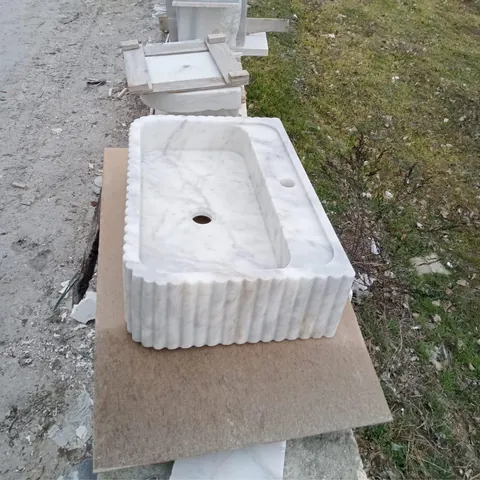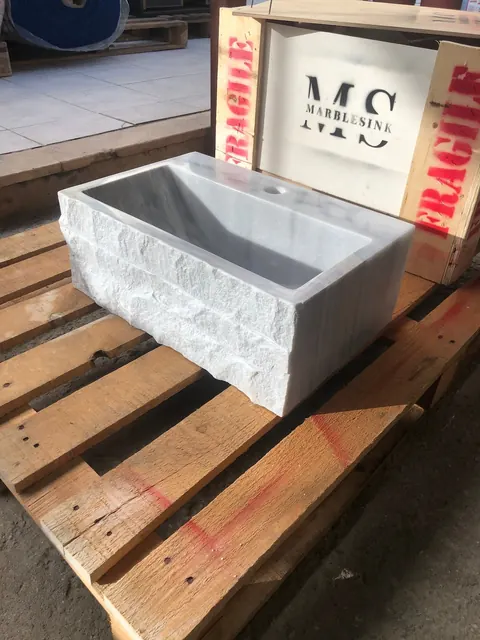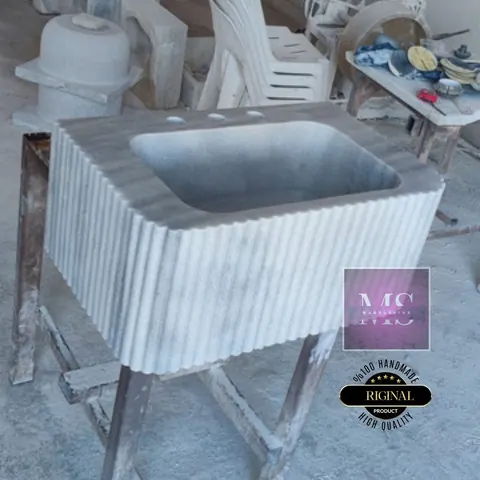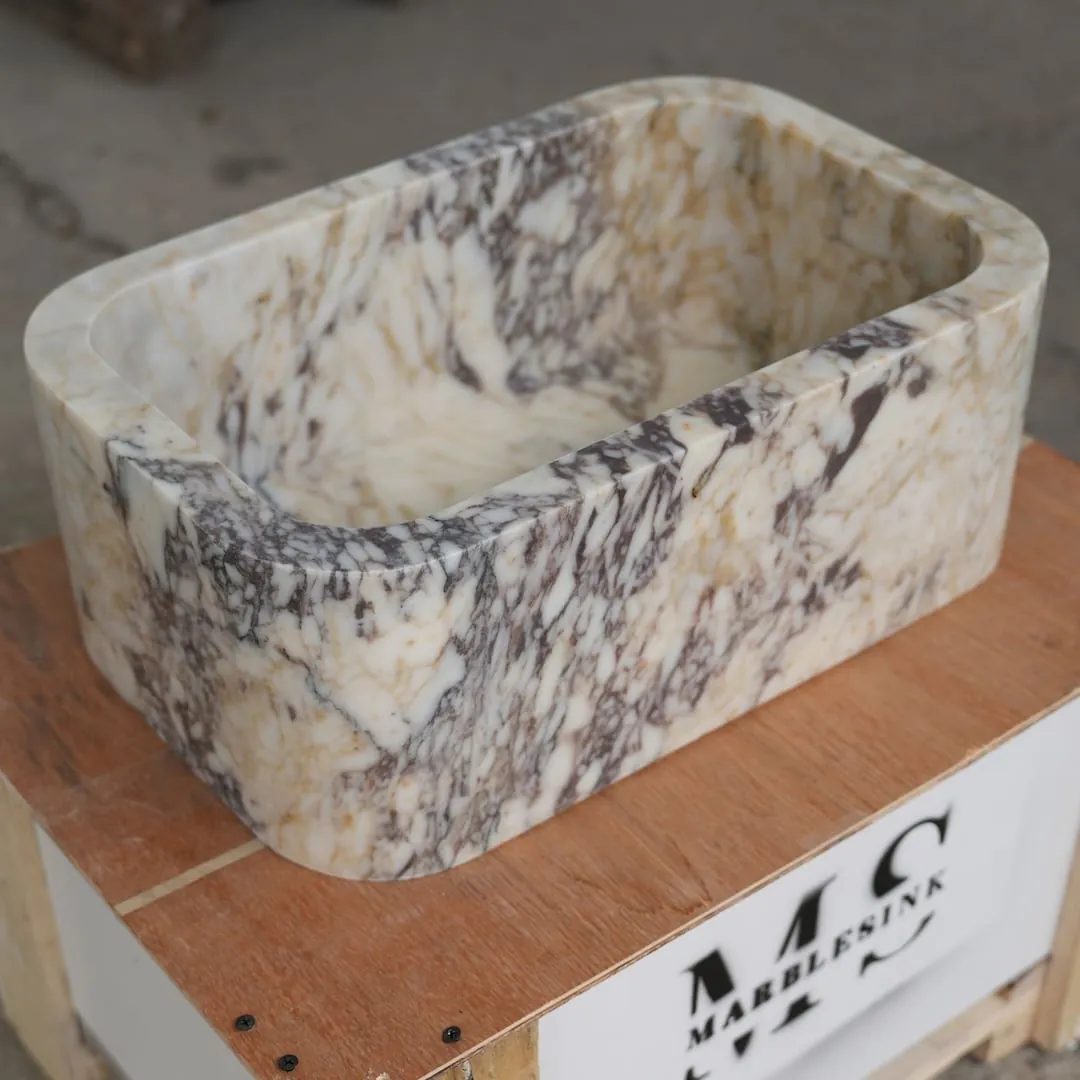
Calacatta and Carrara are both white calcite marbles with the same hardness and the same care. Carrara marble has a white to gray ground with fine gray veins and is the most common type. Calacatta marble is rarer, with a brighter ground and a few broad veins. As carved sinks they cost about the same: median starting prices are $1,150 and $1,192. The short, sourced answer is on Carrara vs Calacatta marble.
Calacatta vs Carrara at a glance
| Carrara | Calacatta | |
|---|---|---|
| Ground color | White, pearl-white to gray | Bright white to ivory |
| Veining | Fine, irregular, smoky gray | A few broad veins, a few centimeters wide |
| Vein color | Gray | Light gray to pale gold |
| Overall look | Soft and even | High contrast, with large clear areas |
| Availability | Most common type | Rare |
| Median starting price of a carved sink (MarbleSinkCo price index) | $1,150 | $1,192 |
| Mohs hardness | About 3 (calcite) | About 3 (calcite) |
| Acids | Etch the surface | Etch the surface |
| Care | pH-neutral cleaner, yearly sealing | pH-neutral cleaner, yearly sealing |
The descriptions follow a stone geologist’s account of the Carrara varieties (Litos). Sink prices come from the MarbleSinkCo stone sink price index.
What is the difference between Calacatta and Carrara?
The difference is the color of the ground and the character of the veins. It is a difference of pattern and rarity, not of chemistry. Both stones are calcite marbles formed from limestone.
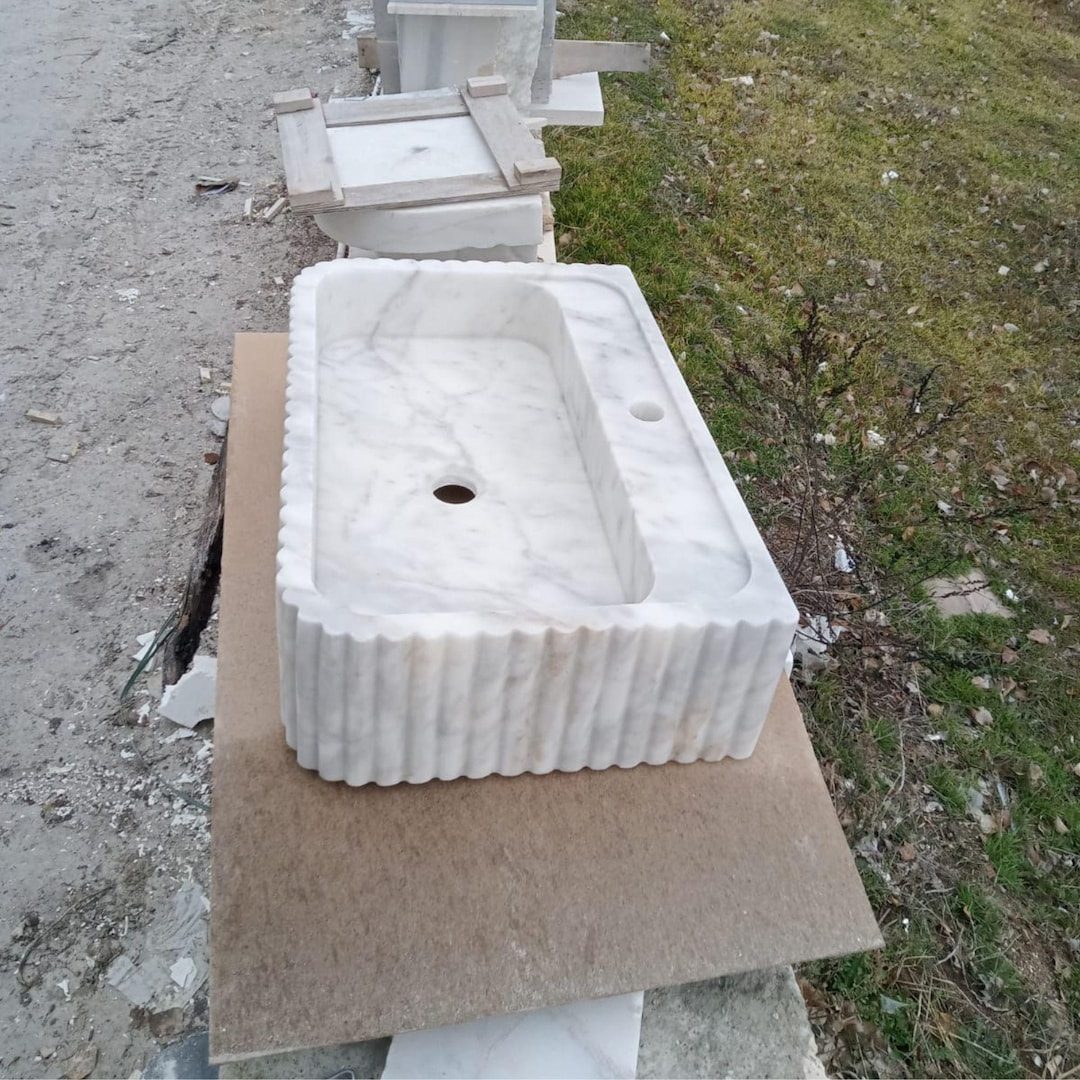
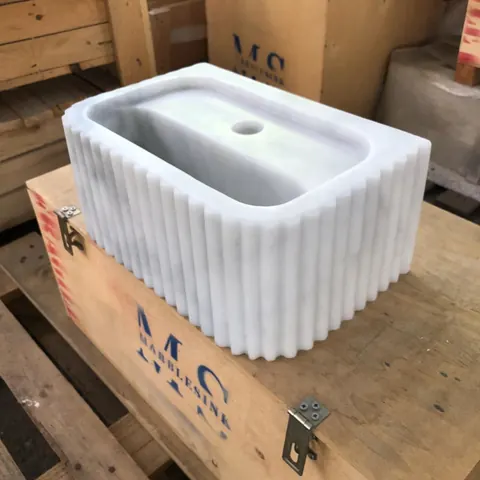
Carrara has a white, pearl-white to gray ground. Its veins are fine, numerous and smoky, and they run irregularly through the stone, so the surface looks evenly patterned from a distance.
Calacatta has a brighter ground and far fewer veins. The veins are a few centimeters wide, run from light gray to pale gold, and leave large areas of the ground clear. A selection in which the veins carry warm gold and beige tones is sold as Calacatta Gold.
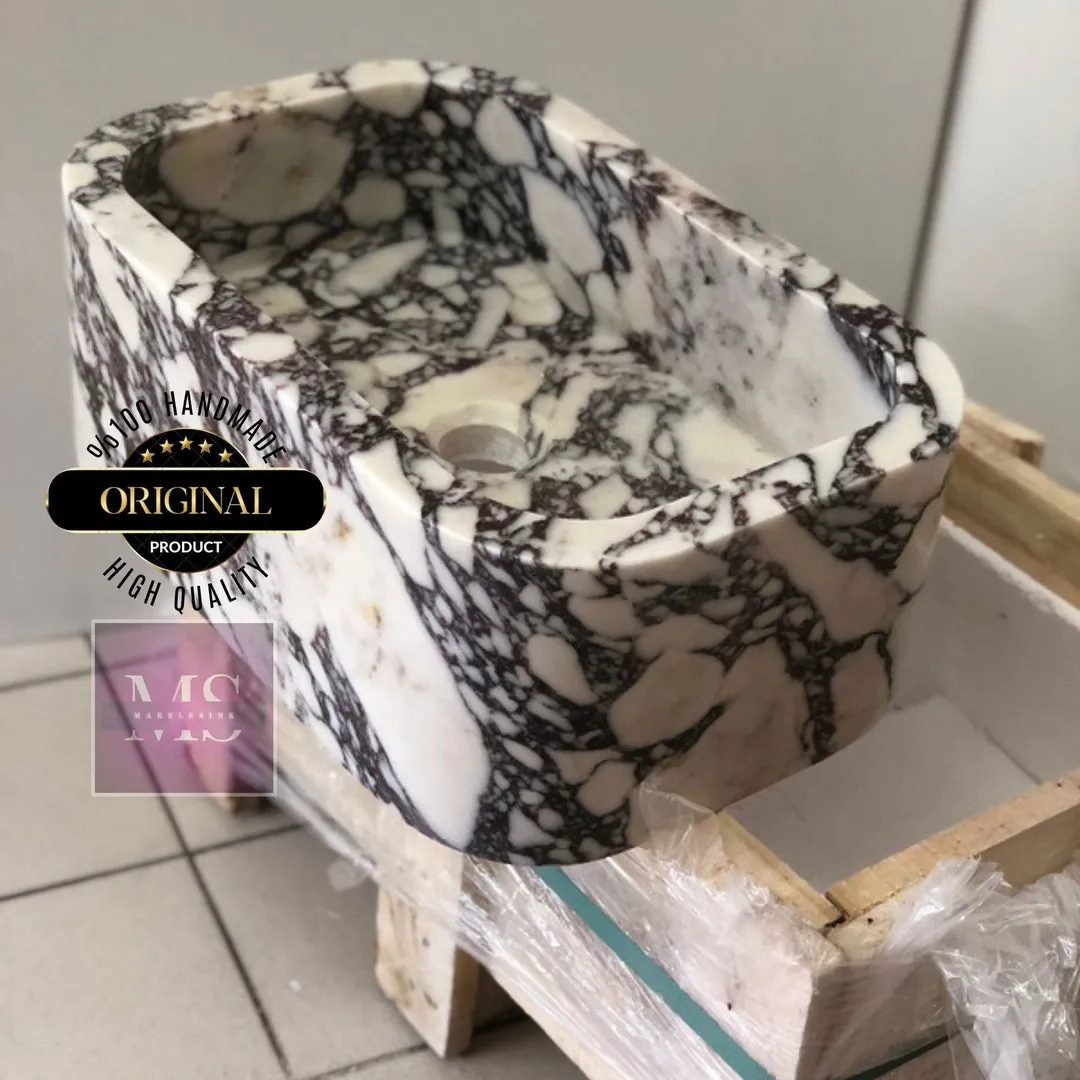
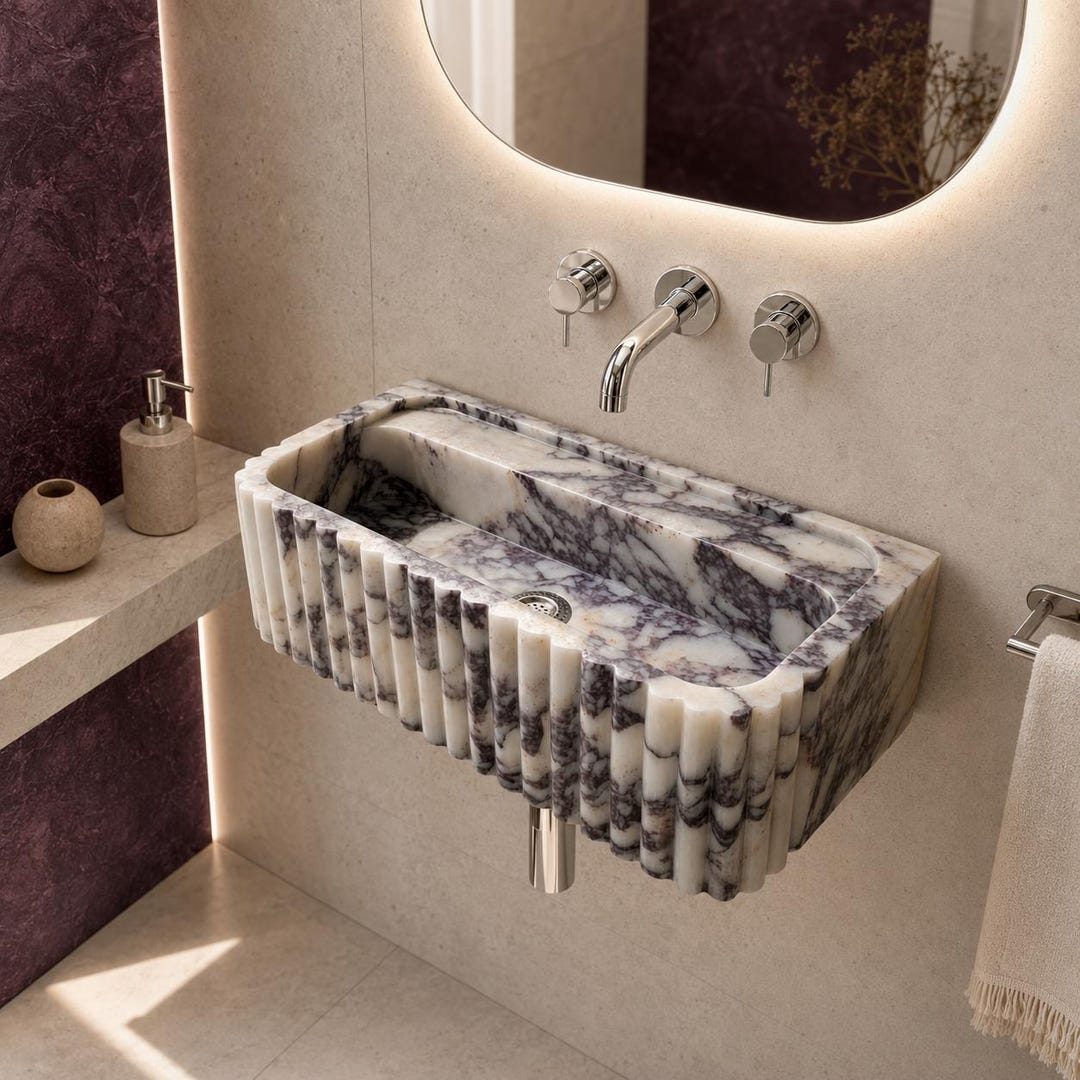
One related name causes confusion. Calacatta Viola has broad burgundy and violet veins and looks nothing like classic Calacatta. The Calacatta marble guide covers the varieties one by one.
Where do the names Carrara and Calacatta come from?
Both names come from the Apuan Alps marble district in Tuscany, Italy. The International Union of Geological Sciences records quarrying there since pre-Roman times and lists more than 100 commercial varieties in the district, with Calacatta, spelled Calacata, among the seven main ones. Calacatta is named after a locality above the town of Carrara.
In today’s trade the two names describe a look. Marble, porcelain and engineered quartz are all sold as Calacatta because of the pattern, so ask the seller what the material is. MarbleSinkCo selects blocks from quarries around the world and does not publish the quarry of individual pieces.
Which is more expensive, Calacatta or Carrara?
Calacatta is the rarer stone. The geologist’s account cited above describes Bianco Carrara as the least expensive and most common of the Carrara types, and Calacatta as rare. We publish no slab prices, so compare quotes for the actual slabs you are offered and not only their labels.
Does a Calacatta sink cost more than a Carrara sink?
A Calacatta sink costs almost the same as a Carrara sink at MarbleSinkCo. In the stone sink price index, the median starting price is $1,150 for Carrara designs and $1,192 for Calacatta designs. Price rises with the width of the sink far more than with the name of the stone: the median is $1,242 for sinks up to 16 in wide and $2,352 for sinks 25 to 30 in wide.
Our own listings show this. One Calacatta wall-mounted sink starts at $1,012 and one Carrara vessel sink starts at $1,334, because the designs and their smallest sizes differ. Sinks in the shop start at $727 overall. You can compare current pieces in the Carrara marble sink collection and the Calacatta marble sink collection.
How do you tell Calacatta from Carrara in a slab or a sink?
- Look at the ground first. Carrara reads white to gray. Calacatta stays close to bright white, sometimes with an ivory tone.
- Count the veins. Carrara has many fine veins across the whole surface. Calacatta has few veins and large clear areas.
- Check vein width. Carrara veins are fine and smoky. Calacatta veins are bands a few centimeters wide.
- Check vein color. Pale gold tones point to Calacatta. Carrara veining stays gray.
- Allow for scale. A sink shows far less surface than a slab. A Calacatta sink may show one or two bold veins and a lot of white, while a Carrara sink shows its pattern evenly. No two blocks match, so a carved piece matches its photos in tone, not line for line.
- Treat the name with caution. Trade names describe a look. Ask what the material is, and ask for a photo of the stone block before carving.
Where is each marble used?
Carrara marble is used for sinks, vanity tops, wall and floor tile, fireplace surrounds, tables and sculpture, because it carves easily and takes a fine finish.
Calacatta marble is used where the veining is meant to be seen: feature sinks, vanity tops, wall panels, fireplace surrounds and tables. Every block is veined differently, so it is chosen piece by piece.
Calacatta vs Carrara sink: which suits which bathroom?
Choose by the room around the sink.
Carrara suits:
- A quiet, gray-toned sink that blends into a classic white bathroom
- Small bathrooms and powder rooms, where a calm pattern keeps the room calm
- Rooms that already have a strong pattern on the floor or walls
Calacatta suits:
- Bathrooms where the sink is the focal point and the surroundings are plain
- Brass or warm metals, because of its gold tones
- Wider sinks, which have enough surface to show the veining
One practical point: Carrara in a honed finish hides water marks, and the white ground of Calacatta shows colored spills quickly. A honed finish helps on both stones, as explained in the honed vs polished finish guide. If you are still deciding between white, beige and dark stones, see how to choose a marble color.
Is the care different for Calacatta and Carrara?
No, the care is identical for both stones.
Calacatta and Carrara are calcite stones at about 3 on the Mohs scale, so they behave the same way in a bathroom:
- Acids etch the surface. Keep vinegar, citrus and limescale removers off the stone.
- Clean with a pH-neutral cleaner and a soft cloth, then wipe dry.
- Seal with a penetrating sealer about once a year. The steps are in the marble sink sealing guide.
- Wipe up hair dye and makeup at once. Stains show more on a white ground.
MarbleSinkCo carves sinks in both stones by hand to order in about 2 weeks, and the size, drain position and tap holes can be set before carving. Because veining differs from block to block, ask for photos of the stone before you order. MarbleSinkCo pieces are ordered through the MarbleSinkCo Etsy shop at https://marblesinkco.etsy.com.
Frequently Asked Questions
What is the difference between Calacatta and Carrara marble?+
Calacatta and Carrara are both white calcite marbles. Carrara has a white, pearl-white to gray ground with fine, smoky gray veins. Calacatta has a very light ground with fewer, broader veins, a few centimeters wide, from light gray to pale gold. Calacatta is rarer, though carved sinks in the two stones cost about the same at MarbleSinkCo.
Which is more expensive, Calacatta or Carrara?+
Bianco Carrara is described by a stone geologist as the least expensive and most common of the Carrara types, and Calacatta as rare. For a carved sink the gap almost disappears: in the MarbleSinkCo price index the median starting price is $1,150 for Carrara designs and $1,192 for Calacatta designs.
Is Calacatta better than Carrara?+
Calacatta is not better than Carrara in performance. Both are calcite marbles with the same hardness, the same sensitivity to acids and the same sealing routine. Calacatta is rarer and has a higher contrast look. Carrara is quieter and more even. The choice is about appearance and budget.
How can you tell Calacatta from Carrara?+
To tell Calacatta from Carrara, look at the ground first, then the veins. Carrara has a white to gray ground covered with fine, irregular, smoky gray veins. Calacatta has a brighter white to ivory ground with a few wide veins, often with gold tones, and large areas of the ground left clear between them.
Do the names Calacatta and Carrara tell you where a stone was quarried?+
Not reliably. Both names come from the Apuan Alps marble district in Tuscany, Italy, but in today's trade they describe a look, and marble, porcelain and engineered quartz are all sold as Calacatta because of the pattern. Ask the seller what the material is. MarbleSinkCo selects blocks from quarries around the world and does not publish the quarry of individual pieces.
Is a Calacatta sink harder to look after than a Carrara sink?+
No, a Calacatta sink needs the same care as a Carrara sink: rinse and wipe dry after use, clean with a pH-neutral cleaner, keep vinegar, citrus and limescale removers away, and reseal with a penetrating sealer about once a year. The only practical difference is visual. The white ground of Calacatta shows a colored spill sooner than a gray Carrara pattern does.
Share this article