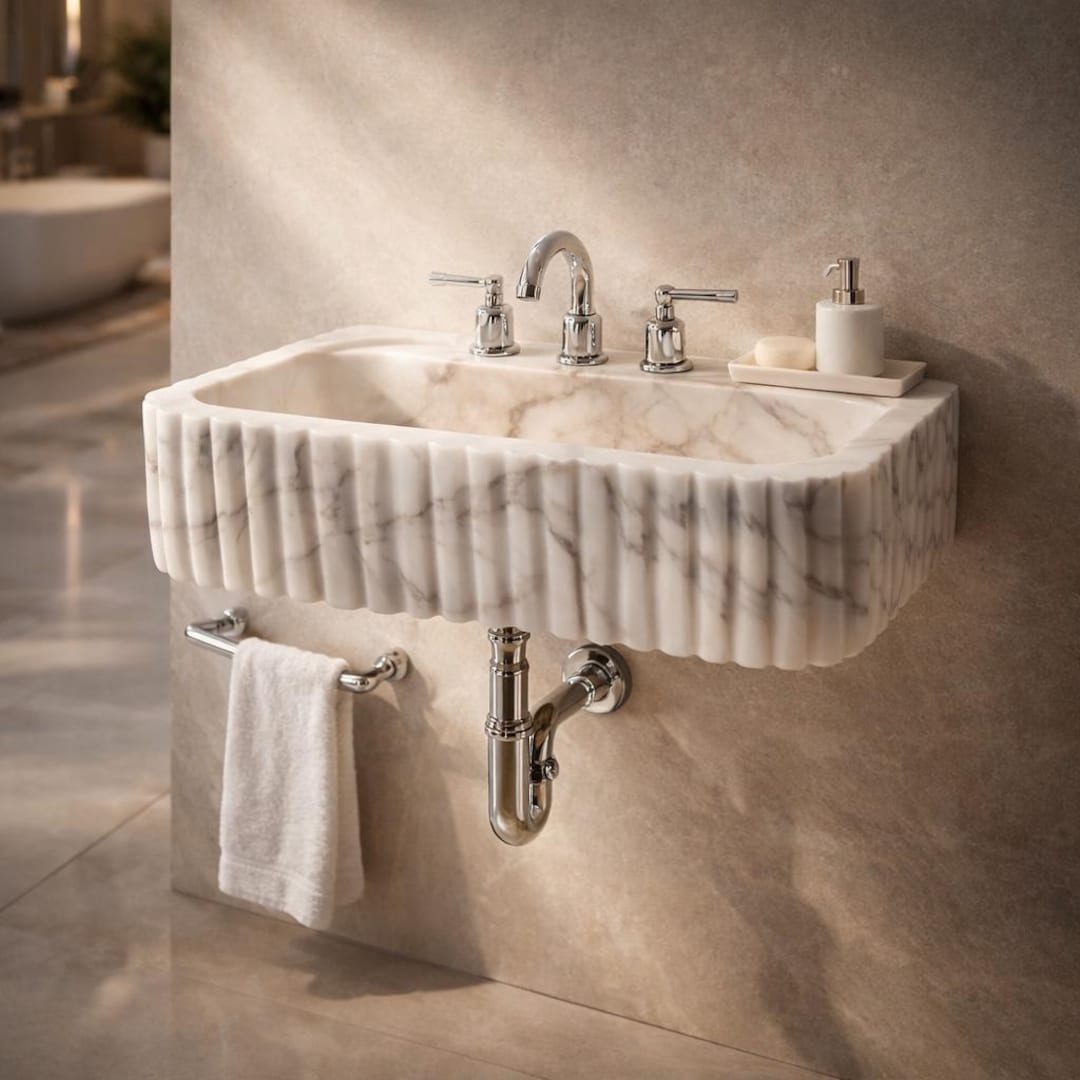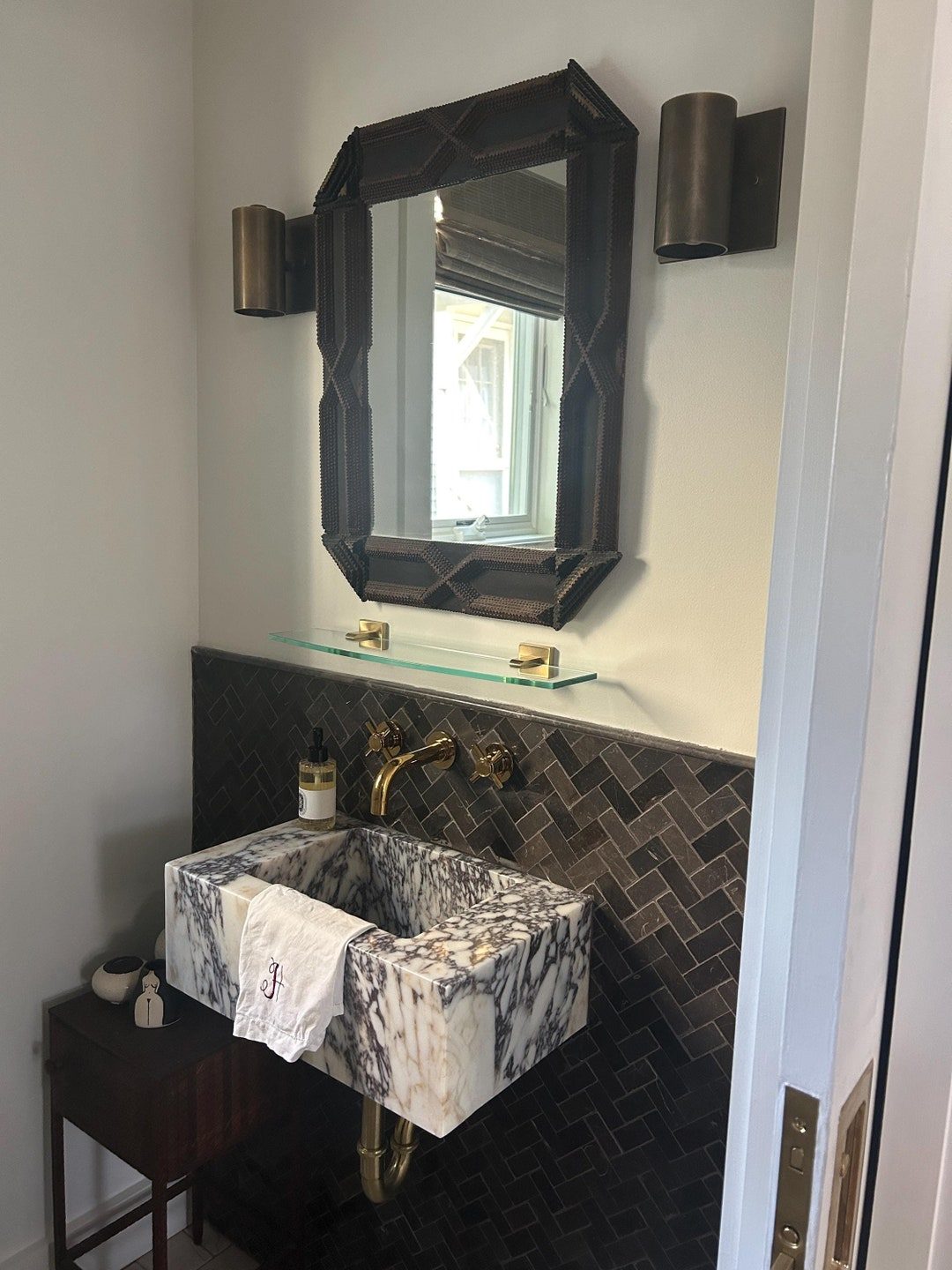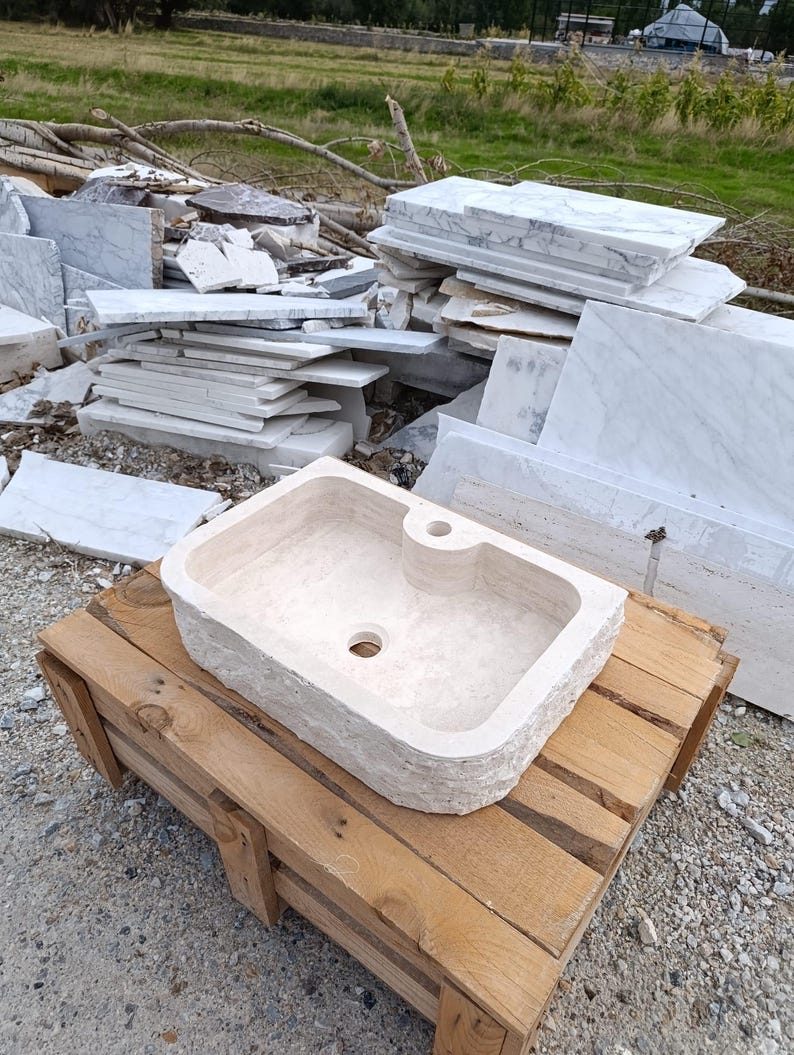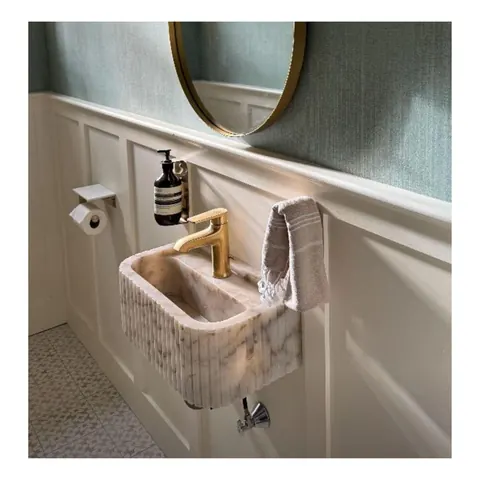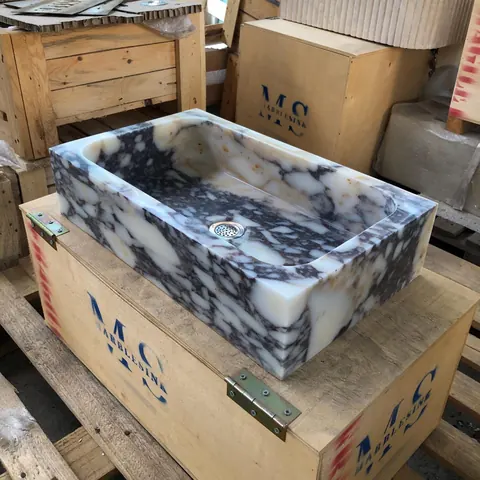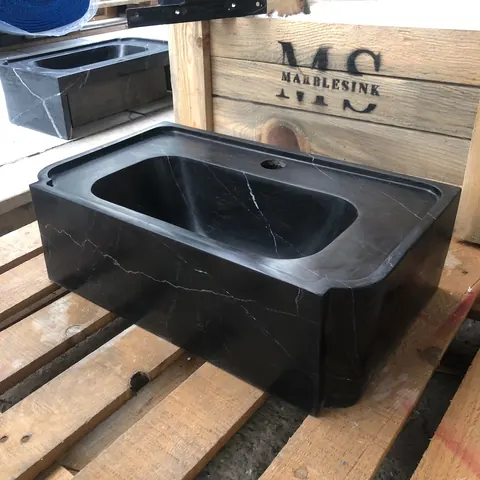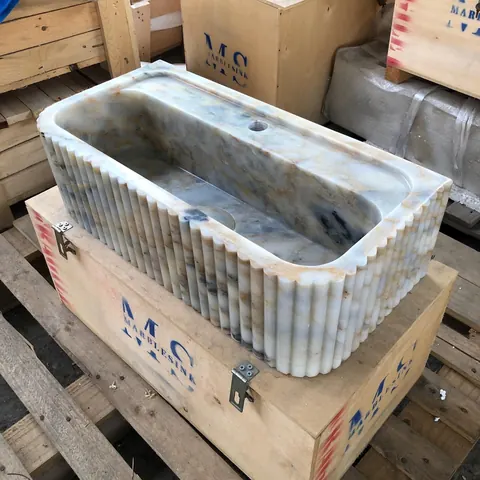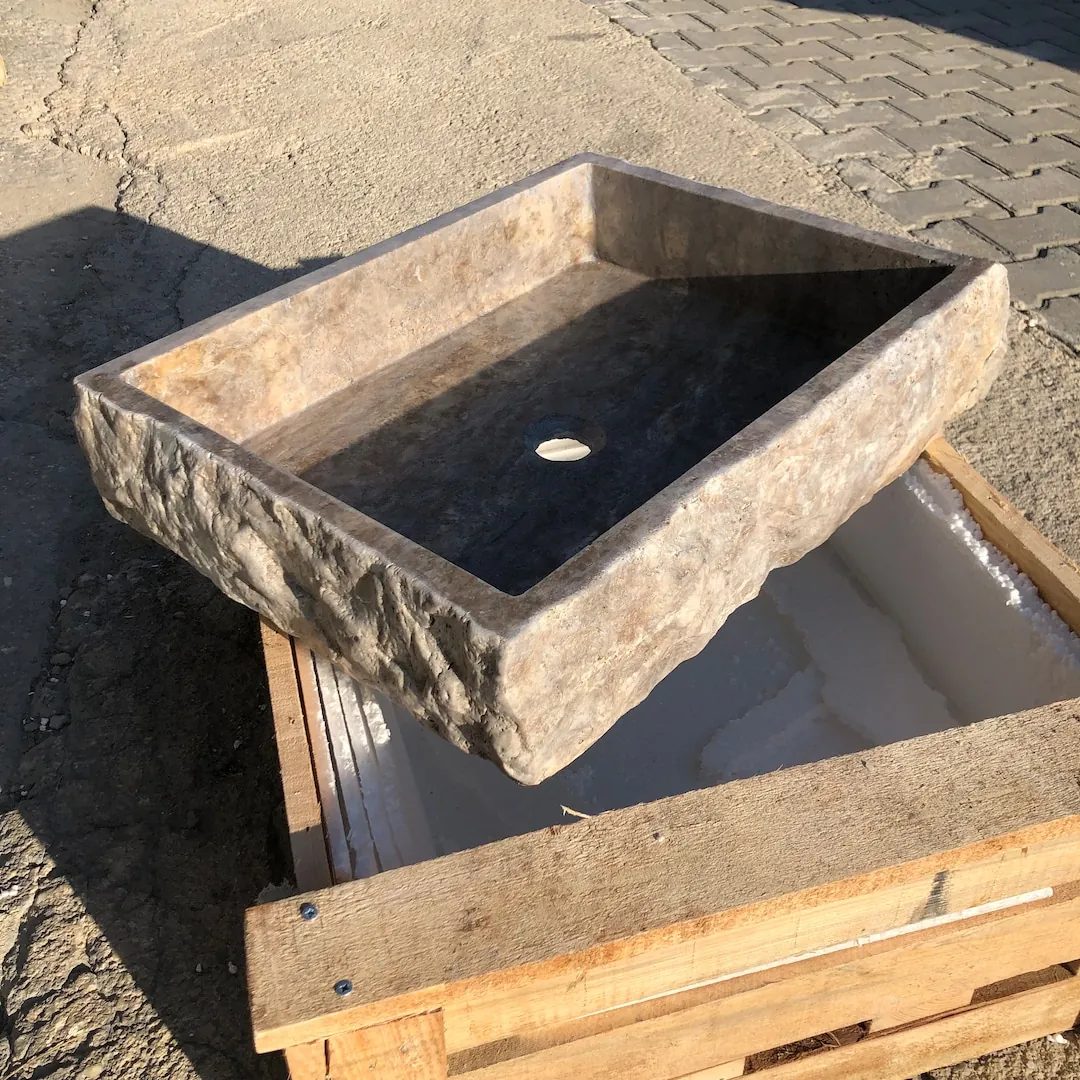
A farmhouse bathroom sink is a deep, plain basin in a natural-looking material, set on a wood vanity or hung on the wall with visible metal fittings. Five ideas cover most rooms: an apron-front basin, a stone trough, a vessel bowl on a wood vanity, a wall-mounted stone basin with a bridge faucet, and a dresser converted into a vanity.
Each idea is described below with the sizes, faucet type, counter height and relative cost you need to plan it.
How do the five farmhouse bathroom sink ideas compare?
| Idea | Typical sink size | Faucet | Height to plan | Relative cost, sink only |
|---|---|---|---|---|
| Apron-front basin | 16 to 36 in wide, 12 to 20 in front to back | Deck-mounted or wall-mounted | Rim at 32 to 36 in | Fireclay is the lower-cost route, hand-carved stone costs more |
| Stone trough | 36 to 60 in wide, 14 to 20 in front to back | One or two, usually wall-mounted | Rim at 32 to 36 in | High in stone, because the block is large |
| Vessel bowl on a wood vanity | 14 to 18 in across, 4 to 6 in tall | Tall vessel faucet or wall-mounted spout | Vanity top at 28 to 32 in | Ceramic is cheapest, hand-carved stone costs more |
| Wall-mounted stone basin, bridge faucet | 16 to 30 in wide, 12 to 18 in front to back | Bridge faucet, holes usually 8 in apart | Rim at 32 to 36 in | Medium to high, brackets extra |
| Repurposed dresser vanity | Dresser 30 to 48 in wide, 18 in or more deep | Depends on the sink | Top at 30 to 34 in, lower for a vessel | Low for a used dresser, sink extra |
Cost levels are relative and exclude the faucet, drain and labor. For hand-carved stone, the MarbleSinkCo stone sink price index gives real numbers: sinks start at $727, most cost $900 to $3,000, and price runs at about $83 per inch of width.
Apron-front basin: the classic farmhouse bathroom sink
An apron-front basin shows its front wall instead of hiding behind the cabinet. In a bathroom it is 4 to 7 in deep, much shallower than a kitchen farmhouse sink.
What it needs:
- A vanity with the top rail cut away, a console frame, or wall brackets.
- A support platform inside the vanity. The sink rests on the cabinet, not on the countertop.
- A faucet decision before ordering. Deck-mounted faucets need holes in the counter or the sink ledge. A wall-mounted spout needs a valve set in the wall.
Fireclay is the lower-cost route. Marble and travertine cost more and weigh more. Stone choices, widths, weight and support are covered in our stone farmhouse sink guide, and you can see carved examples in the stone farmhouse sink collection.
Stone trough sink: a rustic bathroom sink idea for wide walls
A trough is one long, shallow basin, usually 36 to 60 in wide with a bowl 4 to 6 in deep. It suits a shared bathroom because two people can use it at once with one drain.
What it needs:
- Faucets: one for a shorter trough, two for a long one, spaced so each user has elbow room. Wall-mounted spouts keep the rim clear and are easier to clean around.
- Support: a long stone trough is very heavy, so ask the maker for the weight of your size. It sits on a solid vanity, a masonry or timber plinth, or steel brackets fixed into studs or solid blocking, never drywall anchors.
- Drain position: a center drain needs the floor of the trough sloped toward it from both ends. Confirm this with the maker.
For the most rustic version, choose travertine or a chiseled outer face with a honed bowl. Concrete troughs give a similar look for less money.
Farmhouse vessel sink on a wood vanity
A round or oval bowl on an oak, walnut or reclaimed pine top is the easiest farmhouse sink to install, because the counter only needs a drain hole.
- Bowl size: 14 to 18 in across and 4 to 6 in tall suits most vanities 24 in wide or more.
- Counter height: aim for a rim 34 to 36 in above the floor. With a 5 in bowl, the vanity top sits at 29 to 31 in. Our bathroom sink height guide has the full calculation.
- Faucet: a tall vessel faucet behind the bowl, or a wall-mounted spout. The outlet should clear the rim by a few inches and aim at the drain. See how to match a faucet to a stone vessel sink.
- Wood top: seal every face, including the cut edge of the drain hole, with marine varnish or several coats of polyurethane.
Stone bowls in honed marble or travertine look right against rough wood. Shapes and base sizes are shown in the stone vessel sink collection.
Wall-mounted stone basin with a bridge faucet
A rectangular stone basin on visible steel or iron brackets recalls an old scullery sink and leaves the floor clear, which helps in a small bathroom.
A bridge faucet (bridge tap) has two handles joined by an exposed horizontal pipe. Deck-mounted versions need two holes, usually 8 in apart. Wall-mounted versions need hot and cold outlets in the wall at the same spacing. Tap holes in stone are drilled during carving, so buy the faucet first and send its spec sheet with the order.
The wall needs solid blocking (2x8 lumber or 3/4 in plywood) between the studs at bracket height before it is tiled. The wall-mounted stone sink planning guide gives the sequence for the carpenter and plumber.
Repurposed dresser vanity: how to convert one
A solid wood dresser makes a farmhouse vanity for the price of the dresser, a sink and a day of careful work.
- Choose the dresser. Solid wood, 18 in or more deep, and 30 to 34 in tall for a drop-in sink. For a vessel bowl, pick one about 28 to 32 in tall.
- Locate the plumbing. Mark where the drain and supply lines leave the wall, then cut an opening in the back panel.
- Cut the top. Drill the drain hole for a vessel sink, or cut the opening from the template for a drop-in sink. Add faucet holes if the faucet is deck-mounted.
- Rework the drawers. Shorten the top drawer or cut a U-shaped notch around the trap. Fix the front as a false panel if the drawer cannot be saved.
- Waterproof the wood. Apply marine varnish or polyurethane to the top and every cut edge, or replace the top with a stone slab.
- Fix it in place. Level the dresser and screw it to the wall studs. Then set the sink on neutral-cure silicone and connect a 1-1/4 in trap.
Modern farmhouse vs rustic farmhouse: what changes?
The sinks are the same. The surroundings change.
| Modern farmhouse | Rustic farmhouse | |
|---|---|---|
| Vanity | Shaker doors or an open console, white oak or painted | Reclaimed wood, old dresser, timber plinth |
| Sink | White marble or fireclay, clean edges | Travertine, chiseled stone, hammered copper |
| Faucet finish | Matte black or polished nickel | Unlacquered brass or oil-rubbed bronze |
| Walls and floor | White paint, plain tile, vertical paneling | Limewash, plaster, stone or brick floor |
A modern farmhouse vanity is usually 30 to 48 in wide for one sink and 32 to 36 in tall, with a stone or sealed wood top.
Which materials suit a farmhouse bathroom sink?
- Fireclay: glossy white, non-porous, low maintenance.
- Honed marble: matte white or grey with veining. Suits modern farmhouse rooms.
- Travertine: warm beige with natural pitting. The most rustic of the stones.
- Soapstone: dark grey, soft to the touch, not etched by acids.
- Hammered copper: darkens to brown with use.
- Concrete: matte and heavy, and it needs sealing.
Marble and travertine are calcium-based, about 3 to 4 on the Mohs scale. Acids such as vinegar, citrus and limescale removers leave dull etch marks on them. Clean with a pH-neutral cleaner and apply a penetrating sealer about once a year. The marble vs travertine sink comparison covers the differences.
MarbleSinkCo carves single-bowl bathroom basins in marble and travertine by hand, to order in about 2 weeks, from $727, with most pieces between $900 and $3,000. Every piece is ordered through the MarbleSinkCo Etsy shop. Steel wall brackets are sold separately (from $138) and there are no returns, so confirm size, drain position and tap holes before ordering.
Frequently Asked Questions
What kind of sink goes in a farmhouse bathroom?+
A farmhouse bathroom suits a deep, plain basin in a natural or matte material: an apron-front basin, a stone or concrete trough, a vessel bowl on a wood vanity, or a wall-mounted stone basin on visible brackets. Fireclay, honed marble, travertine, soapstone and hammered copper all fit. Pair the sink with a cross-handle or bridge faucet.
Can you use a farmhouse sink in a bathroom?+
Yes, a farmhouse sink works in a bathroom. Bathroom apron-front basins are smaller and shallower than kitchen ones, typically 16 to 36 in wide, 12 to 20 in front to back and 4 to 7 in deep. The vanity needs its top rail cut away so the apron shows, and the rim should finish 32 to 36 in above the floor.
What faucet goes with a farmhouse bathroom sink?+
A farmhouse bathroom sink pairs with a bridge faucet, a widespread faucet with cross or lever handles, or a wall-mounted spout with separate handles. Bridge and widespread faucets usually need holes 8 in apart, so check the faucet maker's dimensions before any holes are drilled. Unlacquered brass, oil-rubbed bronze, polished nickel and matte black are the usual finishes.
How high should a vanity be for a farmhouse vessel sink?+
Set the vanity top so the rim of the bowl finishes 34 to 36 in above the floor. Subtract the height of the bowl from that figure. A vessel 5 in tall needs a top at 29 to 31 in, which is lower than a standard 32 to 36 in vanity. Measure the actual bowl before building.
What is the best material for a rustic bathroom sink?+
Travertine, honed marble, soapstone, hammered copper and concrete all give a rustic look because their surfaces are matte and slightly irregular. Travertine and marble are etched by acids such as vinegar and limescale removers, and need a penetrating sealer about once a year. Copper darkens with age. Fireclay is the lowest-maintenance choice.
Can I use a dresser as a bathroom vanity?+
Yes, a dresser can become a bathroom vanity if it is solid wood, at least 18 in deep and the right height: 30 to 34 in for a drop-in sink, or lower for a vessel bowl. The top needs a drain hole and a waterproof finish, the upper drawers must be shortened or notched around the trap, and the dresser should be fixed to the wall.
Share this article