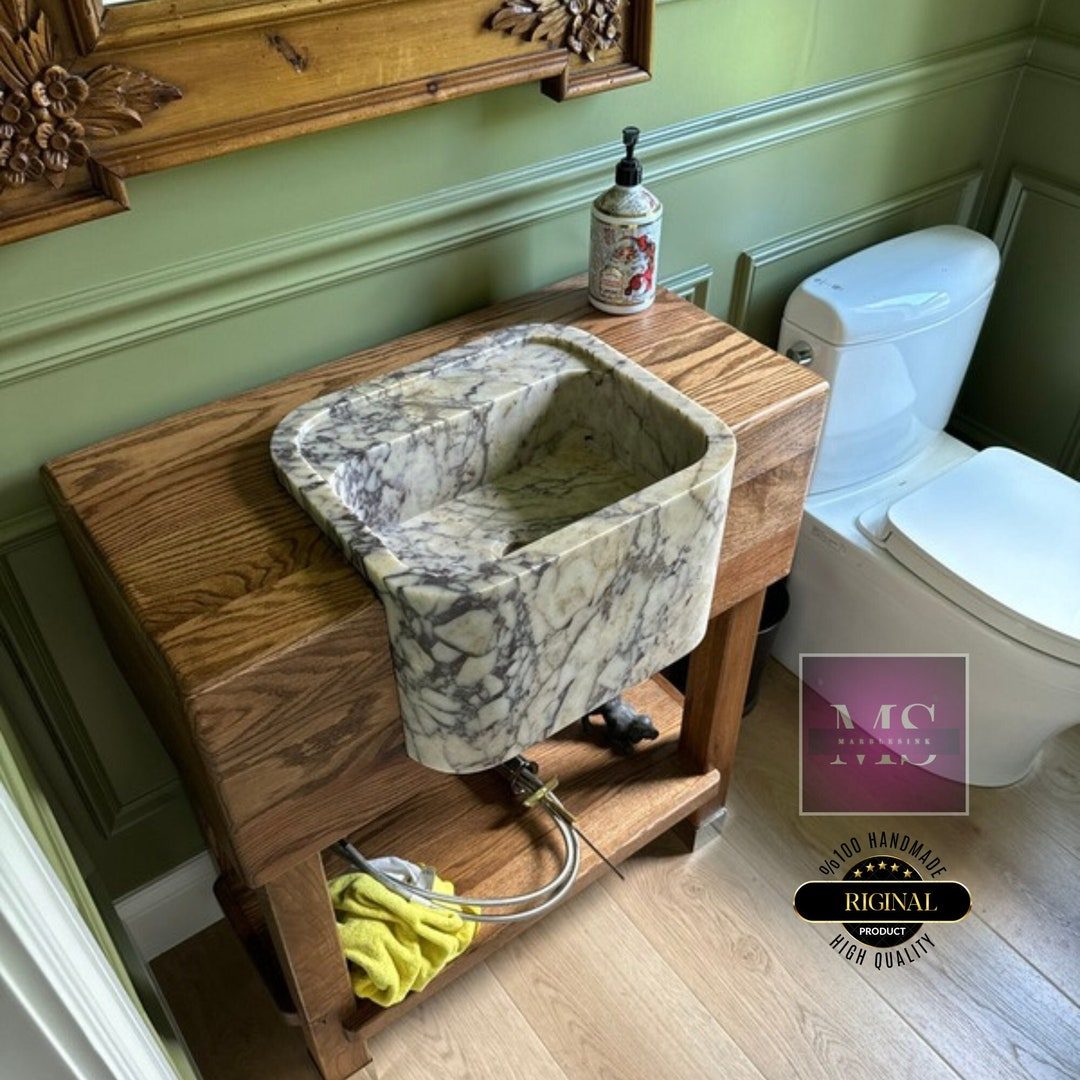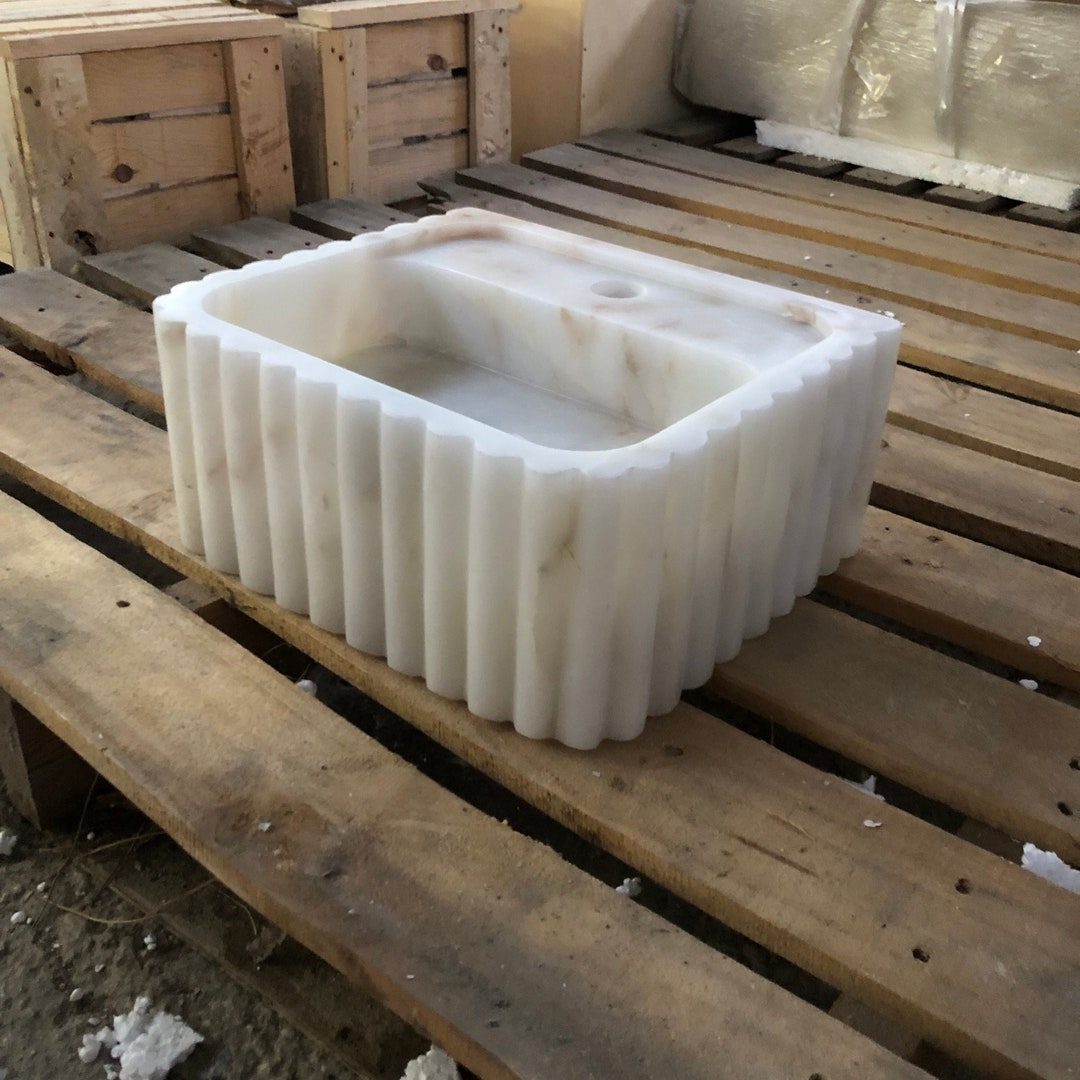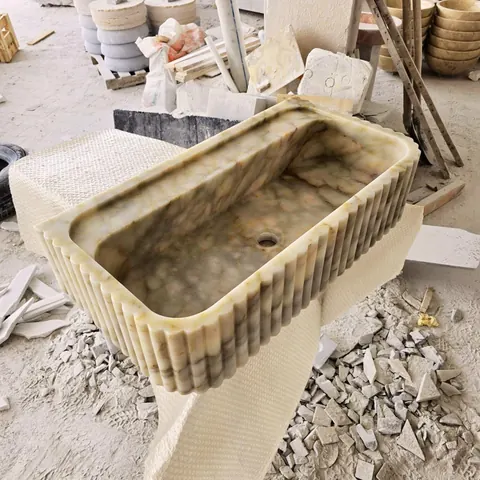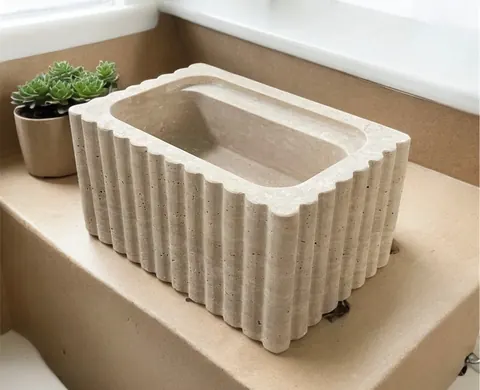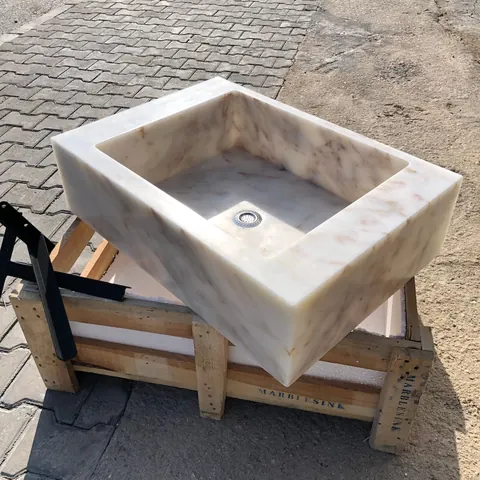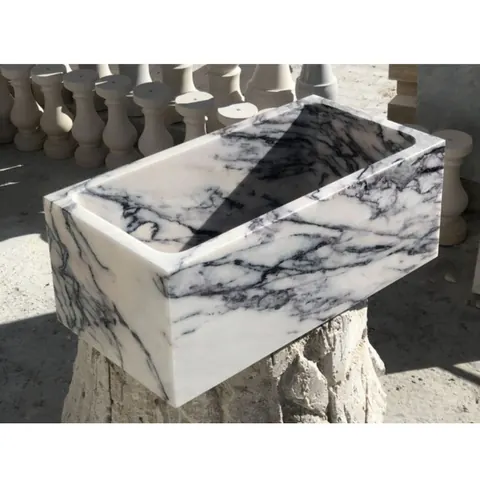
Standard bathroom sink height is 30 to 36 inches (76 to 91 cm) from the finished floor to the rim. Older vanities sit near 30 to 32 inches and newer comfort-height vanities near 34 to 36. The ADA maximum rim height for an accessible sink is 34 inches. A wall-mounted sink can be set at any height you choose.
A sink at the wrong height means years of hunching over a rim that is too low, or reaching up to one that is too high. The height is easy to get right if you decide it before the wall is closed.
What is the standard bathroom sink height?
Vanity-mounted sinks: 30 to 36 inches
Traditional bathroom vanities put the rim at about 30 to 32 inches (76 to 81 cm). Many adults find that low. Newer comfort-height vanities sit at about 34 to 36 inches (86 to 91 cm), close to kitchen counter height.
With a vanity-mounted sink, the cabinet decides the height. You cannot change it without replacing the vanity. The bathroom vanity height guide covers cabinet heights in more detail.
Pedestal sinks: fixed by the manufacturer
A pedestal sink stands at the height of its pedestal, usually inside the same standard range. The pedestal cannot be modified.
Vessel sinks: counter height plus bowl height
A vessel sink sits on top of the counter, so its rim is the counter height plus the height of the bowl. A 6 inch bowl on a 36 inch vanity ends up at 42 inches, which is too high for most people. Subtract the bowl height from the rim height you want, and choose or build the vanity to that figure.
Wall-mounted sinks: any height you choose
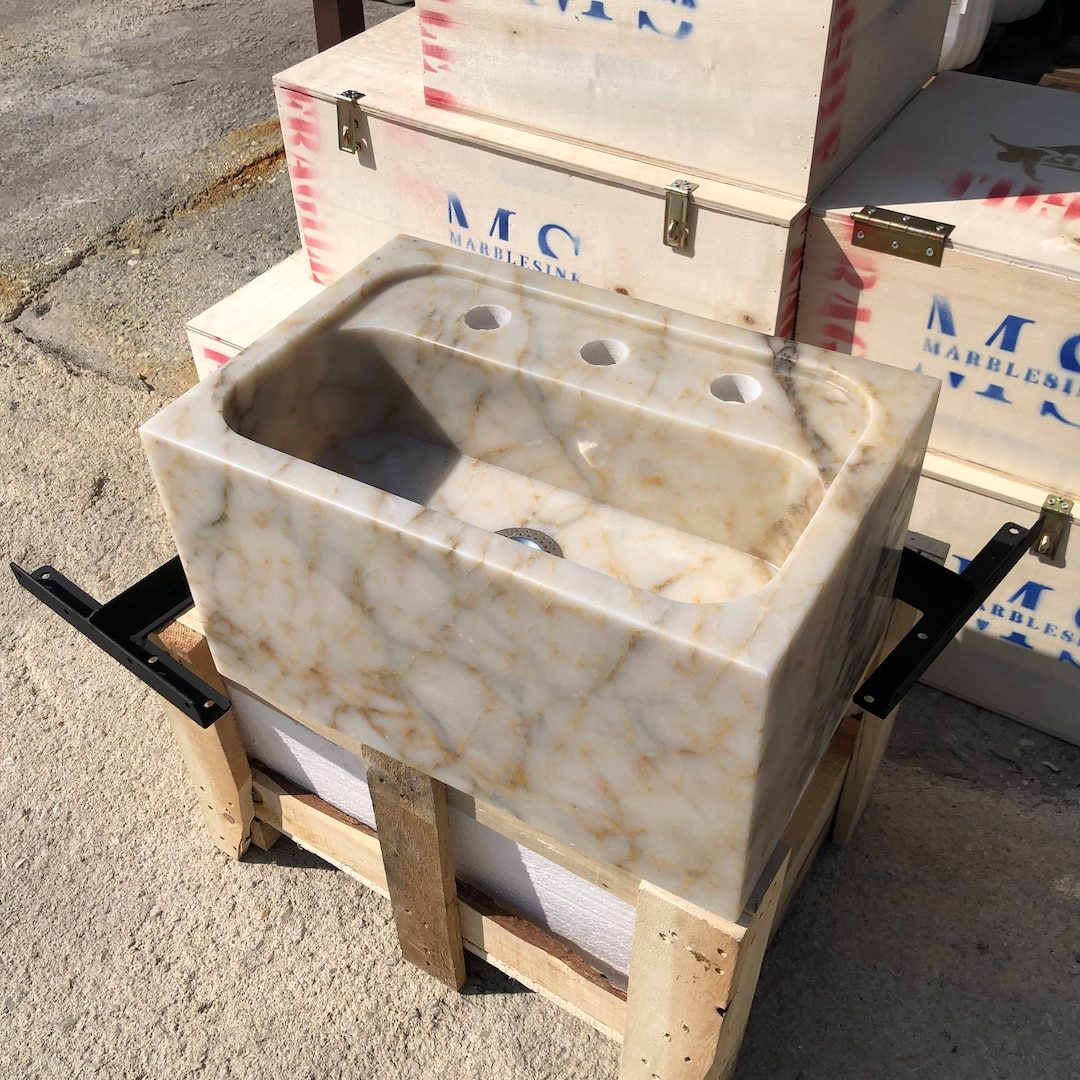
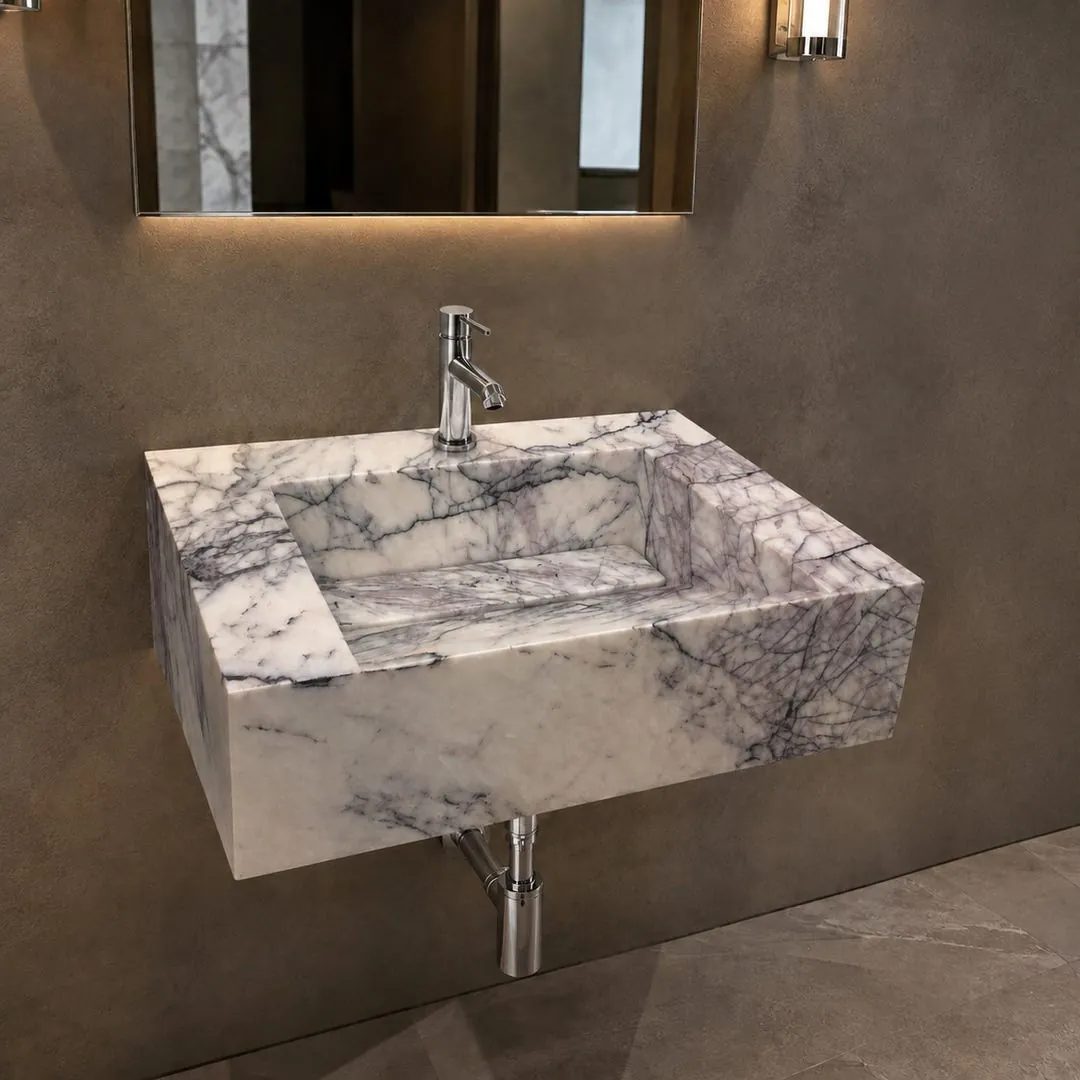
A wall-mounted marble sink rests on brackets fixed to the wall, so the installer sets the rim height before drilling. No other sink type gives the same freedom. The limit is the wall: the brackets must go into studs, solid blocking or masonry at exactly that height.
Which sink height suits which user?
These are rules of thumb, not standards. Test the height in the room before anything is fixed.
| Main users | Rim height to start from | Notes |
|---|---|---|
| Young children | Standard adult height with a step stool | Children grow, and the sink height is permanent |
| Shorter adults | Lower part of the 30 to 36 inch range | Check with the elbow test below |
| Average-height adults | Middle to upper part of the range | Comfort-height vanities fall here |
| Tall adults | Top of the range, or a little higher | Easiest with a wall-mounted sink |
| Wheelchair users | 34 inches maximum to the rim | ADA figure, see below |
| Mixed household | About 34 inches | A workable compromise for most adults |
What are the ADA bathroom sink requirements?
The 2010 ADA Standards for Accessible Design set the requirements for accessible lavatories in public and commercial buildings in the US. Homeowners planning to age in place often borrow the same figures. The main points are:
- Rim or counter height: no higher than 34 inches (865 mm) above the finished floor
- Knee and toe clearance: open space under the sink, with knee clearance at least 27 inches (685 mm) high
- Clear floor space: 30 x 48 inches (760 x 1220 mm) in front of the sink for a forward approach
- Pipes: exposed supply and drain pipes insulated or otherwise protected
- Faucet: operable with one hand, without tight grasping, pinching or twisting
Read the current text of the standard (sections 305, 306 and 606) and your local code before you build, because the full rules have more detail than this summary.
Do wall-mounted sinks help with accessibility?
A wall-mounted sink is a common choice for an accessible bathroom, for three reasons:
- Height control. The rim can be set at 34 inches or lower.
- Open space underneath. There is no cabinet in the knee and toe space.
- Clear approach. Nothing on the floor blocks a wheelchair.
MarbleSinkCo sinks carry no ADA or other certification. Whether an installation meets accessibility rules depends on the installed height, the clearances, the pipe protection and the faucet, and it has to be confirmed by your contractor or code official. The post on stone for accessible bathrooms looks at the layout questions.
How do you find your ideal sink height?
The elbow test
Stand upright with your arms at your sides. Bend your elbows to 90 degrees, as if resting your hands on a counter. Have someone measure from the floor to your elbow. A comfortable rim sits a few inches below that point.
For many adults this lands in the upper half of the standard range. Mock it up with a board or a box at that height and go through the motion of washing your hands before you commit.
More than one user
- Two adults of similar height: use the elbow test for either person.
- Adults of different heights: split the difference, leaning toward the taller person. Leaning down slightly is easier than reaching up.
- Adults and children: install at adult height and add a sturdy step stool.
Aging in place
If you plan to stay in the home long term, 34 inches is a sensible rim height. It works for most standing adults and matches the ADA maximum if a seated position becomes necessary later.
How do you set the height of a wall-mounted sink?
Step 1: Mark the rim height
Measure from the finished floor to the rim height you want and mark the wall. Measure from the finished floor, not the subfloor.
Step 2: Work out the bracket position
Measure the distance from the top of the sink down to the point where it rests on the bracket. Subtract that from the rim height and mark the bracket line. Take this measurement from the real sink and the real bracket.
Step 3: Fix into studs or blocking
Marble sinks are solid stone, and their weight varies a lot with size. Drywall alone cannot carry one. Fix the brackets into studs, or open the wall and add solid timber blocking between the studs at bracket height. The stone sink weight calculator gives an estimate for your size.
Step 4: Mount and level
Install the brackets, check them with a level, then set the sink on them with a helper. Connect the drain and supply lines and seal the wall joint with neutral-cure silicone.
The wall-mounted stone sink installation planning guide has the full sequence, and wall-mount sink ideas shows layouts.
Which sink height mistakes are most common?
Defaulting to 30 inches. The low end of the range comes from older vanities. Use it only if it suits the people who will use the sink.
Copying the old sink’s height. If you are replacing a vanity sink with a wall-mounted one, the old height was set by a cabinet, not by comfort. Measure again.
Forgetting the faucet. A wall-mounted faucet goes above the sink. Plan its height with the rim so the handles are easy to reach and the spout clears the bowl.
Forgetting the mirror. The mirror is normally centered above the sink at eye level. If the sink moves up, the mirror and lights move with it.
How do MarbleSinkCo wall-mounted sinks fit a custom height?
A MarbleSinkCo wall-mounted sink is set on steel brackets, so its height is decided at installation:
- Steel brackets are sold separately, from $138.
- Custom size, drain position, tap holes and finish (honed or polished) are available on request.
- Price: the Calacatta wall-mounted sink is listed from $1,012. Sinks across the range start at $727, and most cost $900 to $3,000.
- Made to order in about 2 weeks, with free insured express shipping and no returns, so confirm the dimensions before ordering.
Where to buy
MarbleSinkCo pieces are ordered through the MarbleSinkCo Etsy shop. To compare designs first:
- Wall-mounted sinks: the rim height is set at installation
- Vessel sinks: the rim height is the counter height plus the bowl height
- Marble sink dimensions and bowl size guide
- How much does a marble sink cost?
Frequently Asked Questions
What is the standard bathroom sink height?+
Standard bathroom sink height is 30 to 36 inches (76 to 91 cm) from the finished floor to the rim. Older vanities put the rim near 30 to 32 inches, and newer comfort-height vanities near 34 to 36 inches. A wall-mounted sink has no fixed height, so it can be set anywhere in or outside that range.
What is the ADA bathroom sink height requirement?+
The 2010 ADA Standards set the rim or counter of an accessible lavatory no higher than 34 inches above the finished floor, with knee and toe clearance underneath, a clear floor space in front and protected pipes. A wall-mounted sink leaves the space below open, but compliance depends on the whole installation, so confirm it with your contractor or code official.
Can I install a bathroom sink at a custom height?+
Yes, with a wall-mounted sink. It hangs on brackets fixed to the wall, so the installer sets the rim at the height you choose before drilling. A vanity sink sits at whatever height the cabinet gives, and a vessel sink adds its own bowl height to the counter, so the vanity under it must be lower.
What sink height is best for tall people?+
Tall users are usually more comfortable with the rim at the upper end of the standard range, around 36 inches, or a little higher. A quick check is to stand upright, bend your elbows and set the rim a few inches below elbow height. MarbleSinkCo wall-mounted marble sinks sit on steel brackets, sold separately, so the height is chosen at installation.
How high should a vessel sink be?+
The rim of a vessel sink ends up at the counter height plus the height of the bowl. To keep the rim in the usual 30 to 36 inch range, subtract the bowl height from the rim height you want. For example, a 6 inch bowl with a 34 inch rim needs a counter at 28 inches.
Share this article