FAQ
Care & Maintenance FAQ
Short answers on living with a marble sink. The care methods follow the published guidance of the Natural Stone Institute, linked below.
By MarbleSinkCo · Updated
Are marble sinks hard to maintain?
A marble sink is not hard to maintain, but it has rules. Daily care is a rinse and a dry wipe. Weekly care is a pH-neutral stone cleaner or mild dish soap. About once a year the stone is resealed with a penetrating sealer. The one thing to avoid is acid: vinegar, citrus and limescale removers leave dull etch marks on marble.
How do I clean a marble sink?
Clean a marble sink with a neutral stone cleaner or a few drops of mild dishwashing liquid in warm water, applied with a soft cloth. Rinse well and wipe the bowl dry, because soap left behind forms a film. Do not use vinegar, lemon, limescale remover, scouring powder or abrasive pads. This is the routine the Natural Stone Institute recommends for calcium-based stone.
Do marble sinks stain?
Marble can stain, because the stone is slightly porous. Hair dye, makeup, coffee and colored mouthwash can soak in if they are left to sit. A penetrating sealer makes marble more stain resistant, not stain proof, and gives you time to wipe a spill away. Most stains that do set can be drawn out with a poultice left on for 24 to 48 hours.
Do marble sinks etch?
Yes. Marble is made of calcite, a form of calcium carbonate, and acids dissolve a thin layer of the surface. The result is a dull, pale mark called an etch. Vinegar, lemon juice, limescale removers and some toiletries cause it. Sealer does not prevent etching. A honed finish hides etch marks far better than a polished one.
Does marble scratch easily?
Marble scratches more easily than porcelain or granite. Marble has a hardness of about 3 on the Mohs scale, while quartz is 7 and a steel knife blade is about 5 to 6.5. Grit, metal cans and abrasive pads can mark it. Because the stone is solid all the way through, light scratches can be honed out. A honed finish hides them best.
How do I seal a marble sink?
To seal a marble sink, clean it and let it dry fully, then wipe on a penetrating (impregnating) stone sealer with a soft cloth. Leave it for the time on the label, usually a few minutes, and buff off every trace of excess before it dries. Keep the sink dry for the cure time the maker states. The whole job takes about 15 minutes.
How often should I seal a marble sink?
We recommend resealing a marble sink about once a year, and sooner if it fails a water test. Put a few drops of water on the dry stone and wait five to ten minutes. If the water still beads, the sealer is working. If the stone darkens under the drops, clean it, let it dry and reseal.
How do I remove a stain from a marble sink?
Match the method to the stain. For organic stains such as coffee or tea, the Natural Stone Institute suggests 12% hydrogen peroxide with a few drops of ammonia. For oily stains such as cosmetics, use a poultice of baking soda and water. Spread a poultice 1/4 to 1/2 in thick, cover it with plastic and leave it 24 to 48 hours.
How do I remove etch marks from marble?
An etch mark is surface damage, not dirt, so cleaning will not remove it. For a light etch on polished marble, wet the area, sprinkle on marble polishing powder and buff with a damp cloth until the mark fades, as the Natural Stone Institute describes. Deep or widespread etching needs a stone restorer, who re-hones or re-polishes the surface.
How do I remove hard water marks from a marble sink?
Do not use a limescale remover on marble: the acid that dissolves limescale also dissolves the stone. For light water spots and rings, the Natural Stone Institute advises buffing with dry 0000 steel wool. Prevention is easier. Wipe the bowl dry after use so mineral deposits never build up, especially in hard water areas.
Can I use vinegar or bleach on a marble sink?
Never use vinegar on a marble sink. Vinegar is an acid and etches marble on contact, even when diluted. Bleach is not a routine stone cleaner and can dull the surface with repeated use: the Natural Stone Institute lists diluted bleach only for specific stains such as mildew. For everyday cleaning use a pH-neutral stone cleaner or mild dish soap. Never mix bleach and ammonia, which produces a toxic gas.
What should never be used on a marble sink?
Keep five things away from a marble sink: vinegar and citrus cleaners, limescale and rust removers, toilet bowl and tile cleaners, scouring powders and creams, and abrasive pads. The first three are acidic and etch the stone. The last two scratch it. Also rinse away hair dye, perfume and toothpaste instead of leaving them on the stone.
Read more
Sources
Popular designs in our Etsy shop
Each listing opens on Etsy with current price, sizes and shipping to your address.
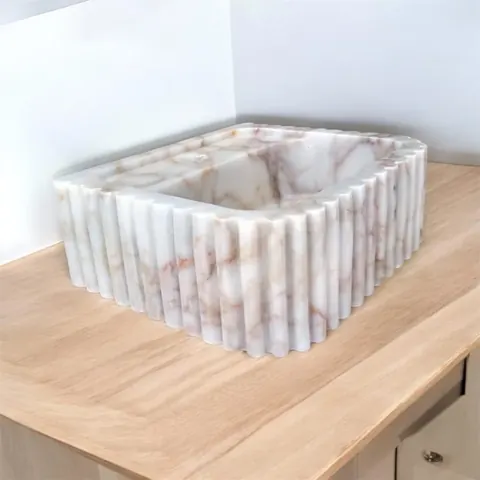
Handcrafted Calacatta Viola Marble Sink
$887.80
View on Etsy →
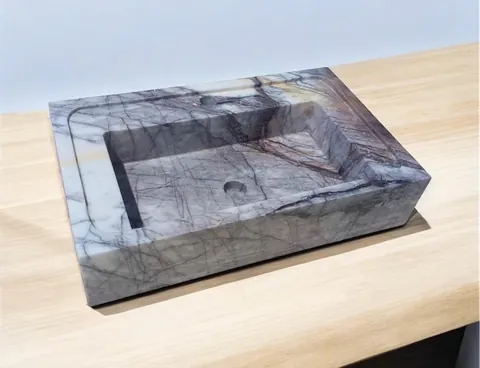
Carrara Marble Sink with Backsplash - Custom Bathroom Vanity
$1,012.00
View on Etsy →
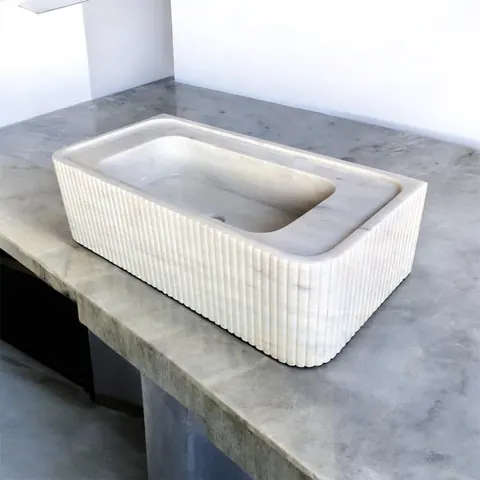
Handcrafted Carrara Marble Sink
$1,095.00
View on Etsy →
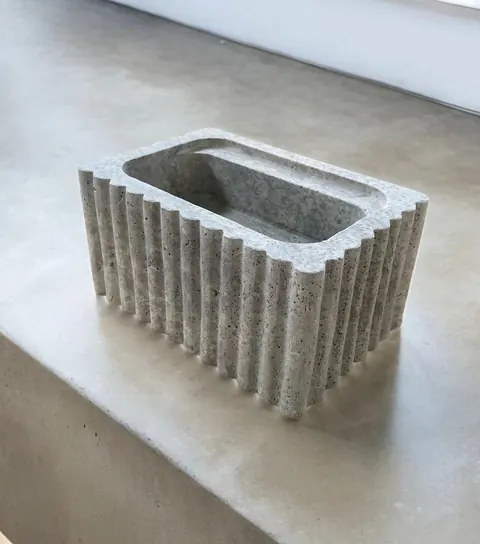
Handcrafted Silver Travertine Bathroom Sink
$1,205.20
View on Etsy →
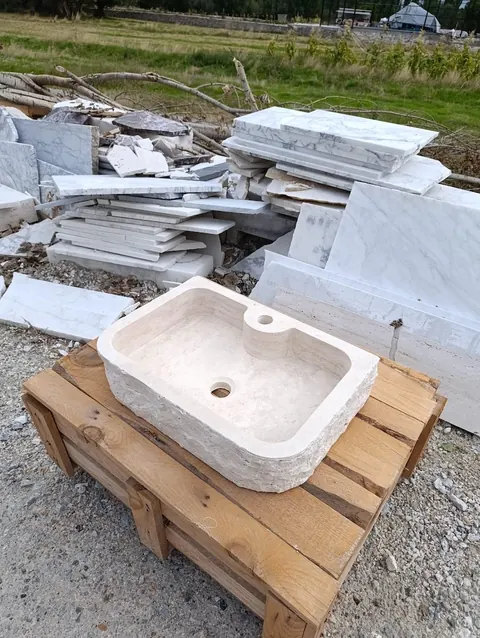
Hand Carved Travertine Sink
$1,370.80
View on Etsy →
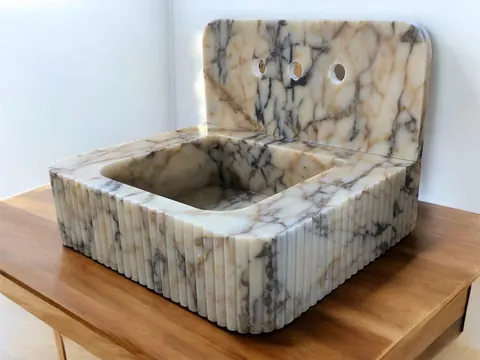
Calacatta Viola Marble Sink
$1,532.00
View on Etsy →
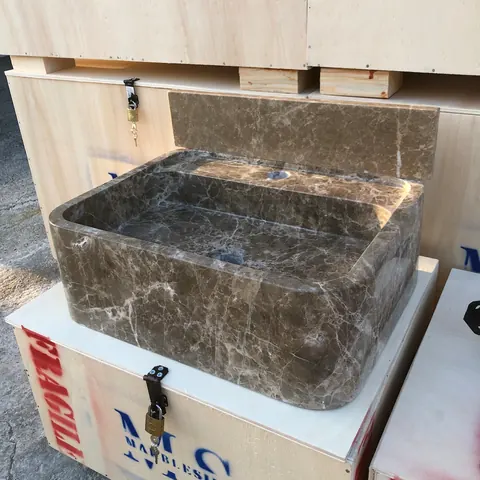
Emperador Dark Marble Sink
$2,290.80
View on Etsy →
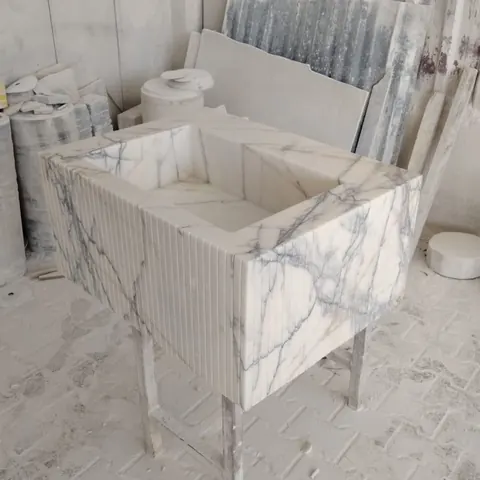
Hand-Carved White Marble Sink
$4,089.00
View on Etsy →