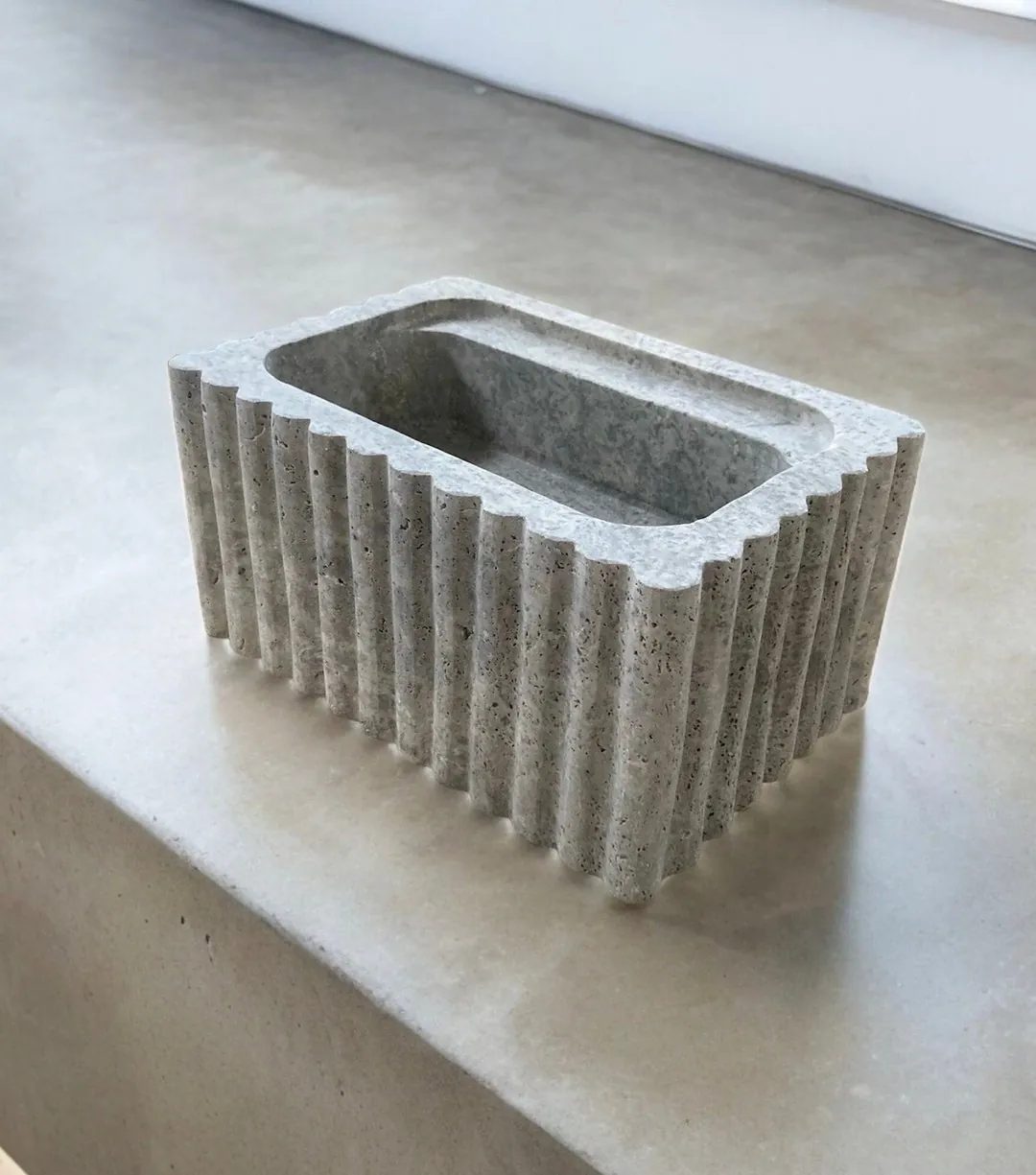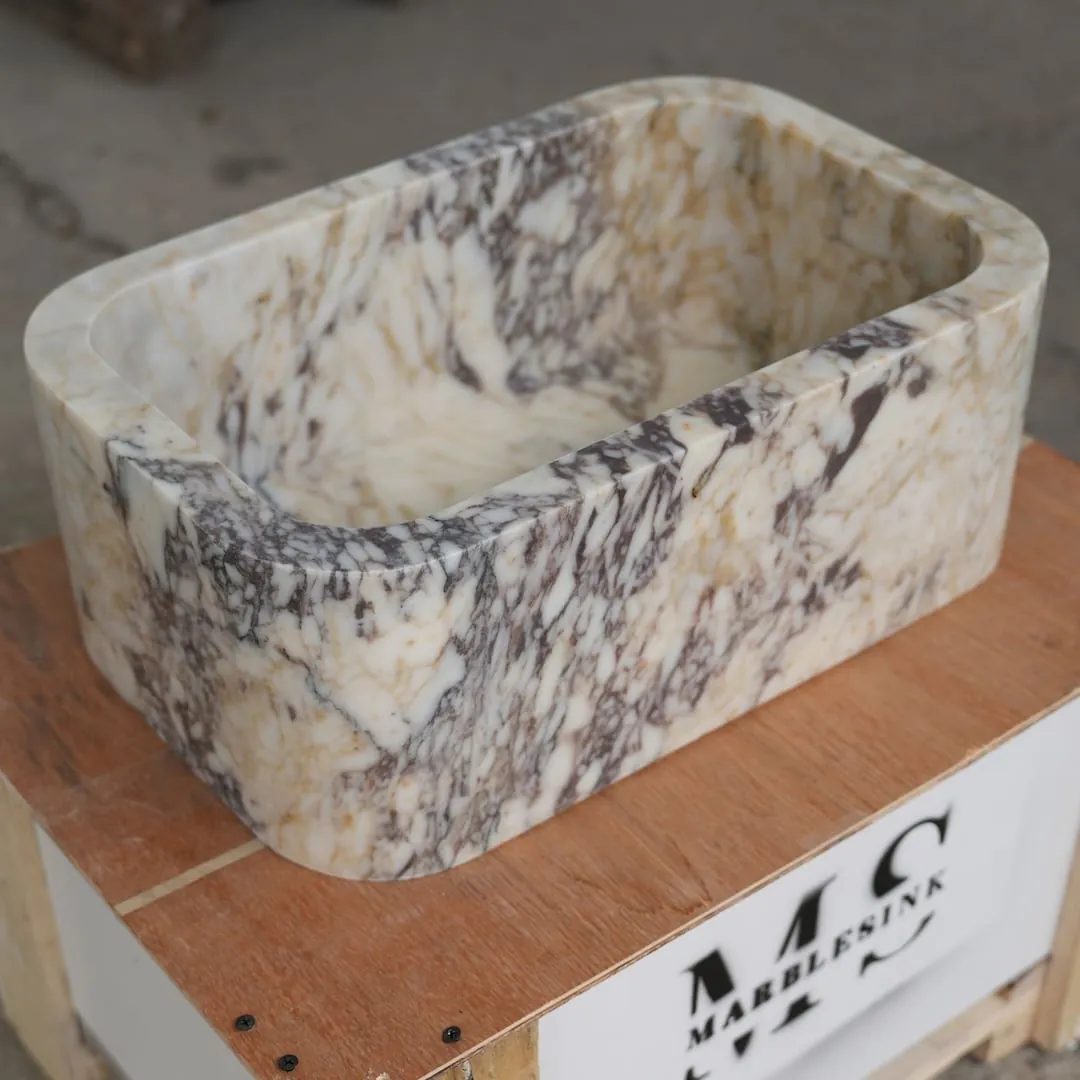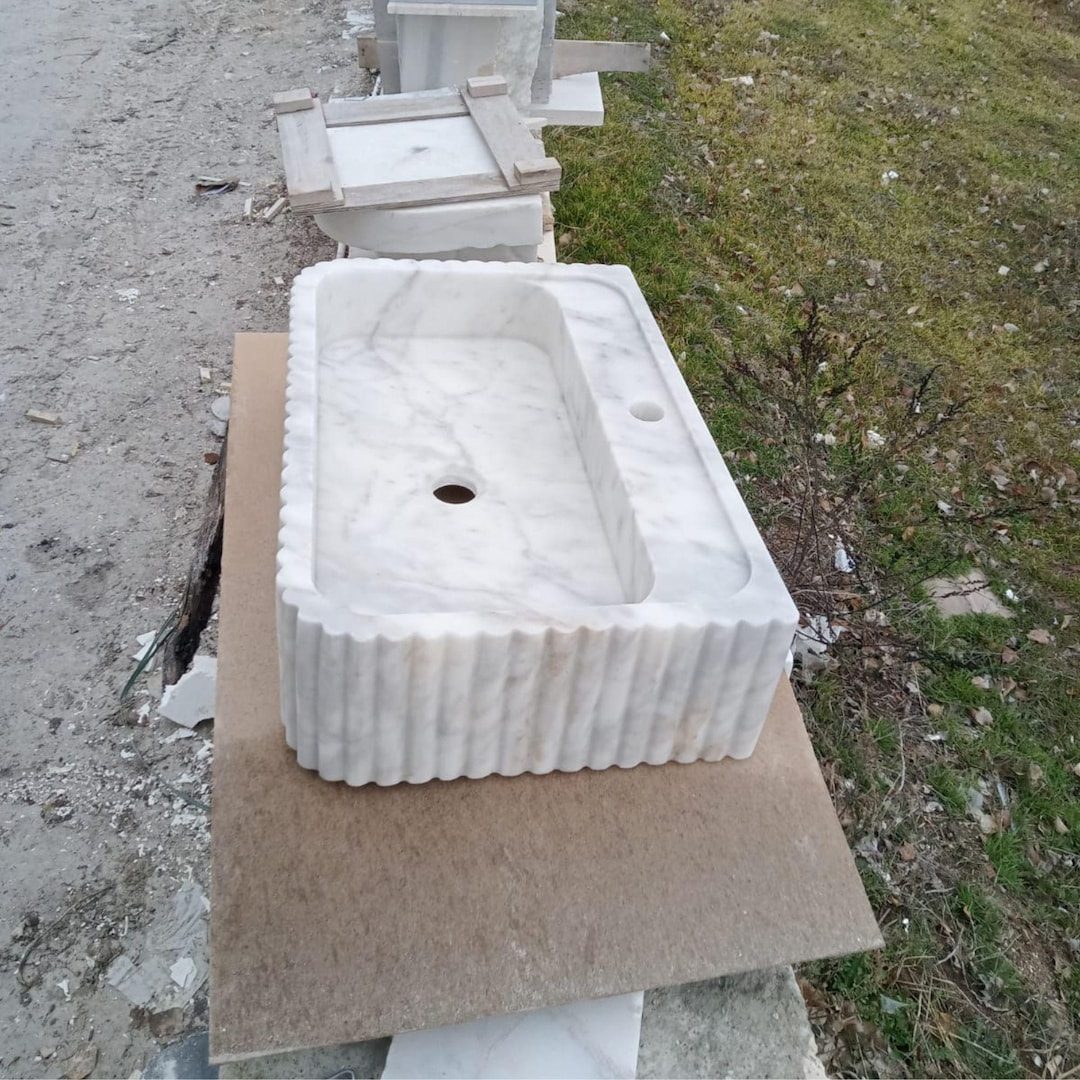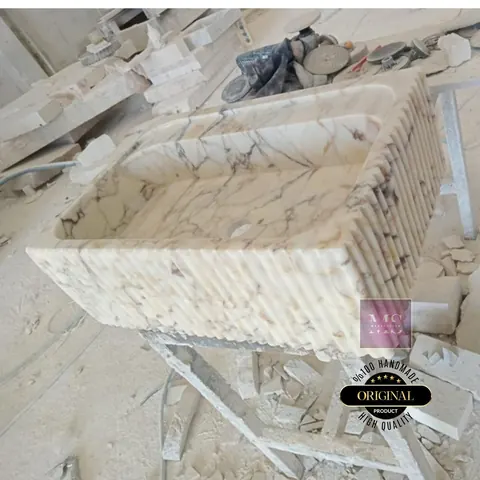
In a world of greenwashed products, marble is genuinely green — and it has been for millions of years.
The Sustainability Scorecard
| Factor | Marble | Porcelain | Engineered Quartz |
|---|---|---|---|
| Raw material | 100% natural stone | Clay + chemicals | 93% quartz + 7% resin |
| Manufacturing energy | Low (quarry + carving) | Very high (2,200°F kiln) | High (compression + resin curing) |
| Chemical coatings | None | Synthetic glaze | Resin binder |
| Lifespan | 50-100+ years | 20-30 years | 25-50 years |
| Recyclable | Yes, infinitely | Limited | No (resin contamination) |
| Biodegradable | Yes (it’s rock) | No | No |
| VOC emissions | Zero | Minimal | Can off-gas from resin |
Why Hand-Carved Matters
Mass-produced sinks require factories, assembly lines, chemical glazes, kilns burning at extreme temperatures, and plastic packaging.
MarbleSinkCo’s process:
- Stone quarried from natural deposits
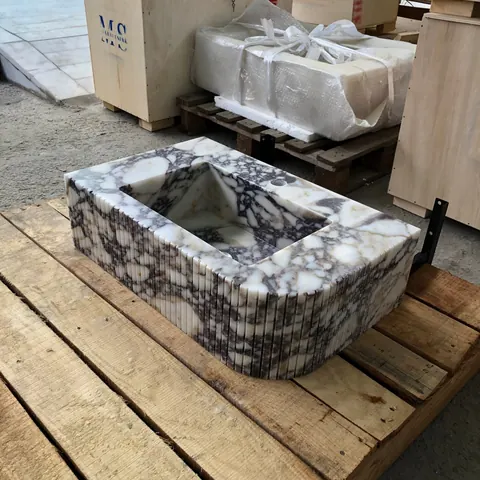
- Hand-carved by artisans using simple tools
- Polished with water and diamond pads (no chemicals)
- Packed for insured express courier shipping
- Ships once — direct to your door
The carbon footprint of a hand-carved marble sink is a fraction of a factory-produced alternative.
The 100-Year Argument
The most sustainable product is the one you never replace. A ceramic sink replaced every 25 years means 4 sinks in 100 years — 4 manufacturing cycles, 4 shipping events, 3 landfill deposits. A marble sink replaced never means 1 of each and 0 waste.
End of Life
When (if) a marble sink finally retires:
- Garden planter — drill drainage, fill with soil
- Bird bath — place on a pedestal outdoors
- Aggregate — crush for construction fill
- Soil amendment — marble is calcium carbonate, a natural soil conditioner
- Reuse — refinish and install somewhere new
Shop sustainable marble sinks →
Related
Frequently Asked Questions
Is marble environmentally friendly?+
Marble is one of the most eco-friendly building materials available. It's 100% natural (no synthetic chemicals), lasts 50-100+ years (reducing replacement waste), is fully recyclable, requires no toxic coatings, and hand-carved marble uses minimal energy compared to manufactured alternatives.
Is a marble sink more sustainable than porcelain?+
Yes, for several reasons. Porcelain requires firing at 2,200°F+ (massive energy), uses synthetic glazes, lasts 20-30 years, and cannot be meaningfully recycled. Marble is quarried and carved (lower energy), uses no chemical coatings, lasts 50-100+ years, and can be repurposed infinitely.
What happens to marble when it's no longer used?+
Marble is infinitely recyclable. Old marble sinks can be: repurposed as garden features, crushed into aggregate for construction, ground into calcium carbonate for soil amendment, or simply repolished and reused. It never goes to a landfill meaningfully — it returns to the earth it came from.
Share this article