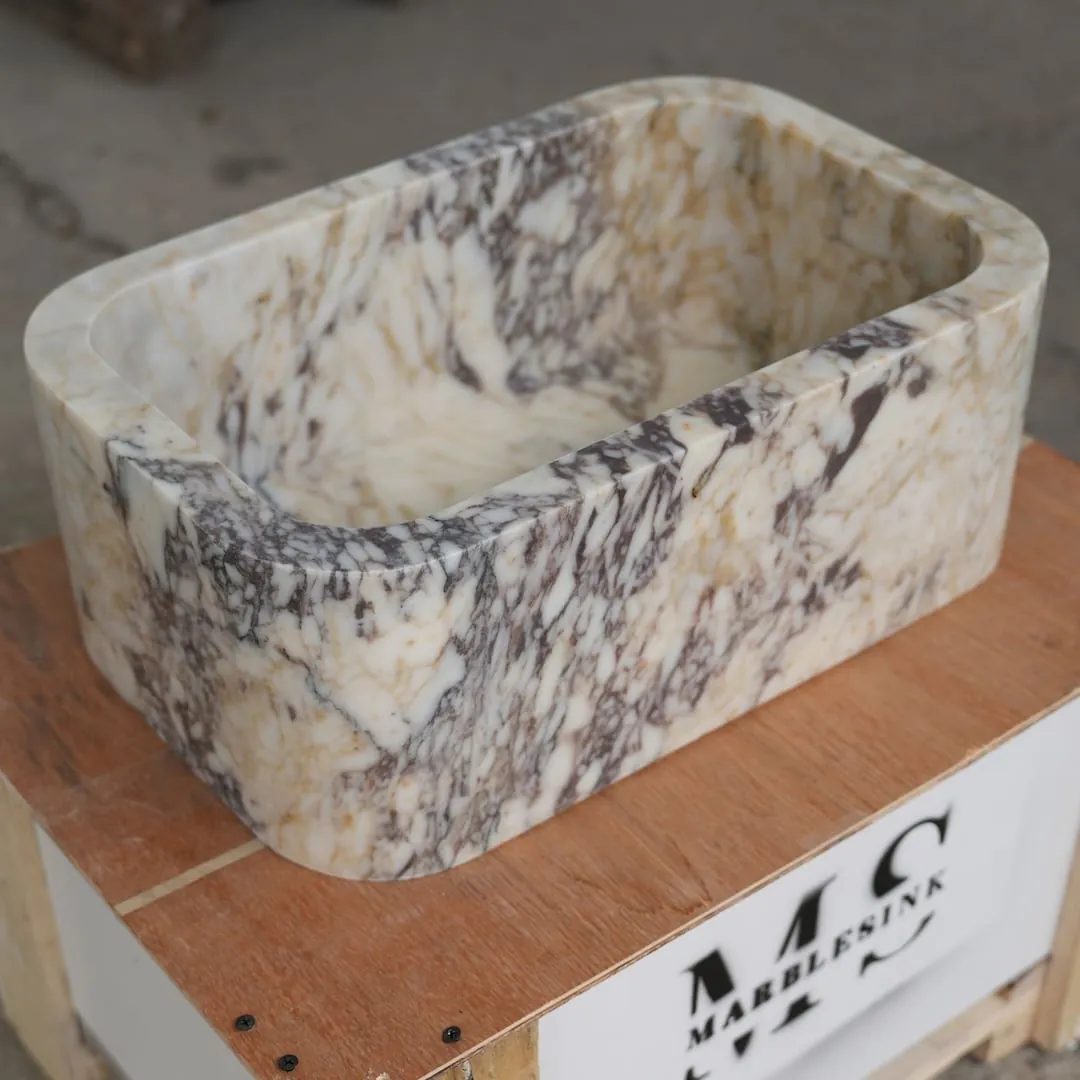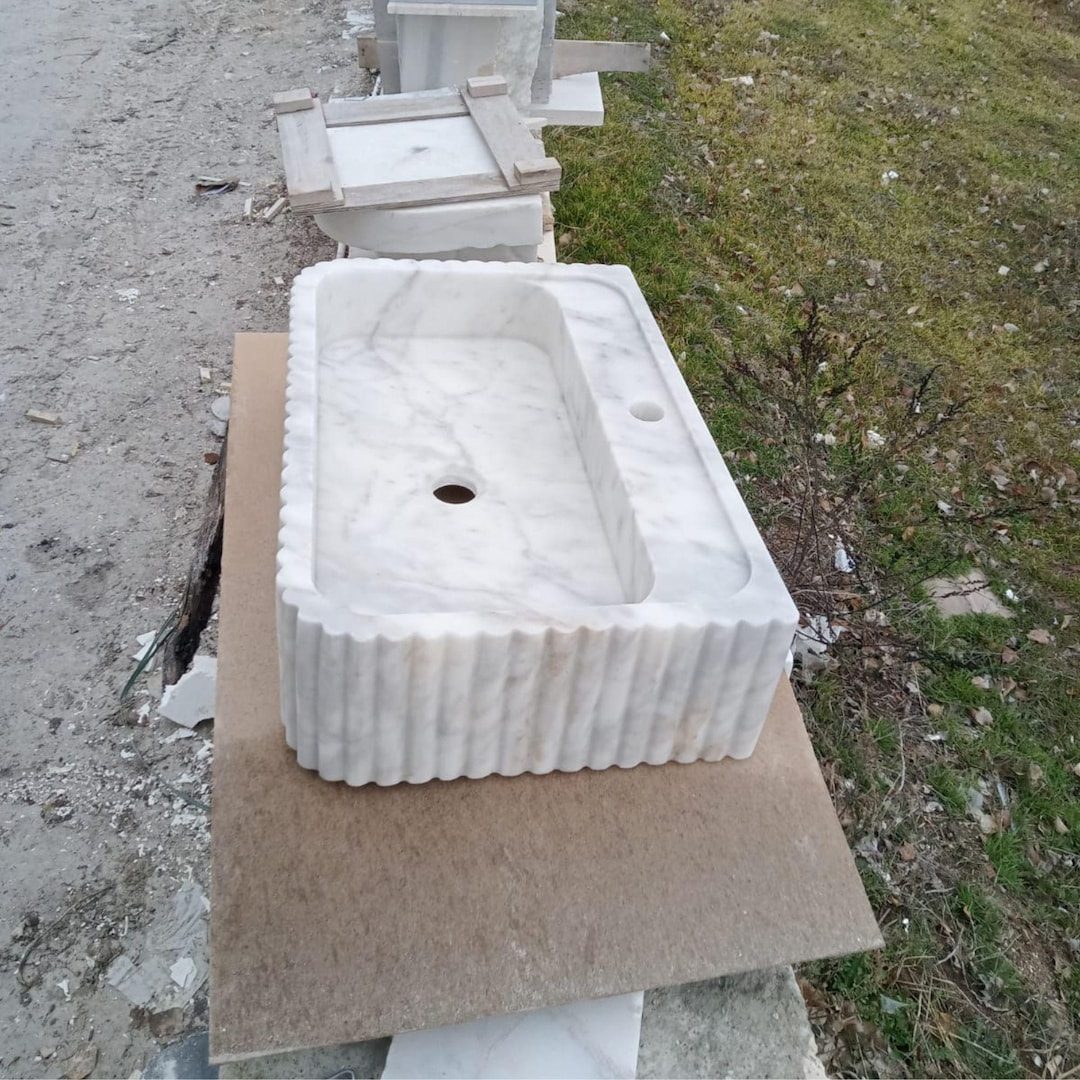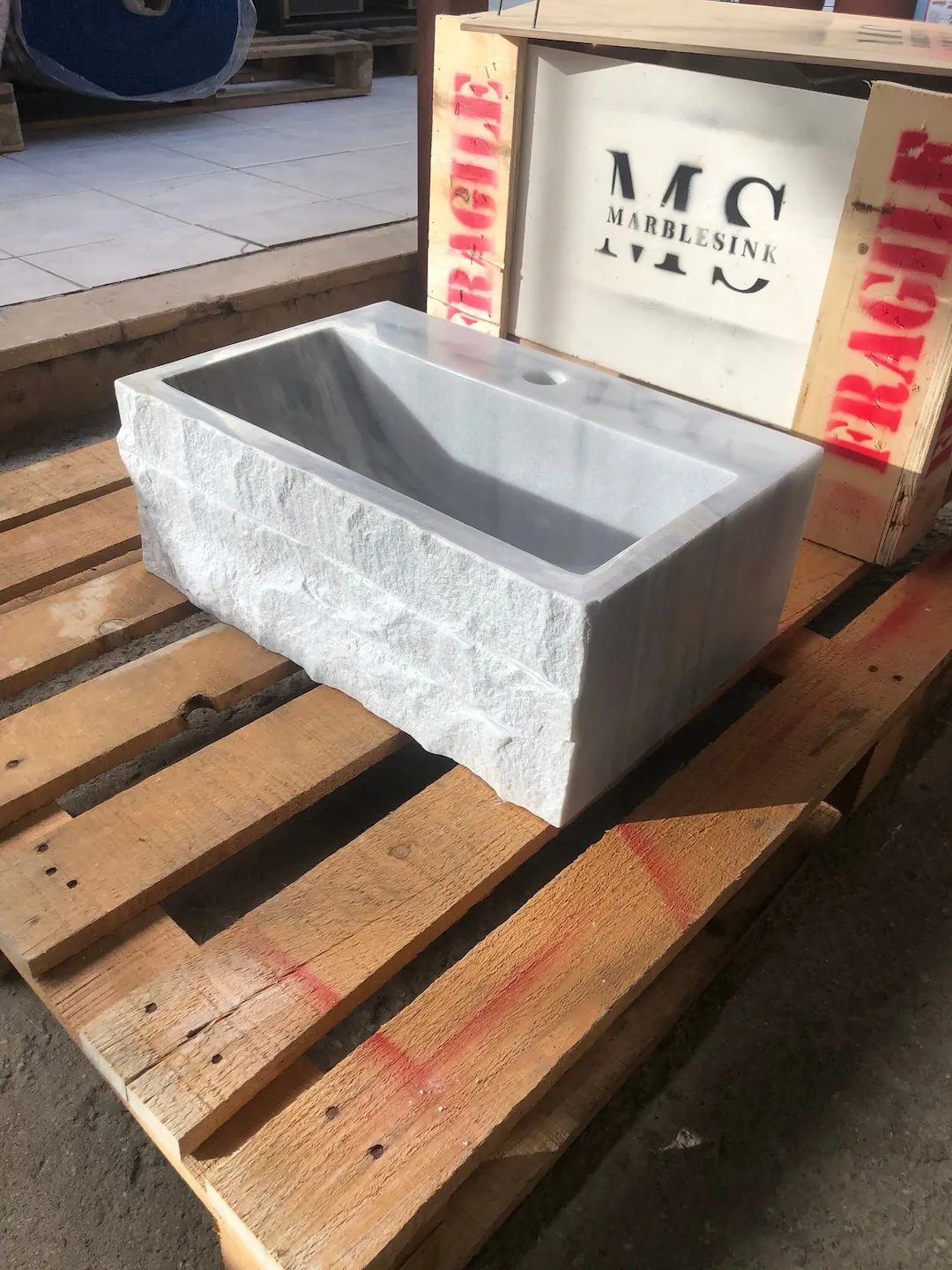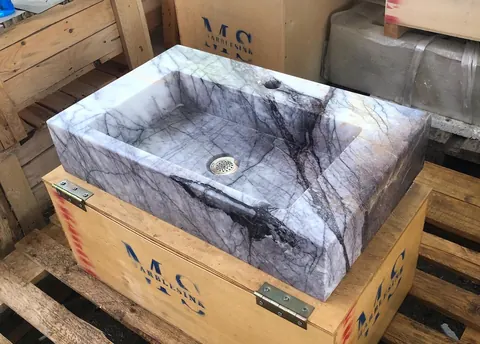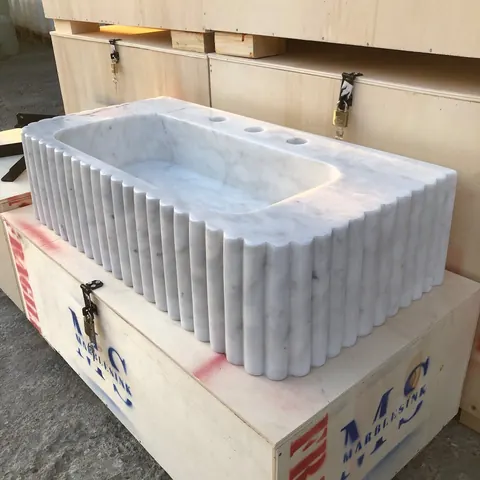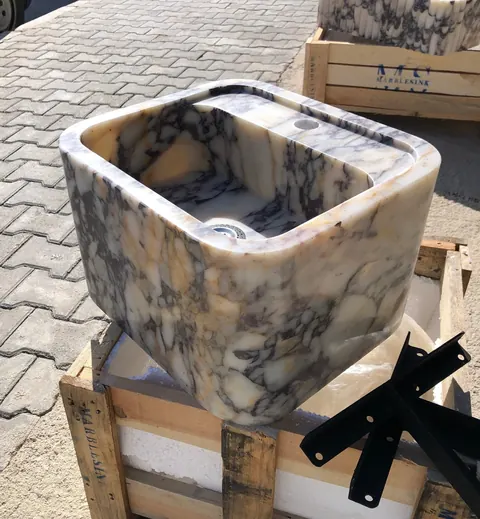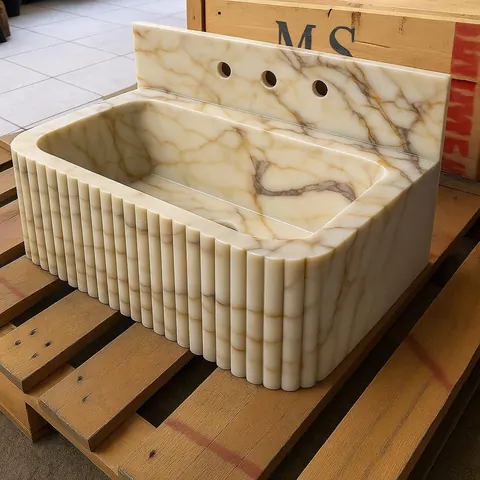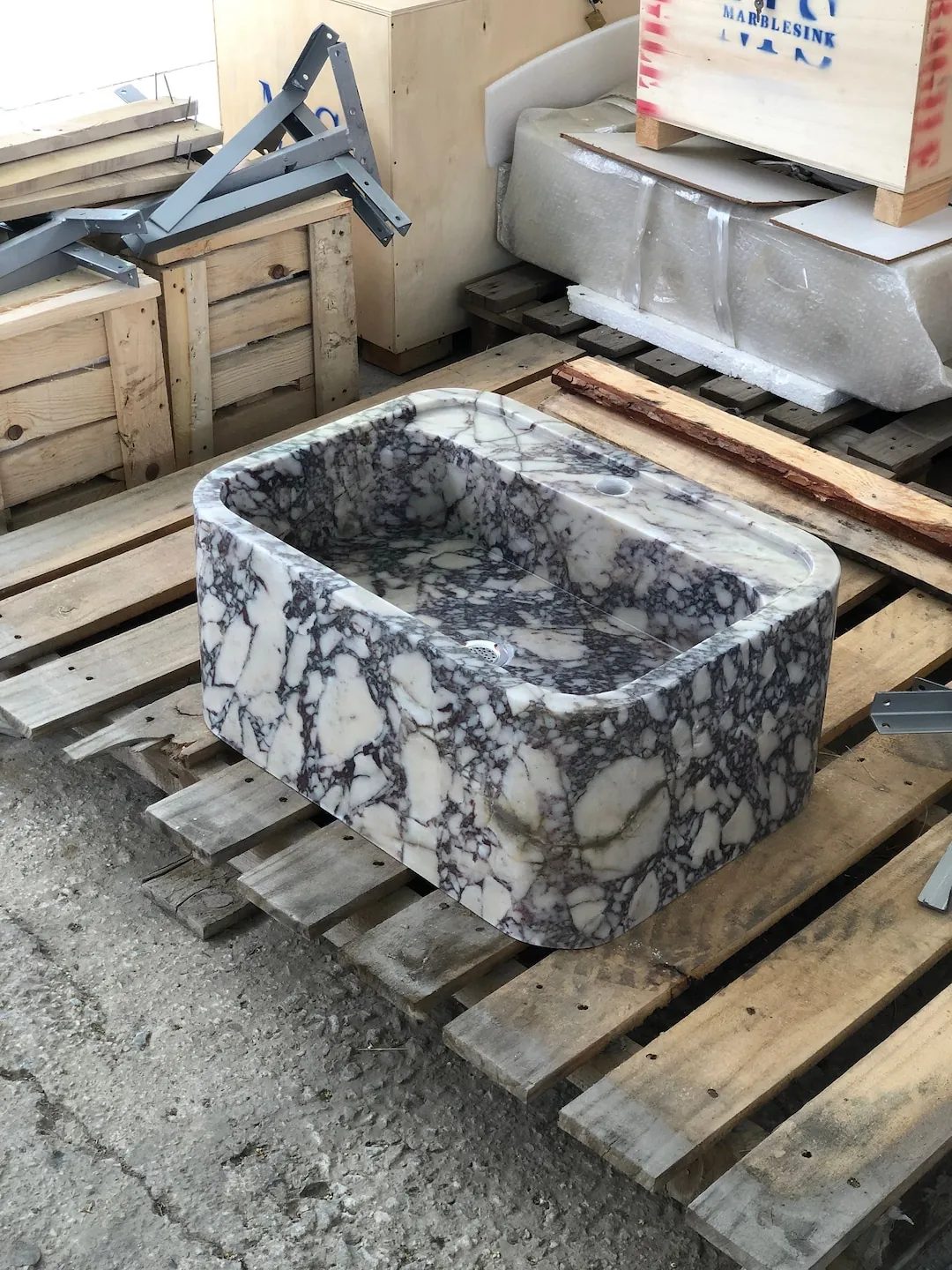
This post compares a carved marble sink with acrylic and other resin-based sinks. The short, sourced answers are on natural stone vs solid surface sink and natural marble vs cultured marble sink.
A resin-based sink is the lower-upkeep choice: liquids cannot penetrate solid surface, it needs no sealer and scratches can be sanded out. A marble sink is real stone carved from one block, with veining that differs in every piece, but acids etch it and it is sealed about once a year. MarbleSinkCo marble sinks start at $727.
What is an acrylic sink?
A sink sold as acrylic is a manufactured, resin-based product, not quarried stone. A CompositesWorld overview of cast polymers describes two families:
- Solid surface is polyester or acrylic resin with 50 to 65 percent mineral filler and no gel coat. It is the same material all the way through.
- Cultured marble is polyester resin filled about 75 to 78 percent with calcium carbonate or alumina trihydrate, under a surface gel coat.
Ask the seller which of these a sink is, because care and repair differ.
How do marble and acrylic sinks compare?
The solid surface column below follows the maker care guides cited on the natural stone vs solid surface page.
| Marble sink | Solid surface sink (acrylic or polyester resin) | |
|---|---|---|
| Material | One block of quarried stone, mainly calcite | Resin with 50 to 65% mineral filler |
| Pattern | Natural veining, different in every piece | Solid colors or a manufactured granite effect |
| Liquids | Absorbs up to 0.20% under ASTM C503; sealed about once a year | Liquids cannot penetrate; the maker’s care guide has no sealing step |
| Cleaners | pH-neutral only; vinegar and limescale remover etch the surface | Avoid strong chemicals such as paint remover and oven cleaner |
| Scratches | Honed out by a stone restorer | Sanded out with abrasive pads |
| Heat | No resin binder | Trivets or hot pads under hot objects |
| Weight | Heavy: at least 162 lb per cubic foot (2,590 kg/m3) under ASTM C503 | Depends on the product; ask the maker |
What does each cost?
We publish only our own prices. MarbleSinkCo marble sinks start at $727 in the smallest size and most cost $900 to $3,000, with a median starting price of $1,196 in the stone sink price index. One example is the Calacatta wall-mounted marble sink, from $1,012 in the smallest size. Prices of acrylic and solid surface sinks depend on the maker and the model, so compare current listings.
Which should you choose?
Choose a solid surface sink when upkeep must be close to zero and the look should be plain and uniform, as in a family bathroom or a rental. Choose marble when the material is the reason for the purchase: real rock, a pattern that is never repeated, and a basin carved to the width, drain position and tap holes of one room. The costs of marble are weight, a penetrating sealer about once a year and pH-neutral cleaning.
MarbleSinkCo carves stone sinks by hand to order in about 2 weeks and does not make acrylic or solid surface products. Pieces are ordered through the Etsy shop at https://marblesinkco.etsy.com. A made-to-order sink cannot be returned and carries no warranty.
Related
Frequently Asked Questions
Is acrylic a good material for a bathroom sink?+
A resin-based sink is a practical low-upkeep choice. Solid surface, which is acrylic or polyester resin with 50 to 65 percent mineral filler, does not let liquids penetrate, needs no sealer, and minor scratches can be sanded out. Its makers advise trivets or hot pads under hot objects. A marble sink needs pH-neutral cleaners and sealing about once a year.
Does acrylic look like marble?+
Not closely. Solid surface comes in solid colors or a manufactured granite effect, and cultured marble is pigmented resin and filler under a gel coat. Natural marble is quarried rock whose veining never repeats and runs through the full thickness of the stone. A repeated or surface-only pattern points to a manufactured product.
Can a scratched acrylic or marble sink be repaired?+
Both can. Solid surface is the same material all the way through, so minor cuts and scratches can be sanded out with abrasive pads. Marble is solid stone throughout, so a stone restorer can hone out etch marks and fine scratches. Cultured marble is different: its surface is a gel coat over the resin and filler.
Share this article