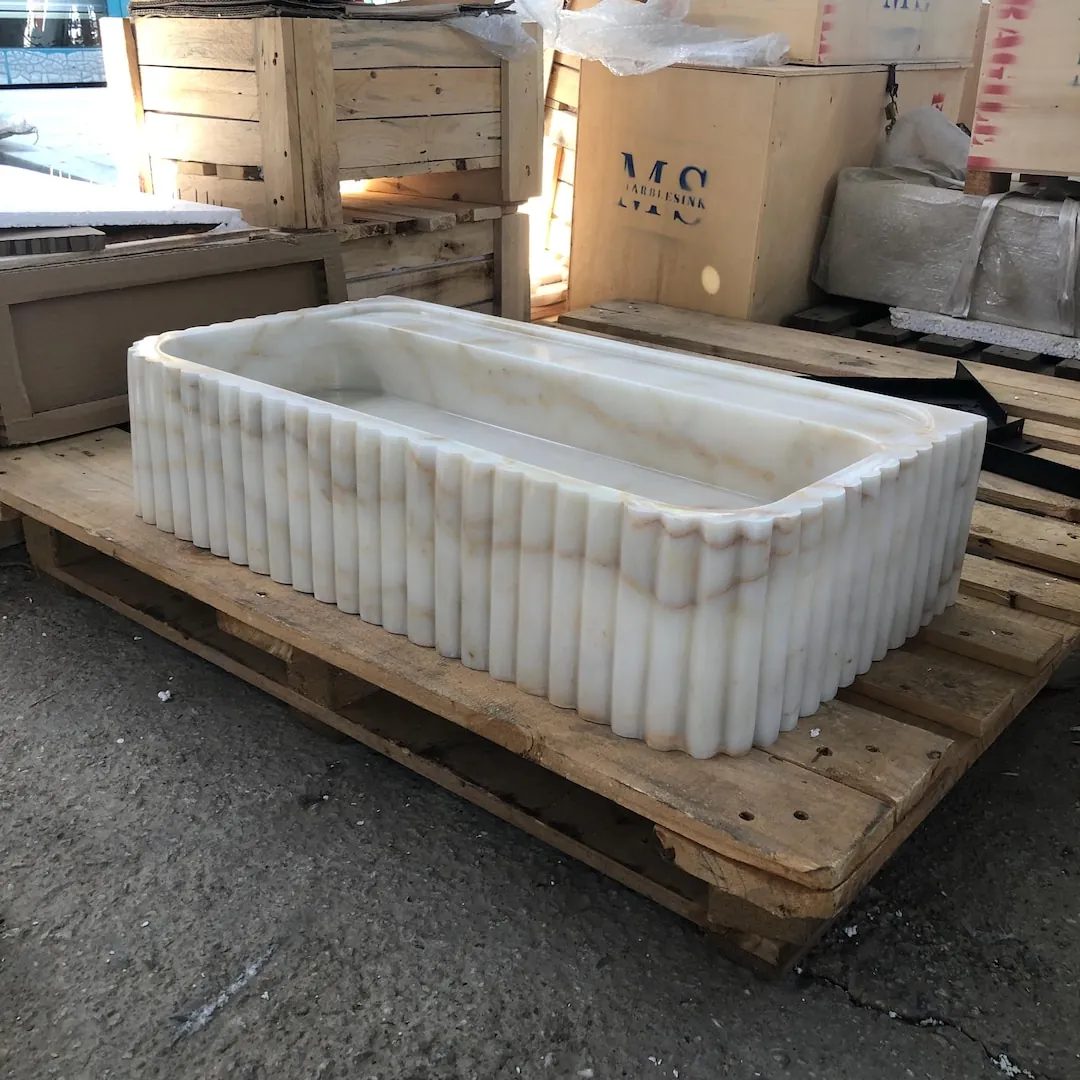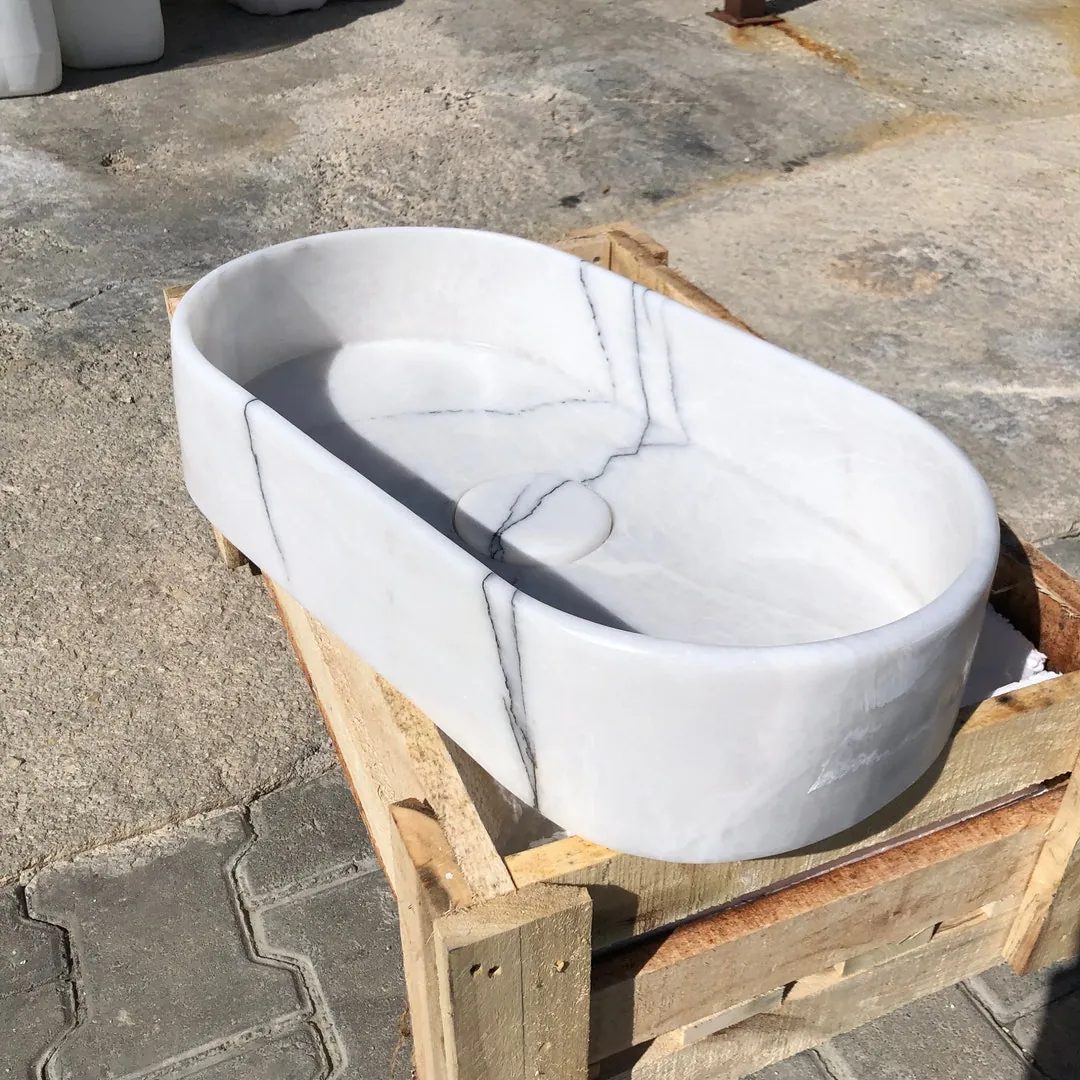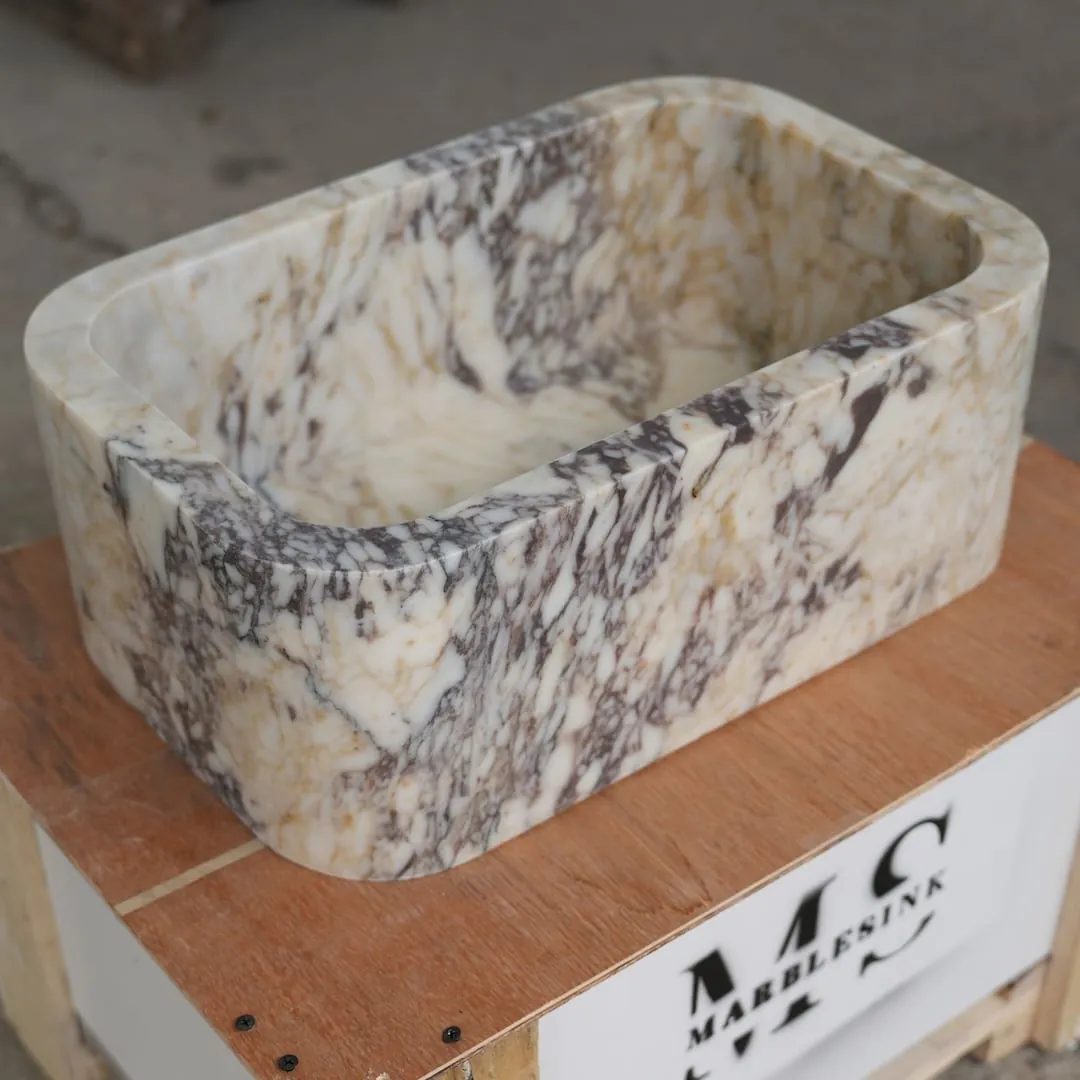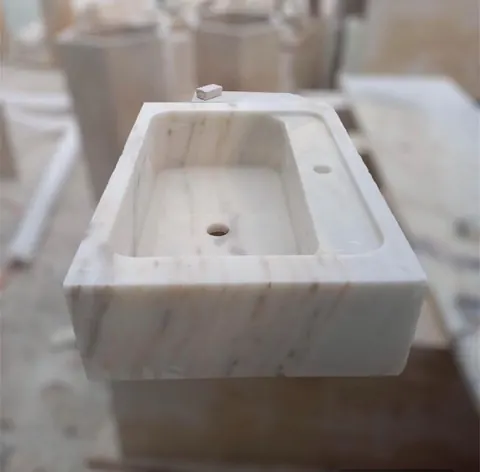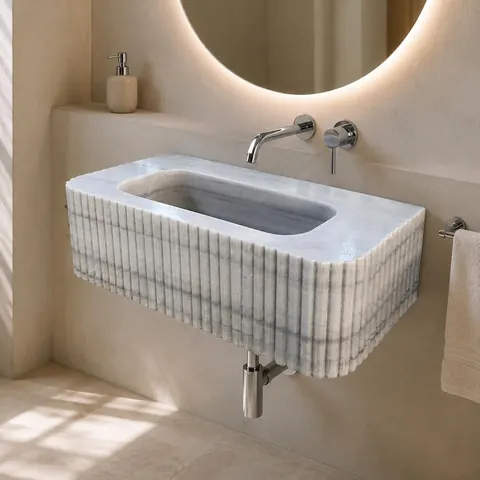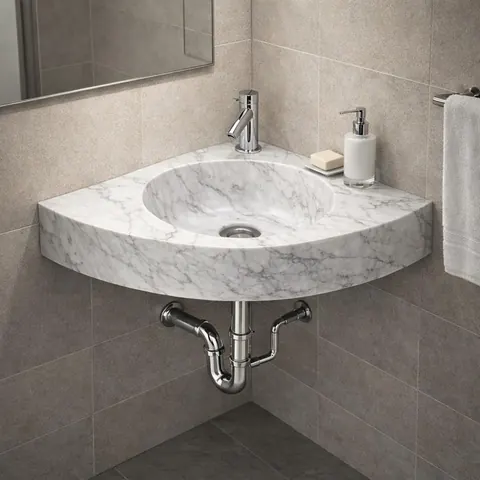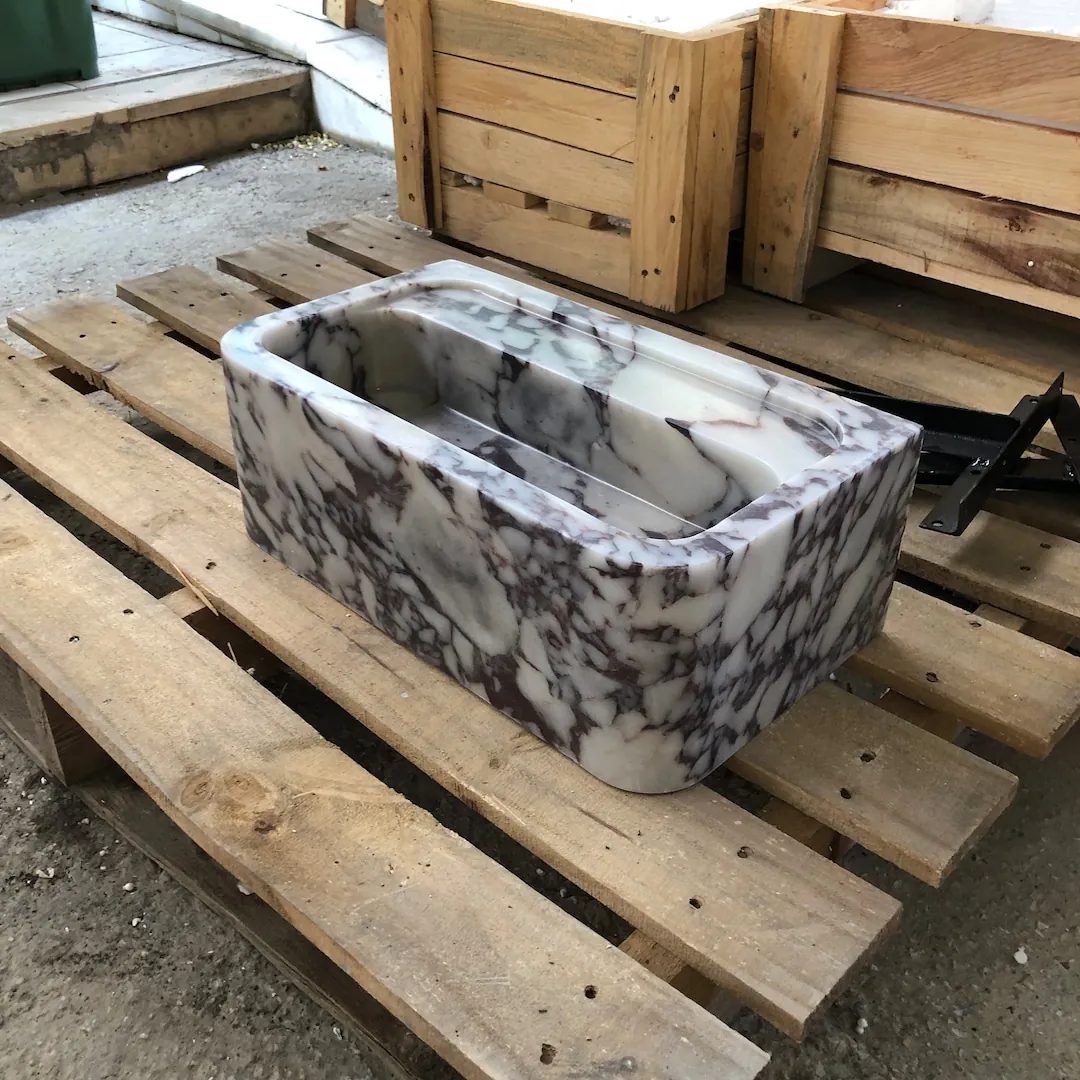
For most bathrooms, ceramic is the more practical sink: its glaze needs no sealer and tolerates most bathroom cleaners, and it is lighter and wins on price. A marble sink is etched by acids, needs sealing about once a year and is much heavier, from $727 hand-carved. Marble offers solid natural stone with a unique pattern, sizes made to order and a surface that can be honed back. The short, sourced answer is on marble sink vs porcelain sink.
Choose ceramic for low upkeep and low cost, and marble if you want the material and accept the care.
How do marble and ceramic sinks compare?
| Marble sink | Ceramic or porcelain sink | |
|---|---|---|
| Material | Solid natural stone carved from one block | Fired vitreous china with a glass-like glaze |
| Cleaners | pH-neutral cleaner or mild dish soap only | Most non-abrasive bathroom cleaners |
| Acids | Vinegar and limescale remover etch the surface | The glaze is not calcite and does not etch this way |
| Sealing | Penetrating sealer about once a year | None |
| Surface damage | Etch marks and fine scratches can be honed out. Chips can be filled and refinished | A chip in the glaze cannot be honed out |
| Weight | Heavy: at least 162 lb per cubic foot (2,590 kg/m3) under ASTM C503. Ask the maker for the weight | Lighter, thin-walled |
| Sizes and custom options | Size, drain position, tap holes and finish made to order | Catalog sizes |
| Overflow | Most carved stone sinks have none | Depends on the model |
| Cost | Hand-carved sinks at MarbleSinkCo from $727, most $900 to $3,000 | Wins on price; depends on brand and model |
Marble vs porcelain sink: are ceramic and porcelain the same?
In sinks, ceramic and porcelain are close relatives, so the comparison with marble comes out the same. A porcelain bathroom sink is vitreous china: a dense fired ceramic finished with a glass-like glaze.
The glaze is what makes these sinks practical. A glazed sink is never sealed, and it tolerates most non-abrasive bathroom cleaners.
Is a marble sink better than ceramic?
On practical measures, no. Ceramic is easier to clean, weighs less and wins on price. Marble is better on three points only:
- Material. A marble sink is solid stone through its full thickness, and no two pieces share the same veining.
- Size and shape. A carved sink can be made to a set width, depth, drain position and tap hole layout. Molded ceramic comes in catalog sizes.
- Repair. Wear is in the stone itself, not in a thin coating, so the surface can be refinished.
Whether those points are worth the higher price is a personal call. The full list is in our guide to marble sink pros and cons.
How does each sink age: scratches, chips and stains?
A ceramic sink keeps its glazed surface until the glaze is damaged. A marble sink changes gradually and can be brought back.
Ceramic. The glaze does not etch with acids as calcite does. The weak point is the glaze itself: a chip in the glaze cannot be honed out.
Marble. Marble is made mainly of calcite, so acids dissolve a thin layer of the surface and leave a dull spot called an etch. Vinegar, citrus and limescale removers all do this, and sealer does not prevent it. Grit and abrasive pads scratch marble, and unsealed stone can absorb hair dye, oil and makeup.
Etch marks and fine scratches can be honed out, because marble is solid stone all the way through. The steps are on how to remove etch marks from polished marble. Honed marble hides wear better than polished, which is why it is the more forgiving choice for a sink that gets daily use. A hard knock can chip a rim or corner, and cracks usually come from an impact, poor support or a sudden change of temperature.
What upkeep does marble need that ceramic does not?
Ceramic needs a wipe with an ordinary non-abrasive bathroom cleaner. Marble needs a short routine:
- Rinse the bowl after use and wipe it dry, so toothpaste and soap do not sit on the stone.
- Clean with a pH-neutral stone cleaner or mild dish soap and a soft cloth.
- Keep vinegar, citrus cleaners, limescale removers and abrasive powders away from it.
- Wipe up hair dye, makeup and oil at once.
- Every few months, put a few drops of water on the dry stone. If the stone darkens under the drops within five to ten minutes, reseal.
- Apply a penetrating sealer about once a year. The method is in our guide to sealing a marble sink.
In hard-water areas this matters more. The acid limescale removers that are used on other sinks will etch marble.
Is a marble sink harder to install than ceramic?
Yes. A ceramic basin is lighter and thin-walled, so it is easier to fit.
Marble weighs roughly 160 to 170 lb per cubic foot. As an estimate from that density, a compact vessel bowl weighs 25 to 50 lb (11 to 23 kg) and a mid-size rectangular basin 60 to 100 lb (27 to 45 kg), so a marble sink needs real support:
- A vanity must be solid and level.
- A wall-mounted stone sink must be fixed into solid blocking or masonry, never drywall anchors.
- Brackets are a separate purchase. MarbleSinkCo steel brackets are sold separately, from $138.
- Most carved stone sinks have no overflow, so they need a drain made for sinks without one.
These are estimates, not product weights, so ask the maker for the weight of the piece. Weight estimates by size are in the guide to stone sink weight and wall support.
How much more does a marble sink cost than ceramic?
Porcelain wins on price, and a hand-carved marble sink costs more. We publish only our own prices:
- Hand-carved, made-to-order marble sink: MarbleSinkCo sinks start at $727 for the smallest size, and most cost $900 to $3,000. The median starting price in the stone sink price index is $1,196. Shipping is free by insured express courier.
- Ceramic or porcelain basin: depends on the brand and the model, so compare current listings.
Buying terms differ too. A catalog ceramic sink is bought from stock on the retailer’s and maker’s terms. A made-to-order stone sink takes about 2 weeks to produce, and ours cannot be returned and carry no warranty. Measure twice before you order. What drives stone prices is covered in how much a marble sink costs.
Who should buy a ceramic sink?
Buy ceramic if any of these apply:
- The budget for the sink is below $727, the lowest MarbleSinkCo price.
- It is a children’s bathroom, a rental or a busy family bathroom.
- Hair dye, bleach cleaners or limescale removers are used at the sink.
- Nobody in the house will wipe a sink dry or reseal it.
- The wall cannot be opened to add blocking for a heavy fixture.
- You need the sink this week, or want the option to return it.
There is nothing second-rate about the choice.
Who should buy a marble sink?
Marble suits a powder room or a primary bathroom with careful users, a space that needs a size or shape no catalog offers, and an owner who likes natural stone enough to accept a surface that slowly changes. If that is you, compare stones and mounting types in our marble sinks range, or start with Carrara marble, Calacatta marble and travertine. MarbleSinkCo pieces are carved by hand to order and are ordered through the MarbleSinkCo Etsy shop at https://marblesinkco.etsy.com.
Frequently Asked Questions
Is a marble sink better than ceramic?+
A marble sink is not better than ceramic on practical measures. A ceramic or porcelain sink has a glass-like glaze that needs no sealer and tolerates most bathroom cleaners, and it is lighter and wins on price. A marble sink is better only if you value solid natural stone, a veining pattern no other sink has, custom sizing and a surface that can be honed back when it marks.
What is the difference between a marble and a porcelain sink?+
A porcelain bathroom sink is vitreous china: a dense fired ceramic finished with a glass-like glaze, made in catalog sizes. A marble sink is carved from one block of natural stone. Marble is about 3 on the Mohs scale (calcite), absorbs a little water, is etched by acids and is much heavier, but it can be refinished and made to order in a custom size.
Do marble sinks stain or etch more easily than ceramic?+
Yes. Acids such as vinegar, citrus and limescale removers leave dull etch marks on marble, and unsealed marble can absorb hair dye, oil and makeup. The glaze of a ceramic sink is not calcite and does not etch this way. Sealing marble about once a year slows staining but does not stop etching. Etch marks can be honed out.
How much does a marble sink cost compared with a ceramic sink?+
A hand-carved marble sink costs more than a porcelain sink. We publish only our own prices: hand-carved, made-to-order marble sinks at MarbleSinkCo start at $727 in the smallest size, most cost $900 to $3,000, and the median starting price is $1,196. What a ceramic basin costs depends on the brand and the model.
Which is easier to repair, a marble sink or a ceramic sink?+
A marble sink is easier to repair. Marble is solid stone all the way through, so etch marks and fine scratches can be honed out, and a small chip can be filled with color-matched resin and refinished. On a ceramic sink the surface is a glaze, and a chip in the glaze cannot be honed out. We have no sourced lifespan figure for either material.
Is a marble sink heavier than a ceramic sink?+
Yes. Marble weighs roughly 160 to 170 lb per cubic foot and a carved sink is solid stone, while a ceramic basin is lighter and thin-walled. As an estimate from density, a compact marble vessel bowl weighs 25 to 50 lb and a mid-size basin 60 to 100 lb. A wall-mounted marble sink needs brackets fixed into solid blocking or masonry.
Share this article