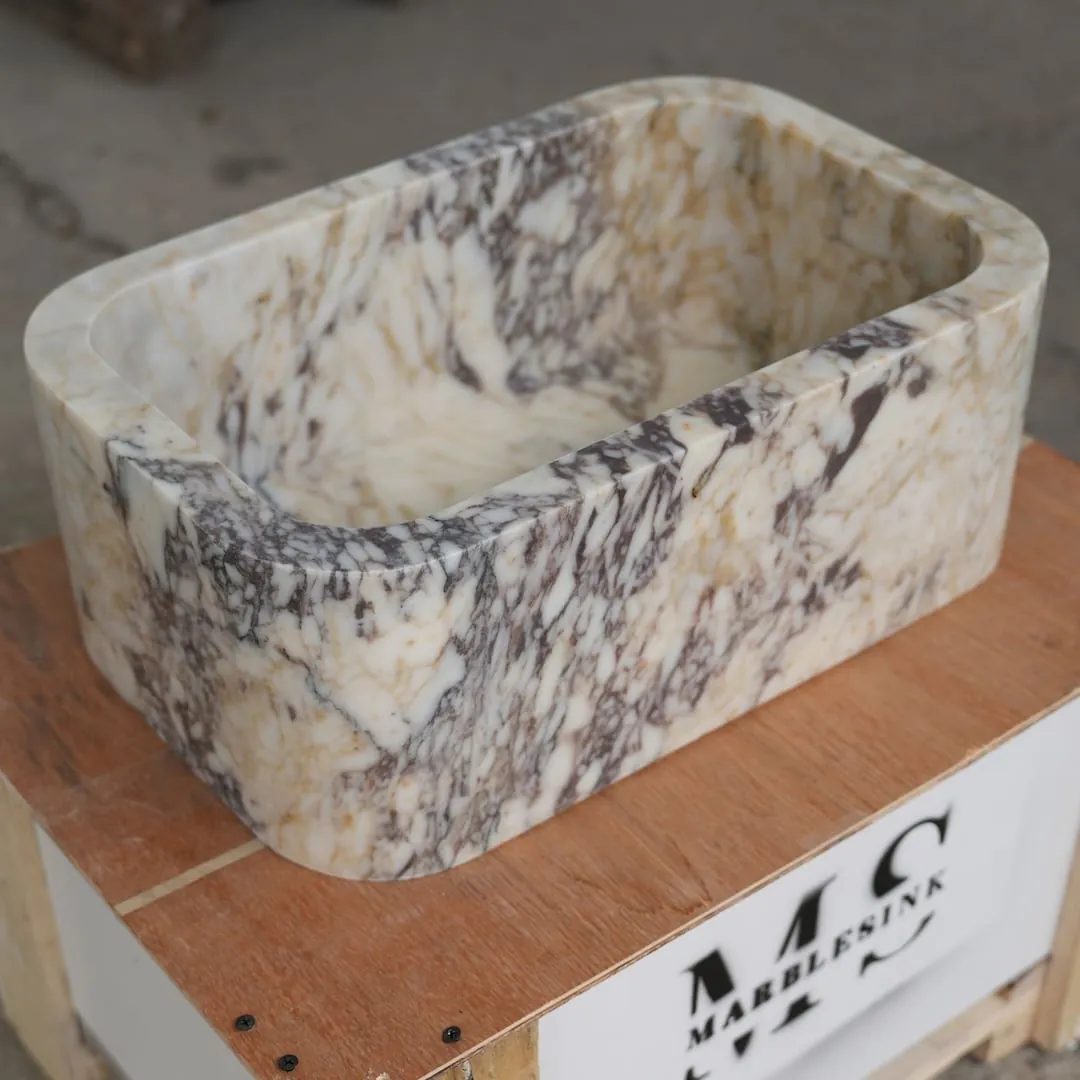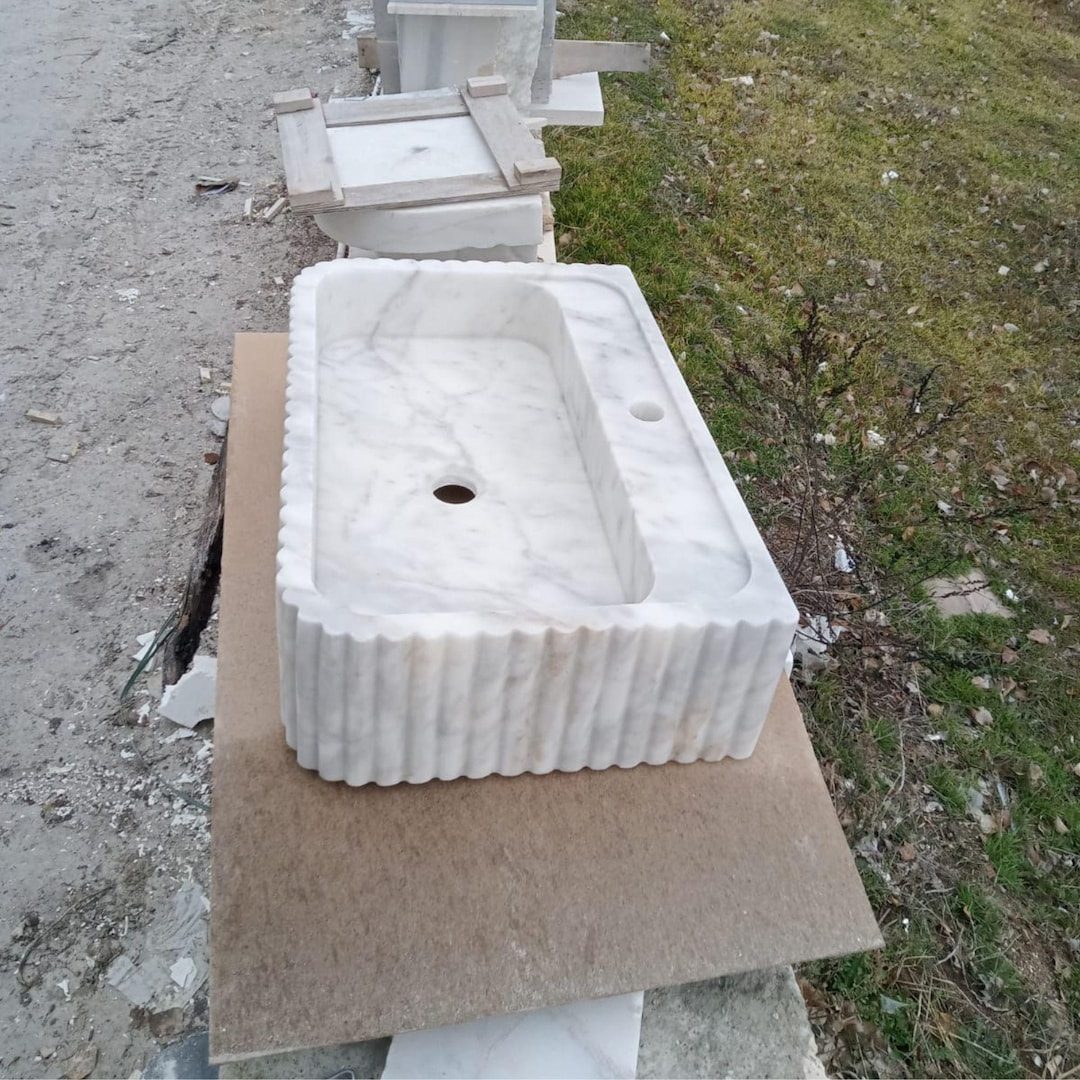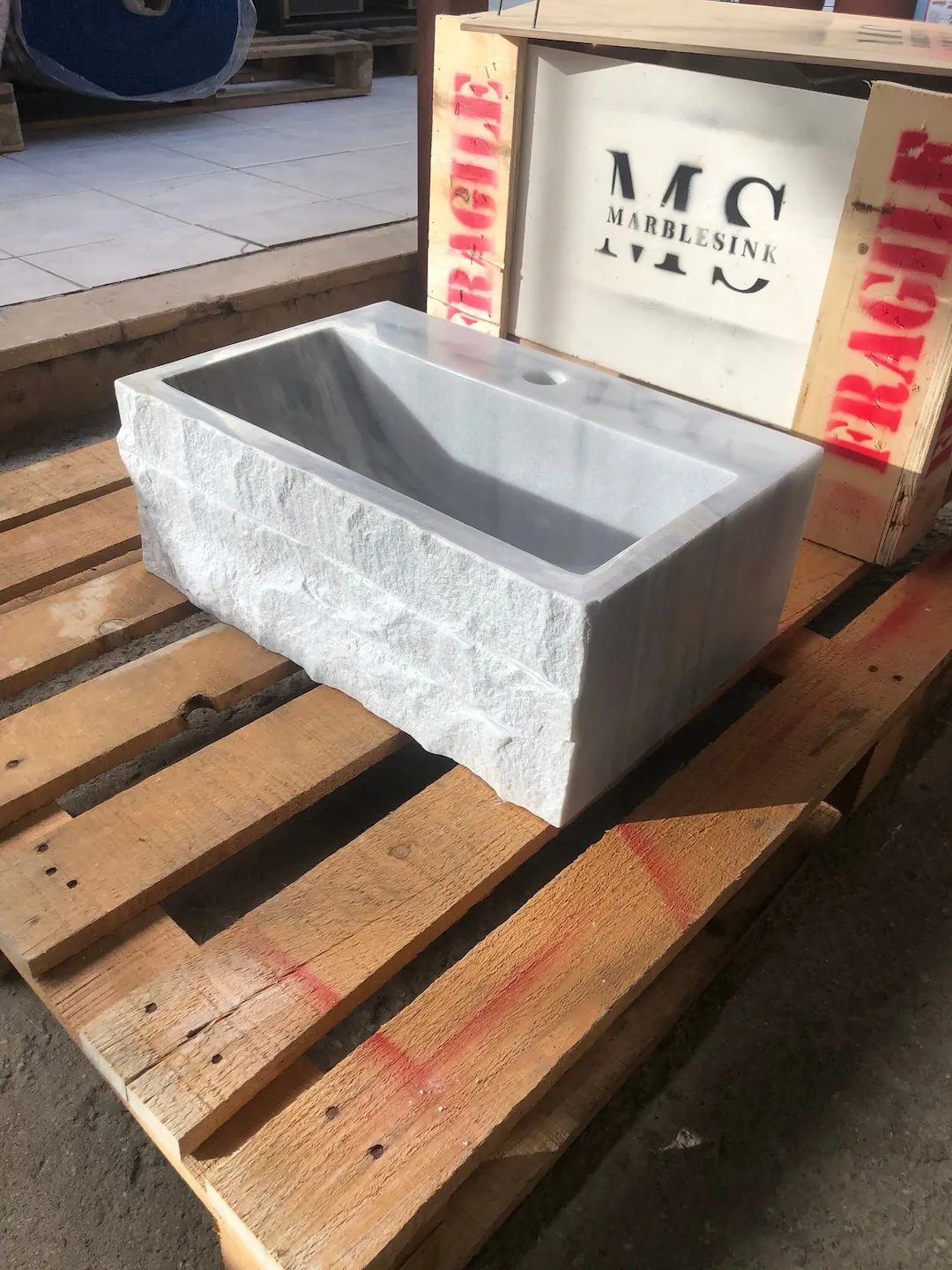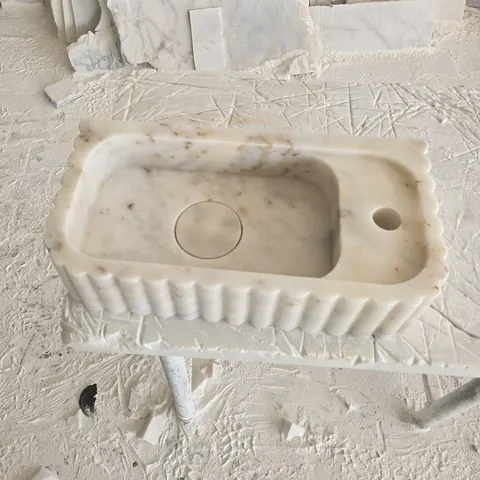
Most marble and stone sinks do not have an overflow. A bowl carved from a solid block has no hidden channel inside its wall, so there is nowhere for an overflow to run. That is normal and allowed in US homes, but you need a drain made for sinks without overflow, or it will leak.
What is a sink overflow?
An overflow is a small hole or slot near the rim of a basin, connected by a hidden channel to the drain body below the stopper. It does two jobs:
- It gives rising water a second way out. If the stopper is closed and the faucet is running, water enters the hole and runs down to the drain. Overflow openings are small, so they buy time and may not keep up with a fully open faucet.
- It lets air into the drain. When a full basin is released, air entering through the overflow helps the water leave faster.
Ceramic basins are cast in a mold, and the channel is formed inside the wall at the same time. That is why most drop-in and undermount porcelain sinks have one.
Do stone sinks have an overflow?
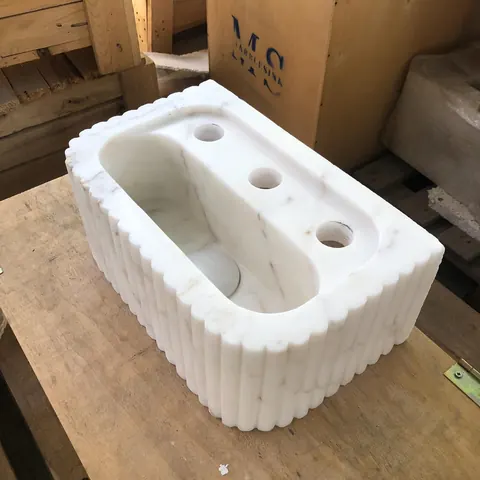
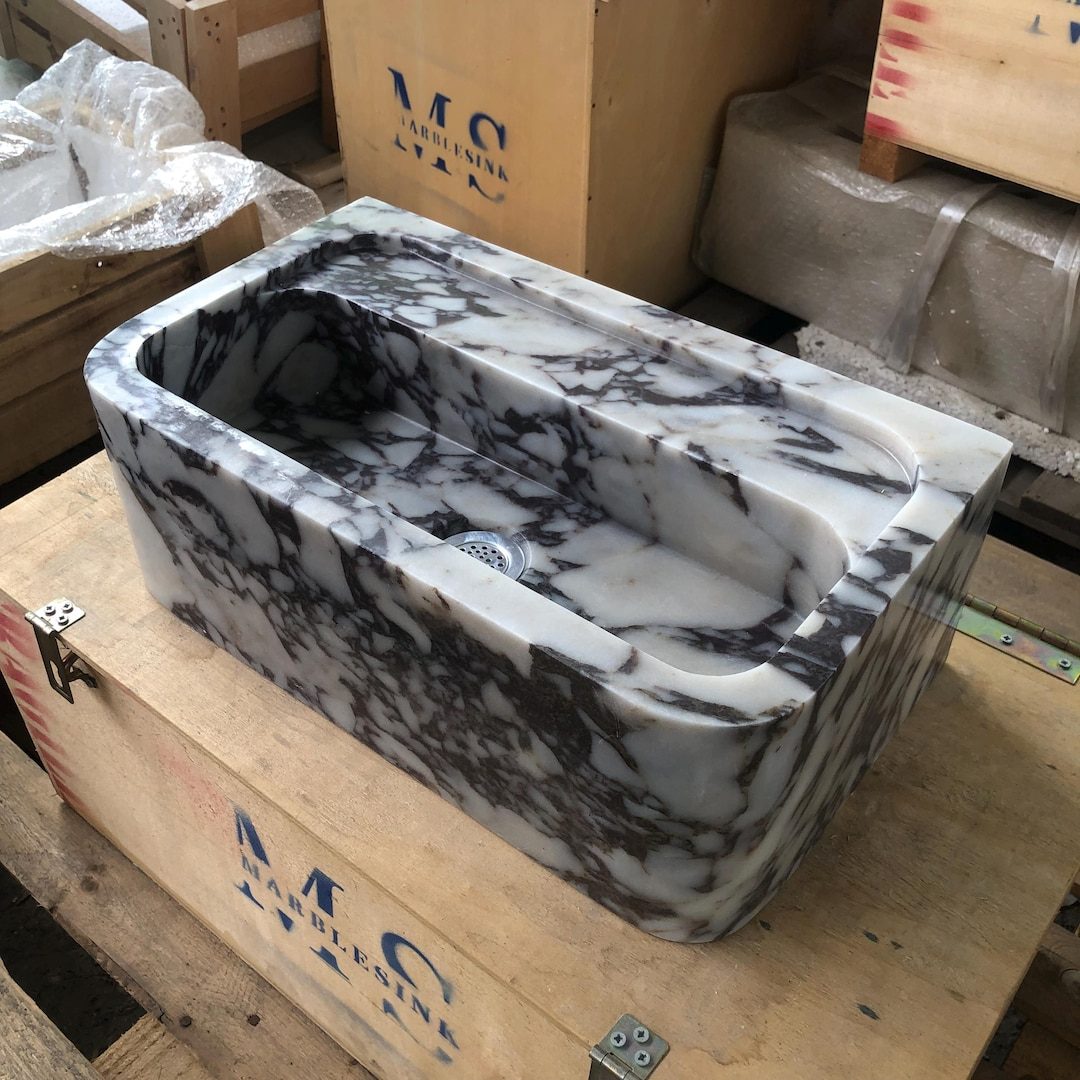
Usually not. A carved stone sink starts as a block, and the bowl is cut out of it. Adding an overflow would mean drilling a long, narrow passage through the wall from the rim to the drain hole. On most vessel bowls the wall is too thin and too curved for that, and the hole would be hard to clean.
| Sink type | Overflow? | Why |
|---|---|---|
| Cast ceramic drop-in or undermount | Almost always | Channel is molded into the wall |
| Ceramic or glass vessel | Often not | Many have a thin single wall |
| Carved marble or travertine vessel | Usually not | Solid wall, no channel |
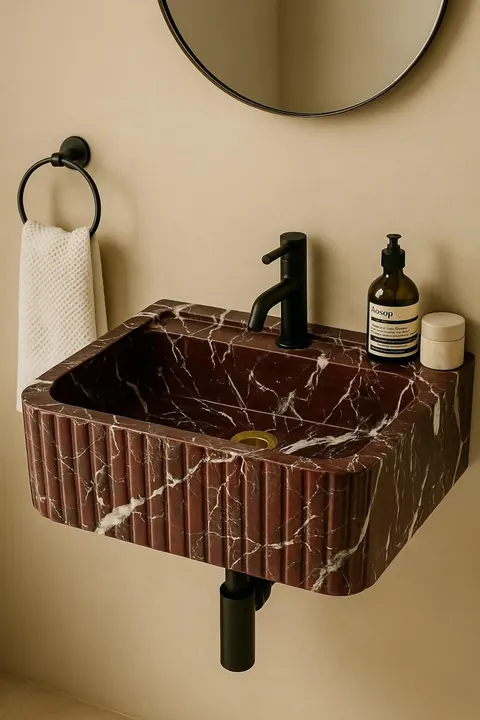
| Carved stone wall-mounted basin | Usually not | Solid block; a few thick-walled designs are drilled |
| Cast or composite “stone” basin | Sometimes | Can be molded like ceramic |
To check a sink, look inside the bowl just below the rim, usually on the faucet side. No hole means no overflow. If you are buying online, ask the seller in writing.
Which drain do you need for a sink without overflow?
Bathroom sink drains are sold in two versions that look the same from above.
- With overflow. The drain body has slots or holes in its side, just below the flange. In a ceramic sink these line up with the overflow channel.
- Without overflow. The drain body is a solid tube.
Fit an overflow drain to a stone sink and the slots end up inside the drain hole or below the bowl, with nothing around them. Every time the sink drains, some water can pass out through the slots, run around the threads and drip under the sink. On a vessel sink that means water between the bowl and the countertop and inside the cabinet. On a wall-mounted basin it drips down the trap and onto the floor.
The fix is to return the drain and buy one marked “without overflow”. Sealant packed around the slots is not a repair.
Grid, pop-up or click-clack: drain types for a sink without overflow
All of these are available with a solid body.
| Drain type | Closes? | Good for | Watch for |
|---|---|---|---|
| Grid (strainer) drain | No, always open | Powder rooms, guest baths, homes with children, rentals | You cannot fill the bowl |
| Push pop-up, also sold as click-clack | Yes, press the cap | Main bathrooms where you want to hold water | Nothing stops a flood if the faucet is left on |
| Lift-and-turn | Yes, twist the cap | Simple mechanism with few parts | Slower to operate with wet hands |
| Lever pop-up with lift rod | Yes, rod behind the faucet | Deck faucets that come with a rod | The rod and pivot arm rarely suit vessel or wall-mounted stone sinks |
A sink without overflow can drain slightly slower, because air has to escape past the water. A grid drain or a pop-up with a wide opening helps.
For a wider comparison, including finishes and traps, see the stone sink drain guide.
What drain hole size and stone thickness should you check?
US lavatory drains use a 1-1/4 in tailpiece, and most sink drain holes are about 1-3/4 in (45 mm) across. Hand-carved sinks are not always drilled to that size, so do not assume.
Thickness matters as much as diameter. Ceramic is thin at the drain. Stone is much thicker, and on a vessel sink the drain has to pass through the bowl and the countertop below it. The threaded body must clear both and still leave room for the gasket, washer and nut.
Before you buy a drain:
- Check the bowl for an overflow hole near the rim.
- Ask the seller for the drain hole diameter of that specific sink.
- Ask for the stone thickness at the drain. For a vessel sink, add the countertop thickness.
- Compare the total with the threaded length or maximum deck thickness listed by the drain maker.
- Choose grid or pop-up, then the finish to match the faucet.
- Buy 100% silicone or a putty labeled stain-free for stone. Standard oil-based plumber’s putty can leave a dark ring in marble.
Drain fittings are not included with MarbleSinkCo sinks. Pieces are ordered through the MarbleSinkCo Etsy shop, so message the shop there for the hole size and thickness of your piece before ordering a drain. Because each sink is carved to order, a different drain position can be requested at that stage. The faucet holes, drain and plumbing guide lists what to send.
Do plumbing codes require an overflow on a bathroom sink?
Generally no. The two model plumbing codes that most US states base their rules on, the International Plumbing Code and the Uniform Plumbing Code, do not require a lavatory to have an overflow. They regulate how an overflow must drain where a sink has one.
States, counties and cities adopt these codes with their own amendments, and commercial or multi-family projects can carry extra requirements from the owner or insurer. If the work needs a permit, ask the plumber or the local building department before the sink is ordered. The guide to plumbing for a stone sink covers rough-in and trap sizes.
Will a sink without overflow flood?
A sink without overflow floods in one situation: the faucet runs while the stopper is closed or the drain is blocked. Federal rules limit US bathroom faucets to 2.2 gallons per minute, and many current models deliver 1.2 to 1.5. At those rates a bowl that holds 2 gallons fills in roughly one to two minutes.
Simple ways to lower the risk:
- Fit a grid drain where children, guests or tenants use the sink.
- With a pop-up, stay at the sink while the bowl is filling.
- Clear hair and soap from the drain every few weeks so it never runs slow.
- Choose a faucet with a moderate flow rate.
- Do not use the bowl to soak laundry or to hold water unattended.
- In a vanity cabinet, a battery leak alarm on the cabinet floor gives an early warning of any drip, from the drain or the supply lines.
Should you avoid a stone sink because it has no overflow?
For most bathrooms, no. Vessel sinks in every material are commonly made without an overflow, and a correctly matched drain is watertight. The trade-off is that the sink does not protect you from a faucet left running. If that is a real concern in your household, a grid drain solves it for the price of not being able to fill the bowl.
Once the drain is chosen, the fitting steps are in the marble sink installation guide, and the vessel sink buying guide covers bowl size and faucet height.
Frequently Asked Questions
Do marble sinks have an overflow?+
Most do not. An overflow needs a hidden channel inside the wall of the basin, and a bowl carved from a solid block of marble has no such channel. A few stone sinks with thick rear walls are drilled for one. Look for a small hole or slot near the rim, or ask the seller before you buy a drain.
What drain do I need for a sink without overflow?+
Buy a lavatory drain sold as without overflow, sometimes labeled non-overflow or for vessel sinks. Its body is a solid tube with no slots in the side. It can be a grid drain that stays open or a push pop-up that closes. Check that the threaded body is long enough for the thickness of the stone.
Can I use a pop-up drain with overflow on a vessel sink?+
Not on a vessel sink that has no overflow hole. The slots in an overflow drain are designed to sit inside the overflow channel of a ceramic basin. With no channel, they open into the drain hole or the space below the bowl, and water can escape there and drip into the cabinet.
Is a sink overflow required by plumbing code?+
Generally not for bathroom sinks in US homes. The model plumbing codes used by most states allow lavatories without an overflow and only set rules for how an overflow must drain where one exists. States and cities adopt and amend these codes, so confirm with your local building department or plumber on permitted work.
Will a sink without overflow flood the bathroom?+
Only if the stopper is closed, or the drain is blocked, while the faucet is left running. Then the bowl fills and spills over the rim. A grid drain removes the risk from a closed stopper because it cannot be shut. Clear hair from the drain regularly so a slow clog does not create the same problem.
What size drain hole does a stone sink have?+
Most bathroom sinks sold for the US market have a drain hole about 1-3/4 in (45 mm) across, which takes a standard lavatory drain with a 1-1/4 in tailpiece. Hand-carved sinks are not always drilled to that size, so ask the seller for the hole diameter and the stone thickness at the drain.
Share this article