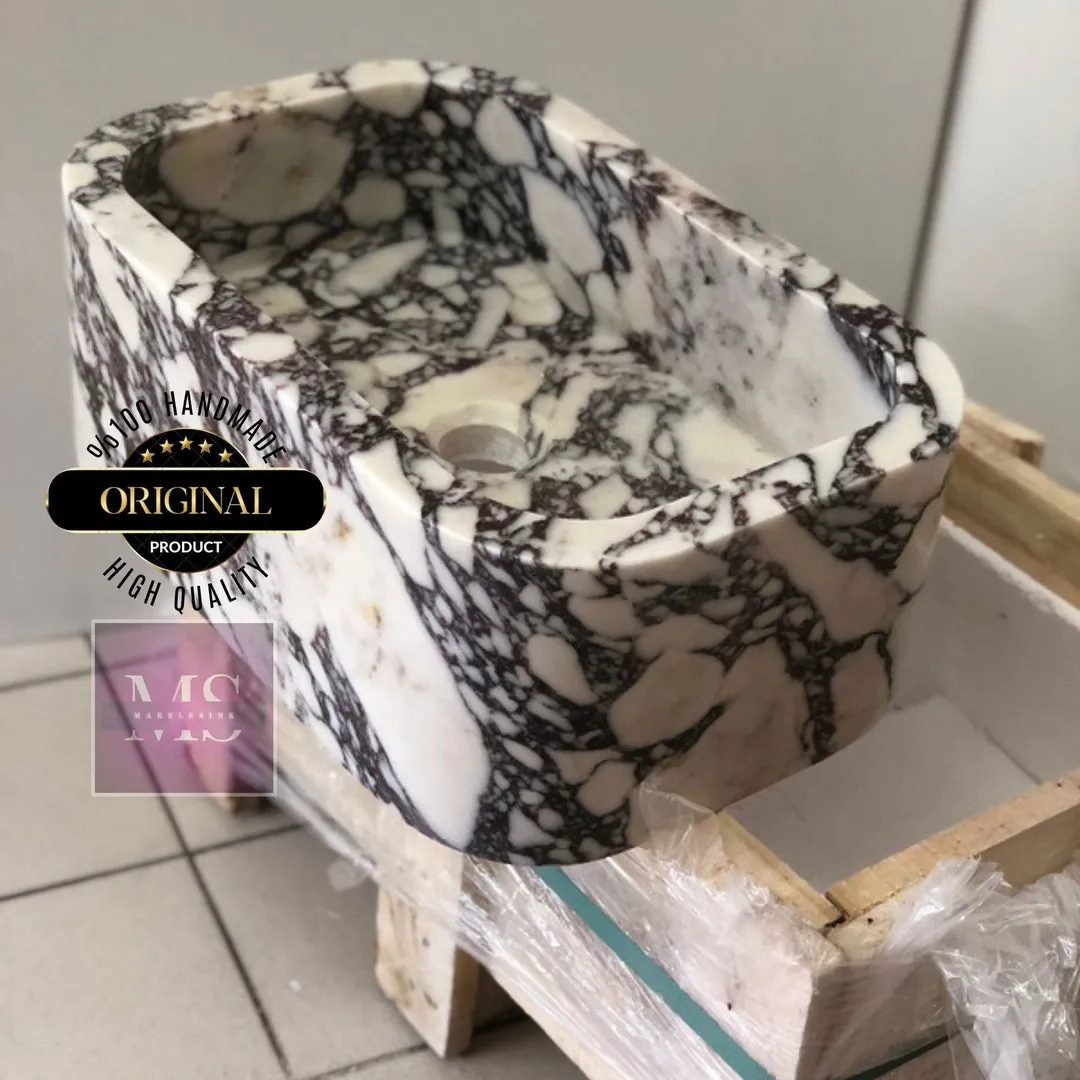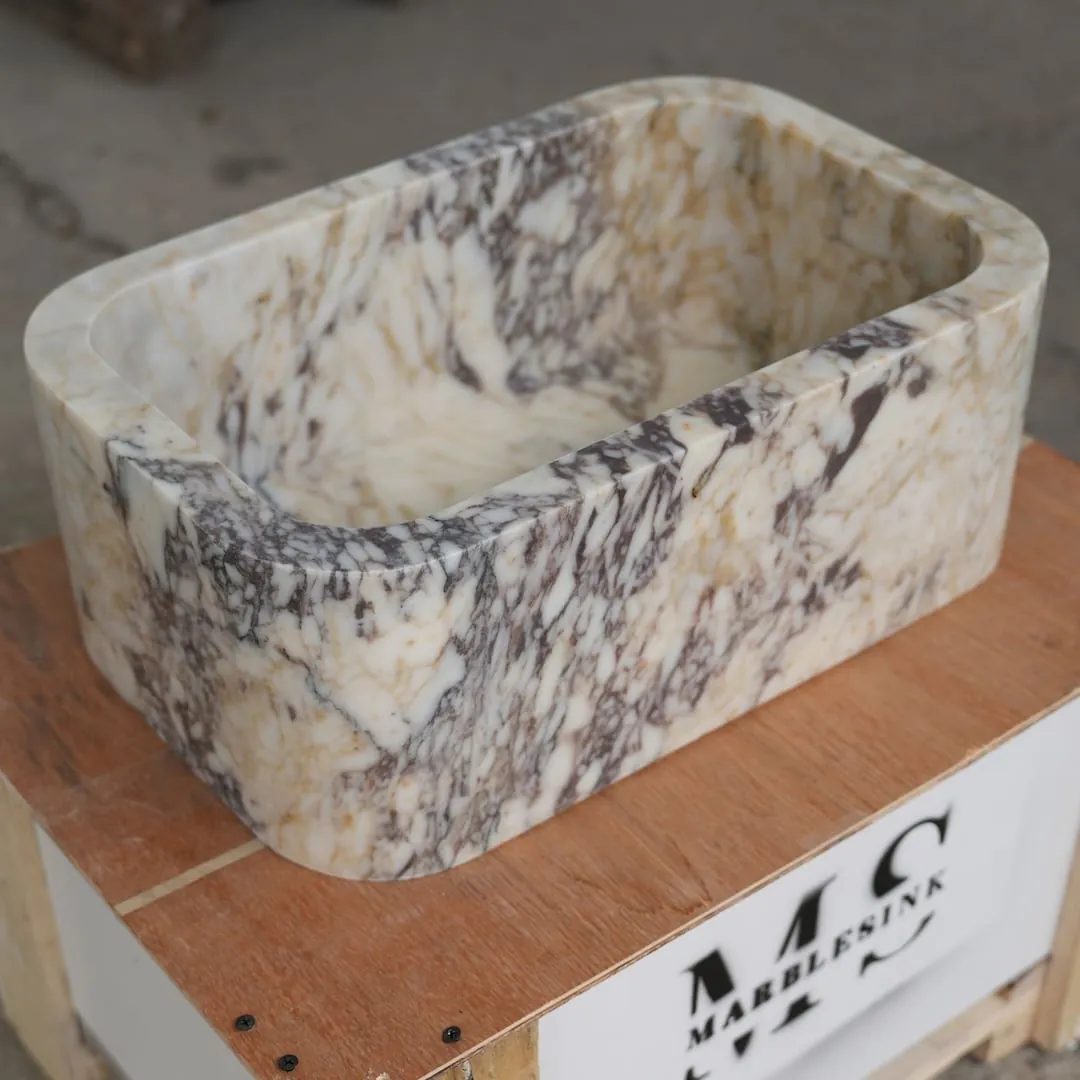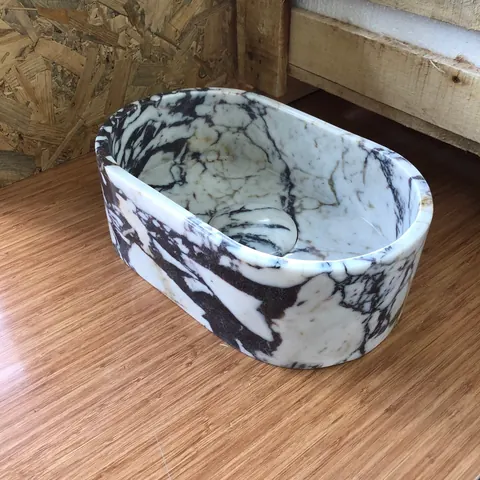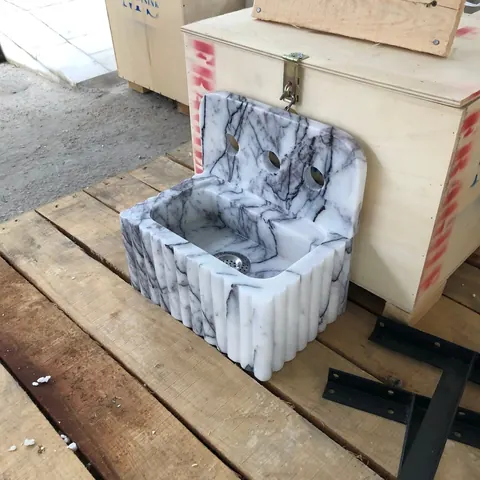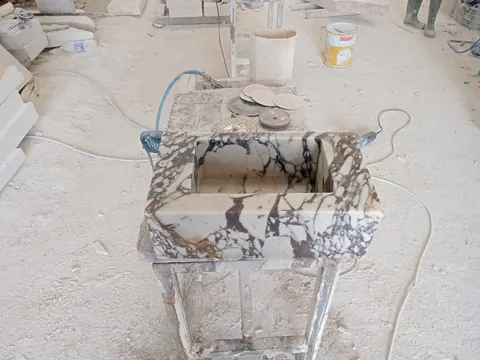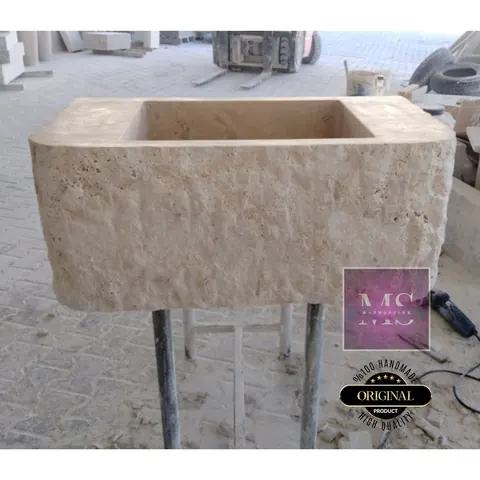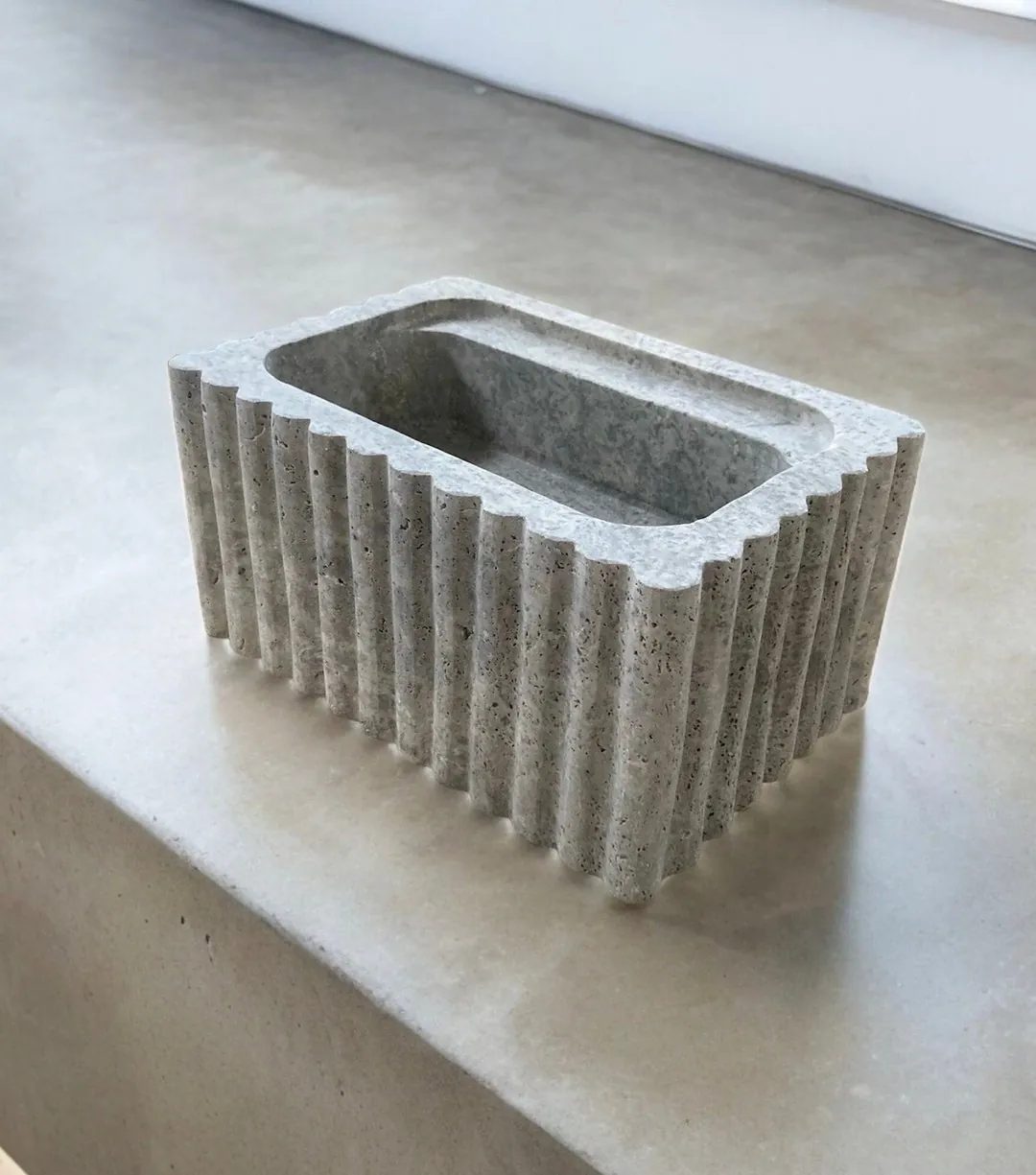
The most sustainable bathroom material is one you do not replace. Natural stone does well on that test: a solid marble or travertine sink can last for decades, contains no resin binder and can be re-honed when worn. Its costs are quarrying and heavy transport, so stone is a sound choice only when the piece is kept.
Why does lifespan matter most?
Every replacement means a new fixture made and shipped, and an old one thrown away. A sink that stays in place through several redecorations has a lower footprint per year of use than one that is swapped each time.
| Material | What limits its life | Can the surface be renewed? |
|---|---|---|
| Marble and travertine | Chips, cracks from poor support, neglect | Yes, by re-honing or re-polishing |
| Granite and basalt | Chips | Yes, though harder to work |
| Ceramic and porcelain | Chipped or crazed glaze, cracks | Rarely |
| Engineered quartz | Resin discoloration, heat damage | Limited |
| Acrylic and resin | Scratching, yellowing | Limited |
| Cultured marble | Worn gel coat, cracks | Limited |
These are general tendencies, not measured lifespans. Care and installation matter as much as the material.
Where does natural stone do well?
1. One natural material
Marble and travertine are quarried as blocks and carved into shape. The finished sink is stone and nothing else. Engineered quartz and cultured marble combine crushed stone or fillers with resin binders and pigments.
2. Repairable surface
Marble can be refinished: scratches honed out, stains drawn out with a poultice, the surface renewed. A worn stone sink rarely has to be thrown away.
3. Carved by hand
MarbleSinkCo sinks are carved by hand in Türkiye, without kilns or molds. Cutting and shaping stone still uses power tools and water, so this is a smaller process, not a zero-energy one.
4. Reusable at end of life
Old stone can be recut into smaller pieces or crushed for aggregate. Composite materials bound with resin are harder to reuse.
5. Made to order
MarbleSinkCo sinks are made to order, not produced in volume for warehouse stock. Each piece is carved after purchase, so nothing is made that is not wanted.
Where does natural stone fall short?
- Quarrying. Extracting stone uses energy and water and changes the landscape. Blocks with flaws become waste or lower-grade products.
- Transport. Stone is heavy. MarbleSinkCo ships worldwide by insured express courier, and long-distance transport of a heavy item has a real carbon cost.
- Care products. Stone needs a penetrating sealer about once a year.
- Fragility in the wrong setting. A chipped or cracked sink that has to be replaced loses the advantage of long life.
A locally made ceramic sink kept for a long time can be a better environmental choice than a stone sink replaced after a few years. The material alone does not decide it.
How do you buy a bathroom fixture for the long term?
1. Buy once
Choose a size, stone and shape you expect to keep. A neutral stone and a simple form date more slowly than a strong trend.
2. Choose materials that can be repaired
Natural stone, solid wood and solid metals can be refinished. Thin coatings and laminates usually cannot.
3. Get the installation right
Most stone sinks that fail do so through poor support or impact. Wall-mounted stone sinks need steel brackets fixed into studs or solid blocking. See the guide to stone sink weight and wall support.
4. Repair before replacing
Have etching and scratches honed out by a stone restorer before considering a new sink. The marble sink care guide covers the routine that prevents most damage.
5. Order only what fits
Made-to-order pieces cannot be returned, so confirm every dimension first. A sink that fits is a sink that stays.
Where to buy
MarbleSinkCo carves about 230 designs by hand to order, mostly marble and travertine sinks, and pieces are ordered through the MarbleSinkCo Etsy shop. Sinks start at $727 in the smallest size and most cost $900 to $3,000. See the marble sinks overview for the range.
Related Guides
Frequently Asked Questions
Is natural stone a sustainable bathroom material?+
Natural stone has real strengths: it is a single natural material with no resin binder, it can last for decades, and its surface can be re-honed instead of replaced. It also has costs. Quarrying uses energy and changes the landscape, and stone is heavy to transport. Stone is most sustainable when the piece is kept and cared for over a long time.
How long does a marble sink last?+
A marble sink can last for decades when it is used and cared for properly, because it is solid stone all the way through and worn surfaces can be re-honed or re-polished. No fixed lifespan can be promised, since it depends on use and care. MarbleSinkCo sinks are made to order and carry no warranty.
What is the most eco-friendly bathroom sink material?+
There is no single answer. The lowest-impact sink is usually the one that stays in use longest and is not replaced when the bathroom is redecorated. Look for a durable material, a neutral design you will keep, a surface that can be repaired, and a maker who produces to order. Natural stone, ceramic and cast iron can all meet that test.
Can a marble sink be repaired instead of replaced?+
Often, yes. Marble is the same material through its full thickness, so etch marks, light scratches and dull areas can be removed by re-honing or re-polishing, and stains can usually be drawn out with a poultice. Small chips can be filled by a stone restorer. Deep cracks are harder to repair, so the sink should be supported and installed correctly.
Share this article