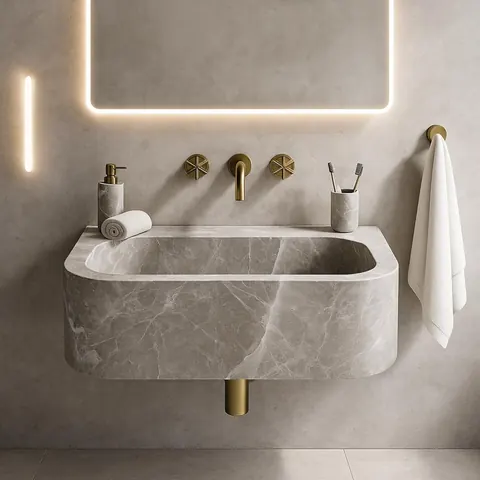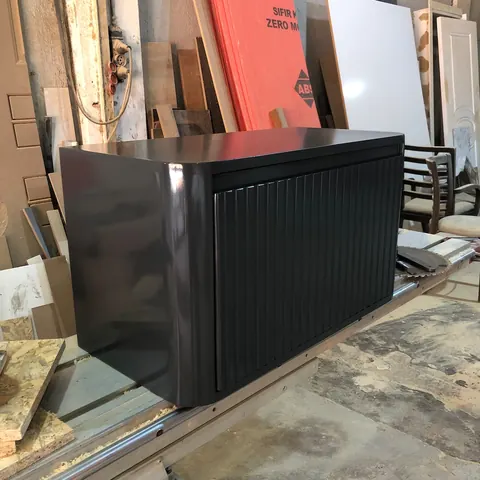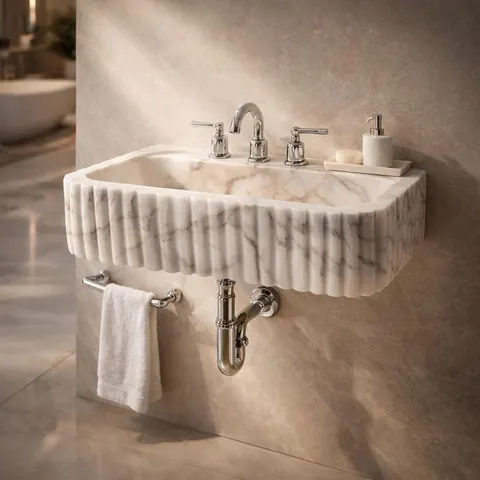
Marble and wood are both natural materials, and they react to water in different ways. No sourced answer page on this site compares the two directly, so this post uses the stone facts on the travertine and Carrara marble pages and the wood facts on what wood is best for a bathroom vanity.
The Water Problem
Marble takes up very little water. ASTM C503 limits marble dimension stone to 0.20% water absorption by weight. A penetrating sealer, renewed about once a year, slows staining. The weak point of marble is acid: vinegar, citrus and limescale removers leave dull etch marks, and sealer does not prevent that.
Wood is not waterproof in any species. A checklist from the Oregon State University Forest Research Laboratory rates the decay resistance of heartwood from 1 (very resistant) to 4 (nonresistant or perishable), and states that the sapwood of nearly all species has no natural durability. In a wet place the finish has to keep water out.
Honest Comparison
| Factor | Marble | Wood |
|---|---|---|
| Water | Absorbs at most 0.20% by weight under ASTM C503 | No wood is waterproof; decay resistance depends on species and finish |
| Protection | Penetrating sealer about once a year | A water-resistant coating on every face and edge |
| Weak point | Acids etch the surface | Water that gets past the finish |
| Cleaning | pH-neutral cleaner or mild dish soap, wipe dry | Follow the maker’s care instructions |
| Surface renewal | Etch marks and fine scratches can be honed out | Depends on the finish |
| MarbleSinkCo price | From $727; most $900 to $3,000 | Not sold by MarbleSinkCo |
Decay resistance ratings for common woods, where 1 is best:
| Wood | Rating |
|---|---|
| White oak | 1 to 2 |
| Teak, Honduras mahogany | 1 to 3 |
| Northern red oak, ash | 3 to 4 |
| Maple, yellow-poplar | 4 |
When Wood Works
A wood sink suits a buyer who wants the grain and will look after the finish. Ask the maker which species is used, whether sapwood is excluded, which finish is applied and how that finish is renewed. We do not make wood sinks and cannot state how long one lasts.
When Marble is the Clear Choice
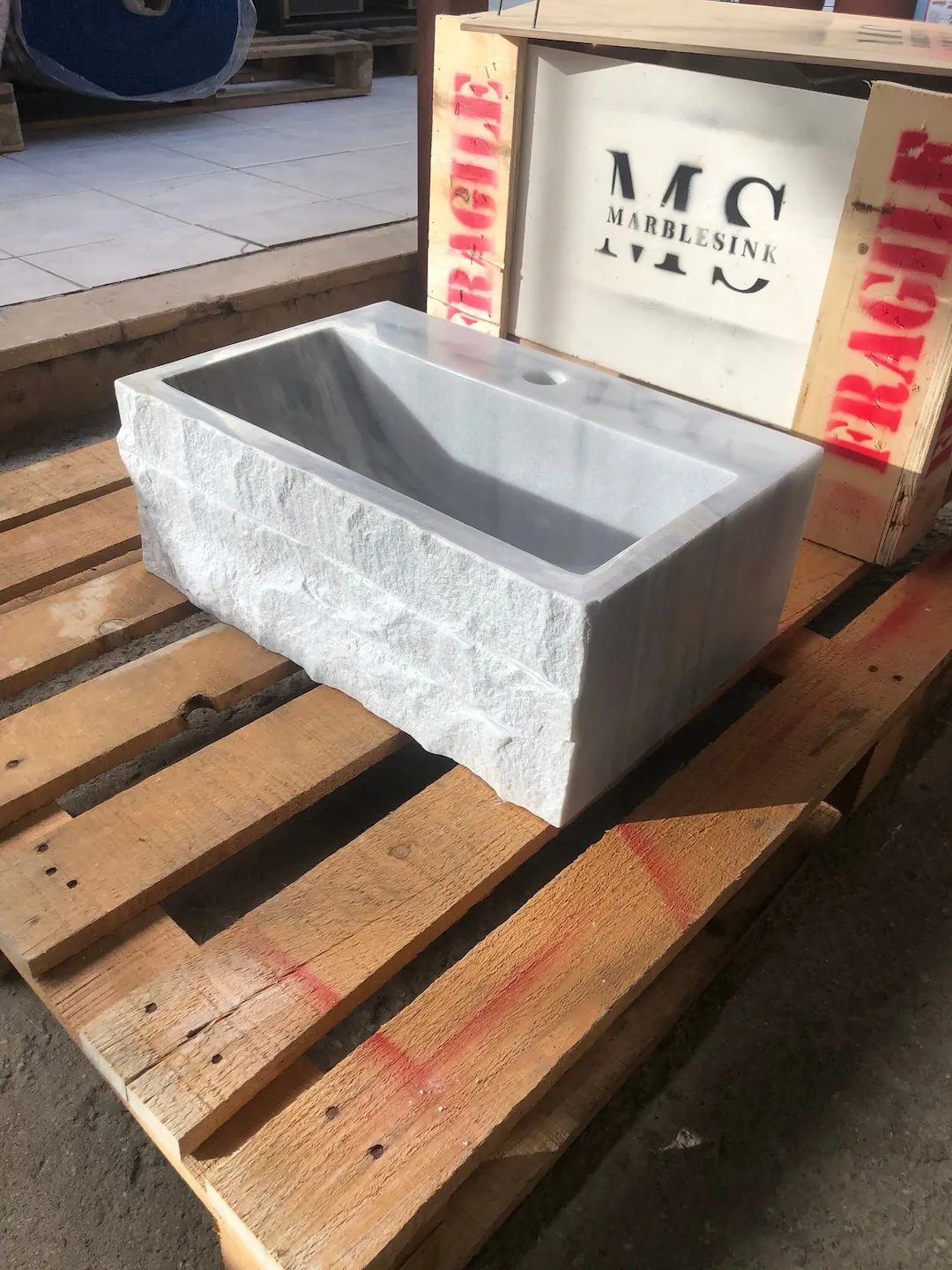
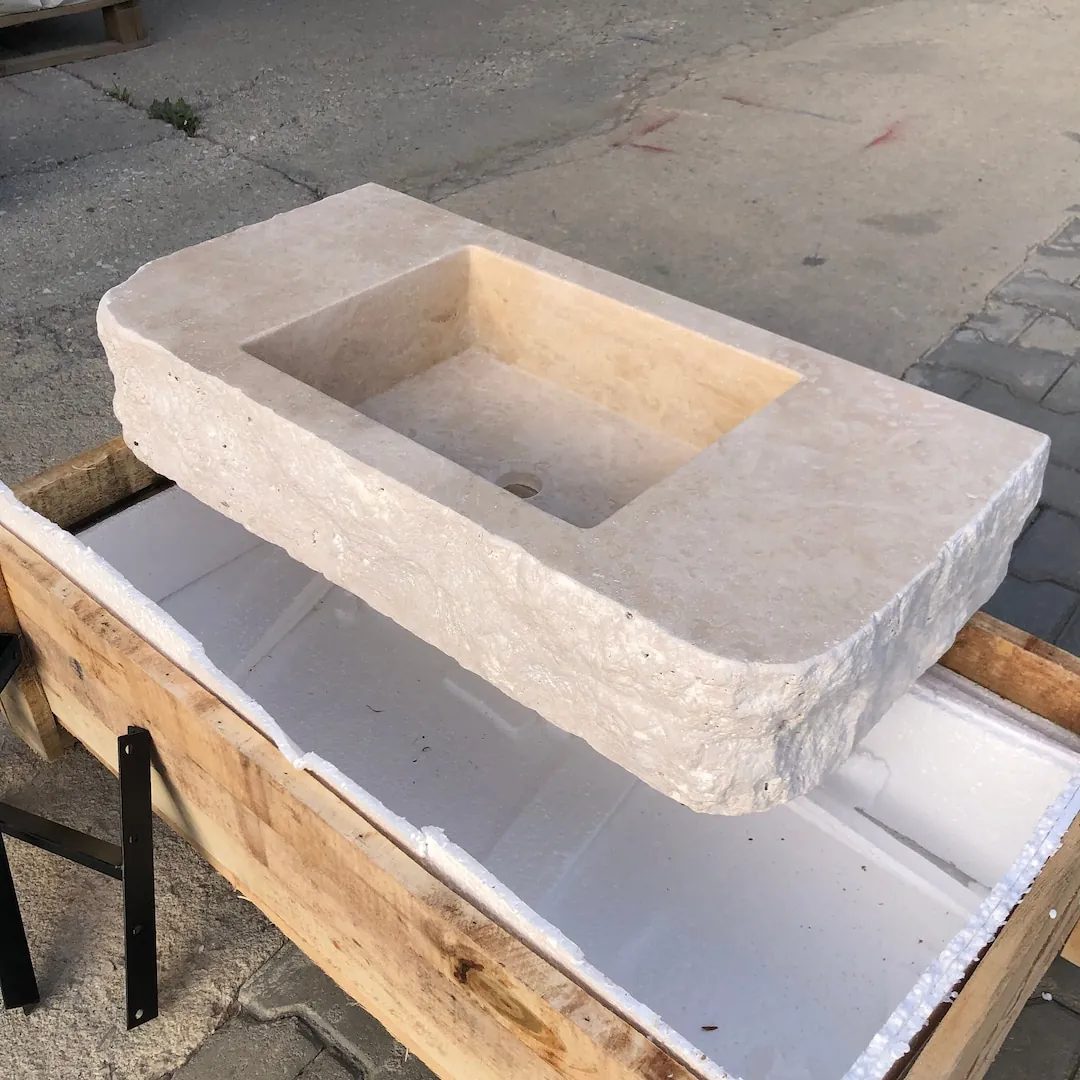
Stone is the simpler choice when the sink will be wet many times a day and you want a surface that can be re-honed. If warm, wood-like tones are the aim, travertine comes in ivory, beige and walnut brown with a matte honed surface. One example is the split-face travertine sink, from $1,370.80 in the smallest size.
MarbleSinkCo carves stone sinks by hand to order in about 2 weeks, and pieces are ordered through the Etsy shop at https://marblesinkco.etsy.com. A made-to-order sink cannot be returned and carries no warranty.
Related
Frequently Asked Questions
Can you use a wood sink in a bathroom?+
A wood sink depends on its finish. No wood is waterproof, and the sapwood of nearly all species has no natural durability, so a water-resistant coating has to cover every face, edge and the drain hole. Ask the maker which species and which finish are used and how the finish is renewed. MarbleSinkCo does not make wood sinks.
Does wood resist water as well as marble?+
No. Marble dimension stone absorbs at most 0.20% water by weight under ASTM C503. Wood resistance to decay depends on the species: on a durability scale where 1 is best, white oak heartwood rates 1 to 2, teak 1 to 3, and maple 4. Marble has its own weak point, because acids etch it.
Which natural stone looks closest to wood tones?+
Travertine. Travertine is a banded limestone in ivory, beige, walnut brown and silver-gray tones, normally honed to a matte surface. It is a calcite stone like marble, so acids etch it, and it absorbs more water than marble, so sealing about once a year matters. MarbleSinkCo lists about 28 travertine sink designs from $727.
Share this article