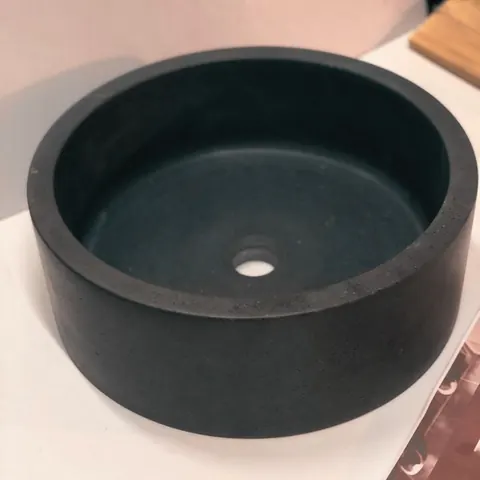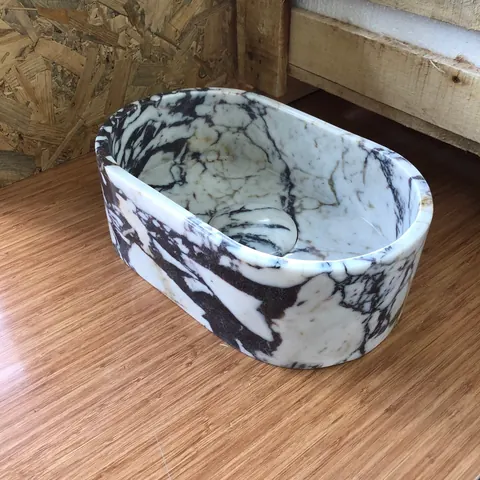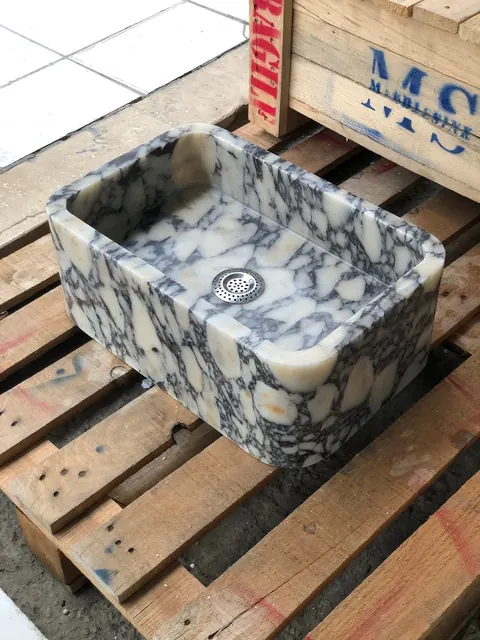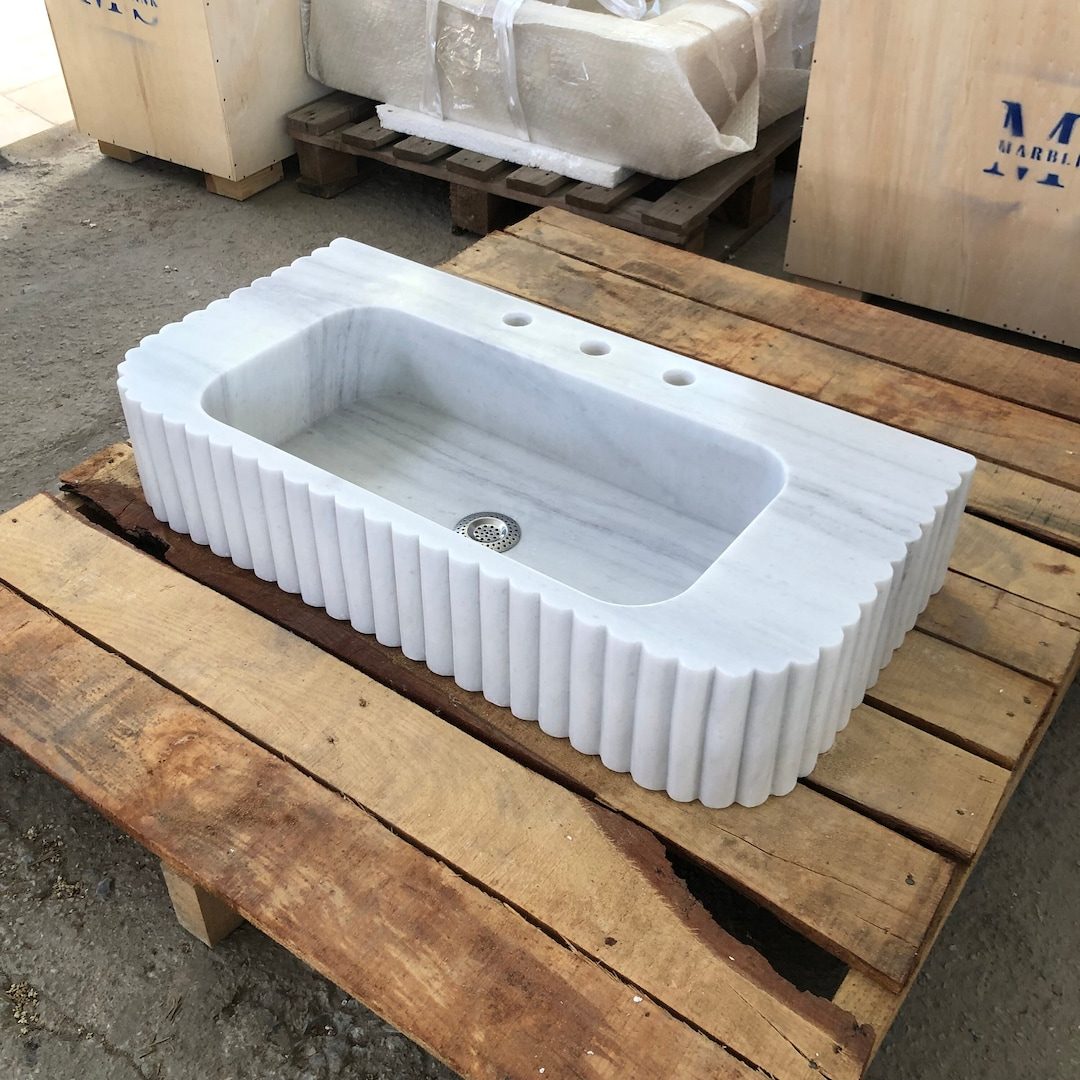
A vessel sink is practical for a powder room or a lightly used bathroom, and less practical for a busy family bathroom. The advantages are simple installation, easy replacement and a wide choice of shapes and materials. The drawbacks are a higher rim, a faucet that must match the bowl, more splashing, and a base joint that needs cleaning.
Most of these drawbacks can be solved before you buy, and the sections below give the measurements for each.
Vessel sink pros and cons at a glance
| Pros | Cons |
|---|---|
| Needs only a drain hole in the counter, not a large cutout | The rim sits 4 to 6 in above the counter, so the vanity must be lower |
| Easy to replace later without changing the countertop | Needs a tall deck faucet or a wall-mounted faucet |
| Works on furniture-style vanities and converted tables | Splashes when the bowl is shallow or the spout is too high |
| The widest choice of shapes and materials | The base joint and the counter behind the bowl collect water and dust |
| The whole bowl is visible, which suits glass and stone | Many have no overflow, so a closed drain and a running tap flood the counter |
Are vessel sinks practical?
They are practical for washing hands, brushing teeth and washing your face, which is all a powder room or guest bathroom asks of a sink.
They are less practical where the sink works hard. Water on the counter cannot be swept into the bowl as it can with an undermount sink. Leaning in to wash hair or shave is more awkward over a raised rim. If the sink is the main one in a family bathroom, compare the two types in vessel sink vs undermount first.
How high should a vessel sink be?
Counter height plus bowl height equals rim height, and the rim should land at about 34 to 36 in above the floor for most adults. Shorter users may prefer 32 in. An accessible sink needs the rim at 34 in or lower with knee space below.
| Bowl height | Counter height for a 34 in rim | Counter height for a 36 in rim |
|---|---|---|
| 4 in | 30 in | 32 in |
| 5 in | 29 in | 31 in |
| 6 in | 28 in | 30 in |
| 7 in | 27 in | 29 in |
The common mistake is setting a bowl on a standard 36 in vanity. With a 5 in bowl, the rim ends up at 41 in. There are three ways to avoid it:
- Buy a lower vanity that matches the counter height in the table.
- Hang a floating vanity at that height.
- Choose a semi-recessed bowl that sits partly inside the counter.
A shallower bowl also lowers the rim, but shallow bowls splash more. Heights by user are in the bathroom sink height guide.
How tall should a vessel sink faucet be, and how far should it reach?
A vessel sink needs a tall deck-mounted faucet or a wall-mounted faucet. Two numbers on the spec sheet decide whether it works.
Spout height. The outlet should sit at least 1 in above the rim, and 1 to 3 in suits most bowls. Add that to the bowl height. A 5 in bowl needs an outlet 6 to 8 in above the counter. Use the spec sheet’s spout height, not the overall height of the faucet.
Spout reach. The stream should land on the floor of the bowl, on or just behind the drain. Measure from the center of the faucet hole to the center of the drain and compare it to the reach on the spec sheet. Vessel faucets commonly reach about 4 to 6 in, which can be short for a wide round bowl. A stream that hits the sloped back wall runs up the curve and out.
Wall-mounted faucets. A common range is 3 to 6 in from the rim to the outlet. The valve goes inside the wall before tile, so fix the rim height first and have a plumber set the valve.
Leave about 1 in between a deck faucet and the bowl so both can be cleaned. Wall-mounted rough-in is covered in our guide to faucets for stone vessel sinks.
Why do vessel sinks splash, and how do you fix it?
Vessel sinks splash for four reasons: the water falls too far, the bowl is shallow (under about 4 in inside), the stream lands on a sloped wall or a raised drain cap, or the flow is too strong. On an installed sink, try these fixes in order, cheapest first:
- Watch where the stream lands. If it hits the bowl wall or the pop-up cap, the faucet reach is the problem, not the bowl.
- Fit an aerator rated 1.2 or 1.5 gallons per minute. It softens the stream and cuts the volume.
- Partly close the supply stops under the sink if your water pressure is high.
- Change the drain if the stream hits a tall pop-up cap. A flatter cap gives the water less to bounce off.
- Replace the faucet with one whose outlet sits 1 to 3 in above the rim and whose reach puts the stream near the drain.
If you are still choosing, pick a bowl at least 4 to 5 in deep inside and match the faucet to it before ordering either.
How do you clean around the base of a vessel sink?
The bowl cleans like any sink. The extra work is the joint where the bowl meets the counter, and the counter behind it.
- Seal the base with a thin, continuous bead of neutral-cure silicone so water cannot creep under the bowl.
- Leave enough room between the bowl and the wall or backsplash for a hand and a cloth, about 2 to 3 in.
- Bowls with a narrow foot and overhanging sides have an undercut that is hard to reach. Straight-sided bowls with a wide base are easier.
- Wipe the counter around the bowl dry after use. Standing water lets mold grow on the silicone, and moldy silicone has to be cut out and replaced.
Vessel sink materials compared
| Material | Relative price | In its favor | Against it |
|---|---|---|---|
| Vitreous china (ceramic) | Lowest | Non-porous glaze. Takes any non-abrasive cleaner. | The exposed rim can chip, and chips are hard to hide. |
| Tempered glass | Low | Light. Many colors. | Shows water spots and soap film inside and out. Can shatter from a sharp impact or thermal shock. |
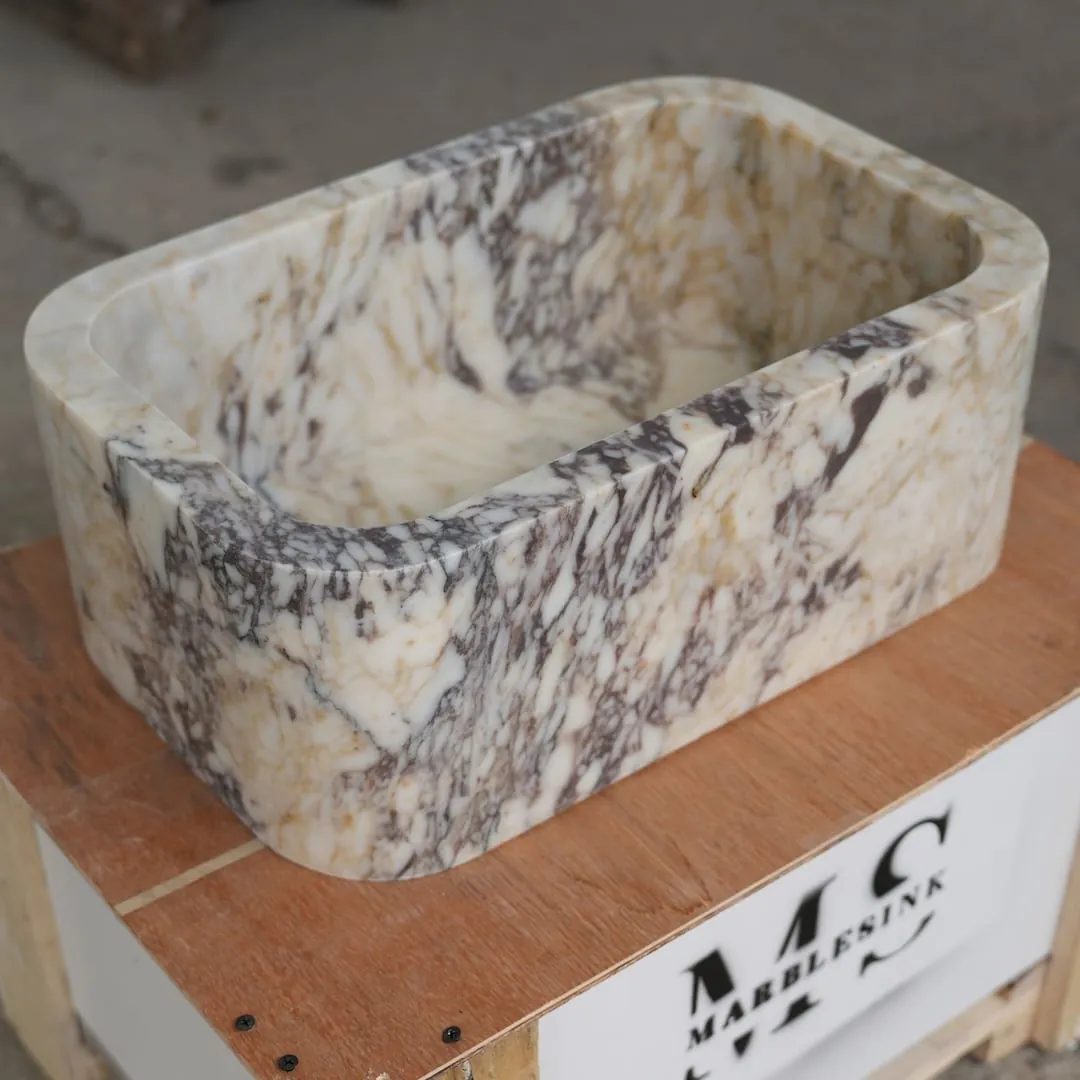
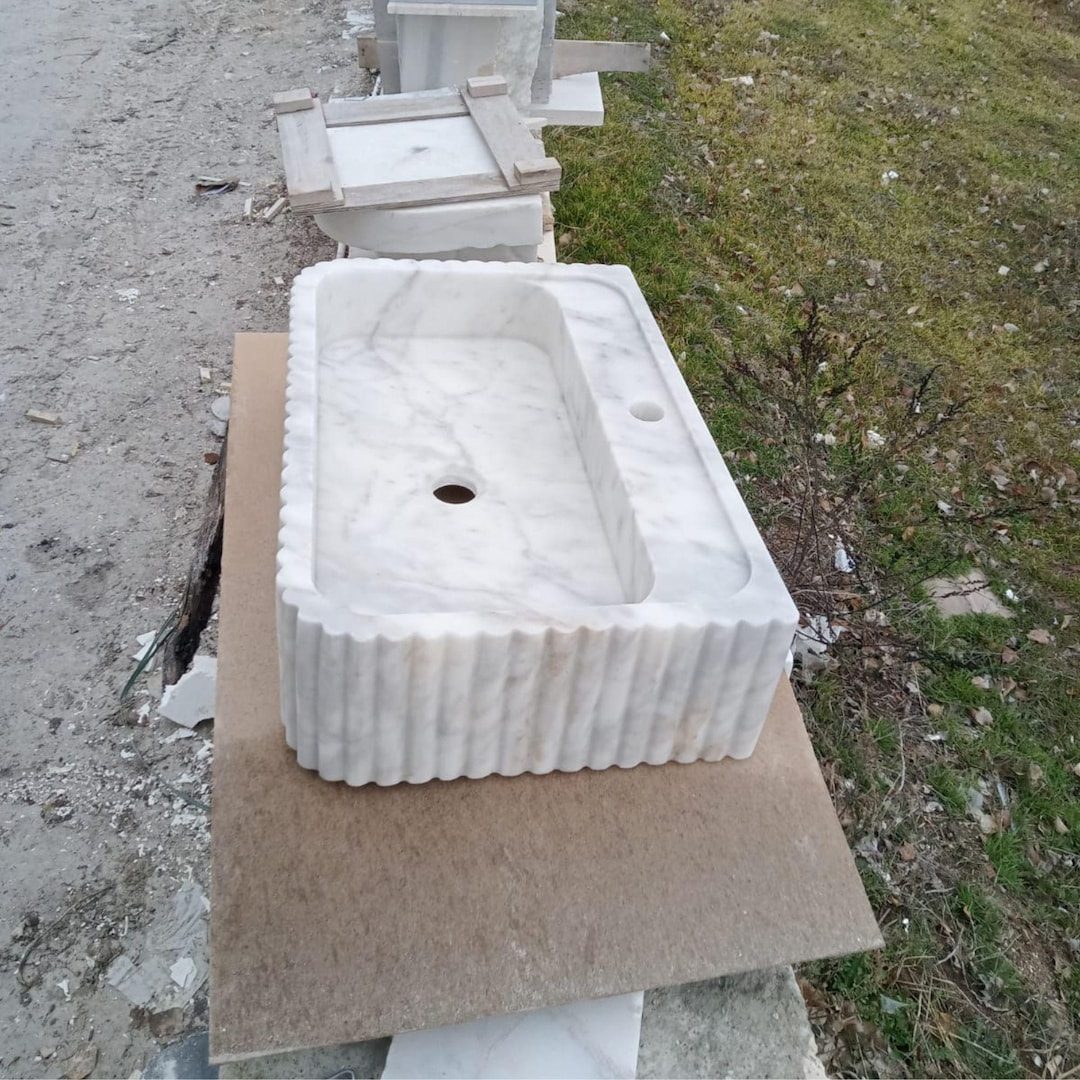
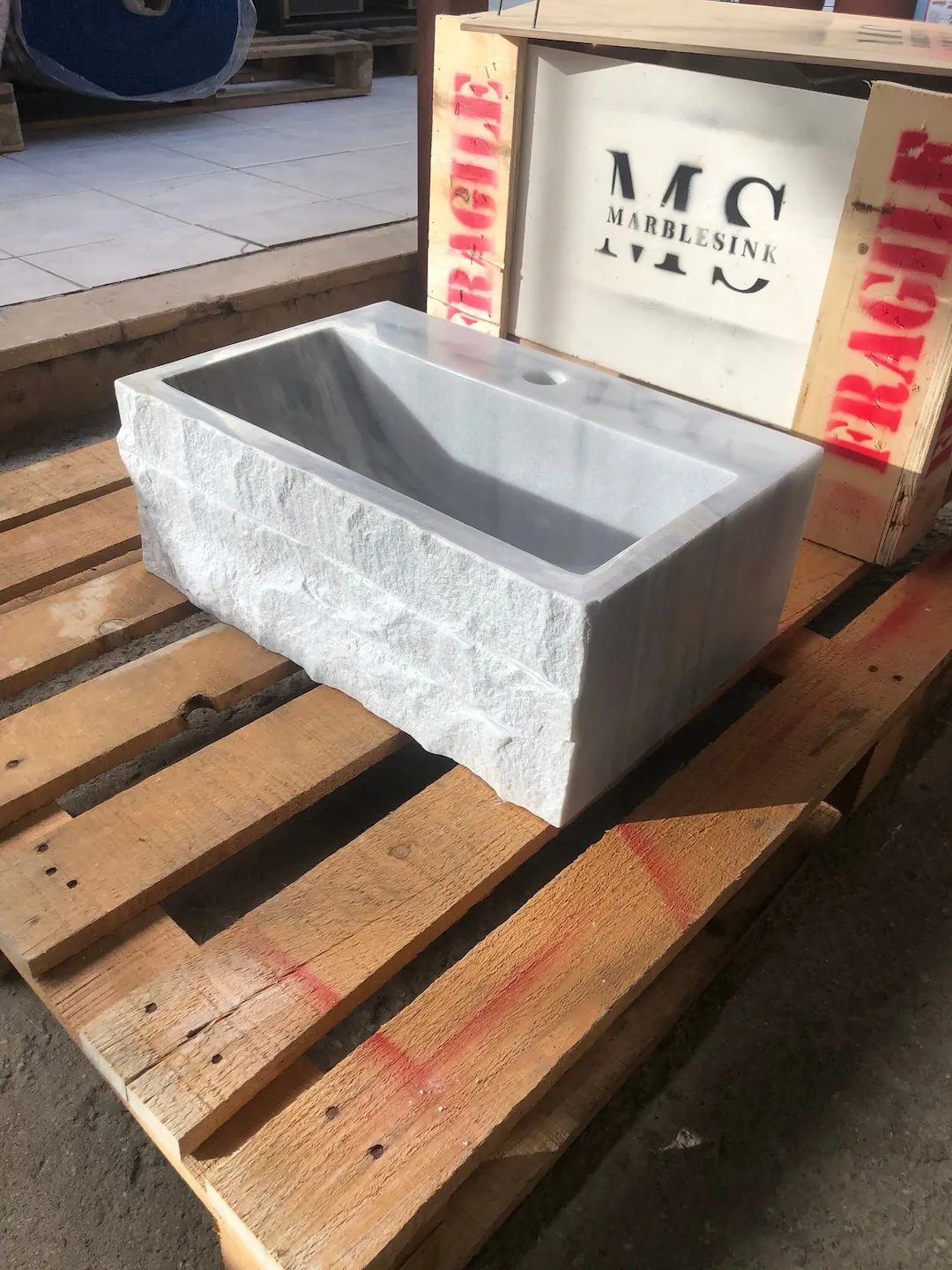
| Natural stone | Widest range; hand-carved is highest | Heavy and stable. No two bowls alike. | Marble and travertine etch from acids and need sealing. |
| Copper | Mid | Develops a patina. Warm color. | The finish changes with use and reacts to acids and toothpaste. |
Marble and travertine are calcium-based, about 3 to 4 on the Mohs scale, and vinegar, citrus and limescale removers etch them. They are cleaned with a pH-neutral cleaner and sealed with a penetrating sealer about once a year. A stone bowl is also much heavier than a ceramic one, so estimate the weight with the stone sink weight calculator and check that the vanity is solid and level.
Mass-produced stone bowls cost less than hand-carved ones. The stone vessel sinks MarbleSinkCo carves to order start at $727, take about 2 weeks to make and cannot be returned, so confirm every dimension first. They are ordered through the MarbleSinkCo Etsy shop. The stone vessel sink buying guide lists bowl shapes and sizes.
Are vessel sinks out of style?
No, but they are no longer the automatic choice for a feature sink. Undermount sinks are a common pick in new vanities, and vessel sinks suit powder rooms and guest bathrooms best.
What looks dated is one version: a brightly colored glass bowl on a full-height vanity with the rim too high. Plain round, oval and rectangular bowls in white ceramic or natural stone, set at the correct height, do not carry that association. If resale is your main concern, a neutral undermount sink is the safer choice.
Who should avoid a vessel sink?
- Families with young children using it as the main sink. The rim is higher and the bowl is easier to knock.
- Anyone keeping a 34 to 36 in vanity. The rim will end up too high.
- Wheelchair users, unless the counter is low enough for a 34 in rim with knee space below.
- People who want to wipe the counter into the bowl. Choose an undermount or integrated sink.
- Owners of counters under about 18 in deep who want a deck faucet. The bowl and faucet may not both fit. A wall-mounted faucet or a smaller bowl solves it.
- Homes with hard water choosing a glass bowl, unless a daily wipe is acceptable.
For everyone else, the order of decisions is: rim height, then bowl, then faucet, then a drain that matches the bowl. Most stone and glass bowls have no overflow and need the type described in the drain guide for sinks without overflow. To compare vessel sinks with the other six mounting types, see the bathroom sink buying guide.
Frequently Asked Questions
Are vessel sinks practical for everyday use?+
Yes for hand washing, teeth and face washing, which is why they suit powder rooms and lightly used bathrooms. They are less practical in a busy family bathroom, because the rim is higher, water on the counter cannot be wiped into the bowl, and the joint around the base needs regular cleaning.
How high should a vessel sink be?+
The finished rim should sit about 34 to 36 in above the floor for most adults. Rim height equals counter height plus bowl height, so a 5 in bowl needs a counter about 29 to 31 in high. A standard 36 in vanity with a 5 in bowl puts the rim at 41 in, which is too high.
How tall should a faucet be for a vessel sink?+
The spout outlet should sit at least 1 in above the rim, and 1 to 3 in suits most bowls. Add that clearance to the bowl height: a 5 in bowl needs an outlet 6 to 8 in above the counter. Check the spout height on the spec sheet, not the overall height of the faucet.
Why does my vessel sink splash?+
Usually because the water falls too far, the bowl is shallow, or the stream lands on the sloped wall of the bowl instead of near the drain. Fit a 1.2 or 1.5 gallon per minute aerator, partly close the supply stops if pressure is high, and lower the spout if it sits more than about 3 in above the rim.
Are vessel sinks out of style in 2026?+
No, but they are no longer the default feature sink. Undermount sinks are a common choice in new vanities. Brightly colored glass bowls on tall vanities are the versions that look most dated. Plain shapes in ceramic or natural stone, set at the correct height, still read as current, especially in powder rooms.
Are vessel sinks hard to clean?+
The bowl itself is easy. The extra work is outside it: the joint where the bowl meets the counter, the counter behind the bowl and the outer wall all collect water and dust. A continuous bead of silicone at the base and enough room behind the bowl for a cloth keep the job quick.
Share this article