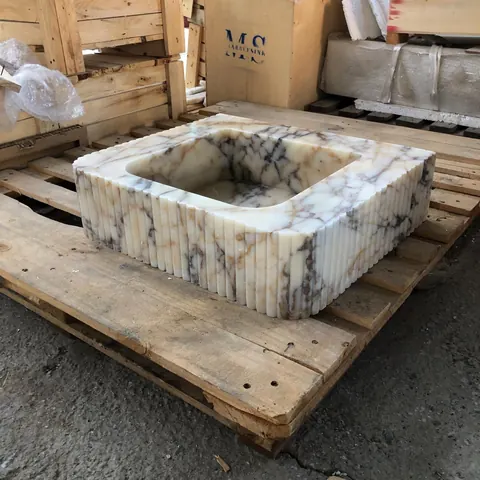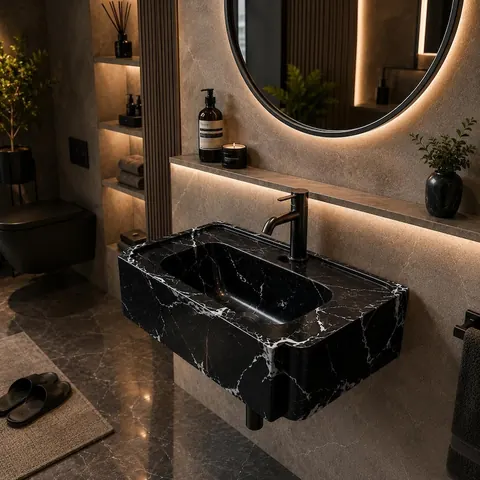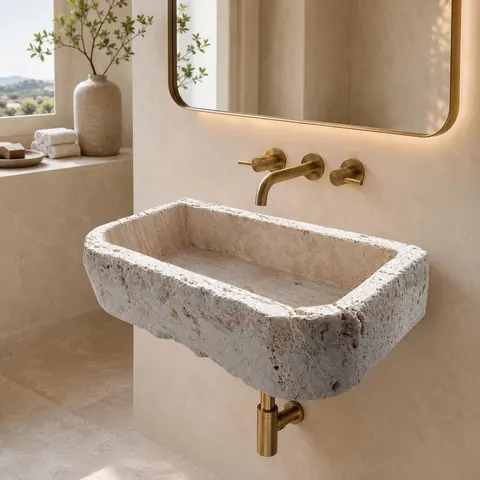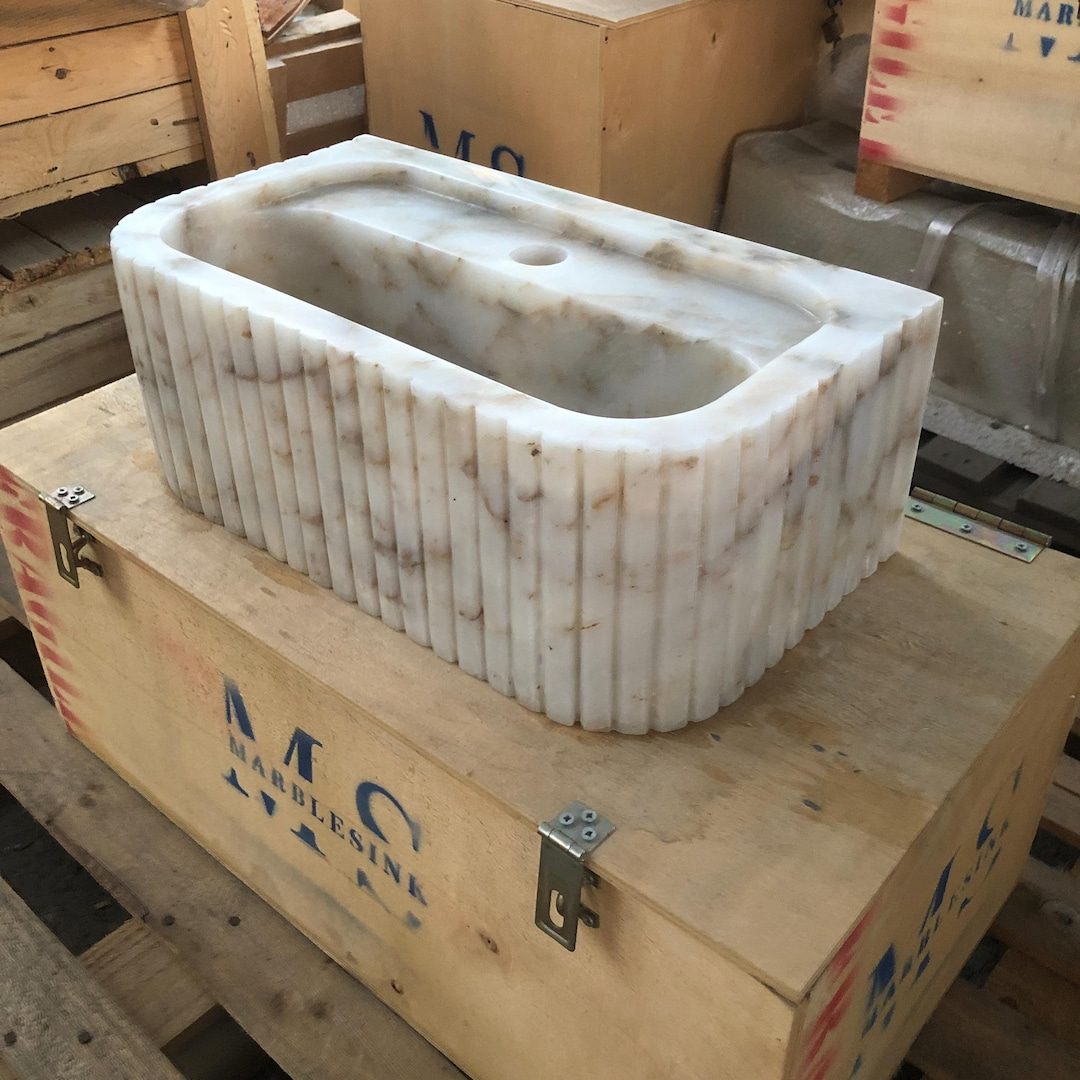
Marble and engineered quartz are both good bathroom materials, and they suit different owners. Engineered quartz typically absorbs 0.05% water, does not etch with household acids and needs no sealing, so it is the low-upkeep choice. Natural marble is solid stone with veining that is different on every piece and a surface that can be refinished, but it etches when acids touch it and needs sealing about once a year. The short, sourced answer is on marble vs quartz for a bathroom sink.
We carve natural stone, so we have a side in this. The comparison below is written to be fair to both.
What is the difference between a marble sink and a quartz sink?
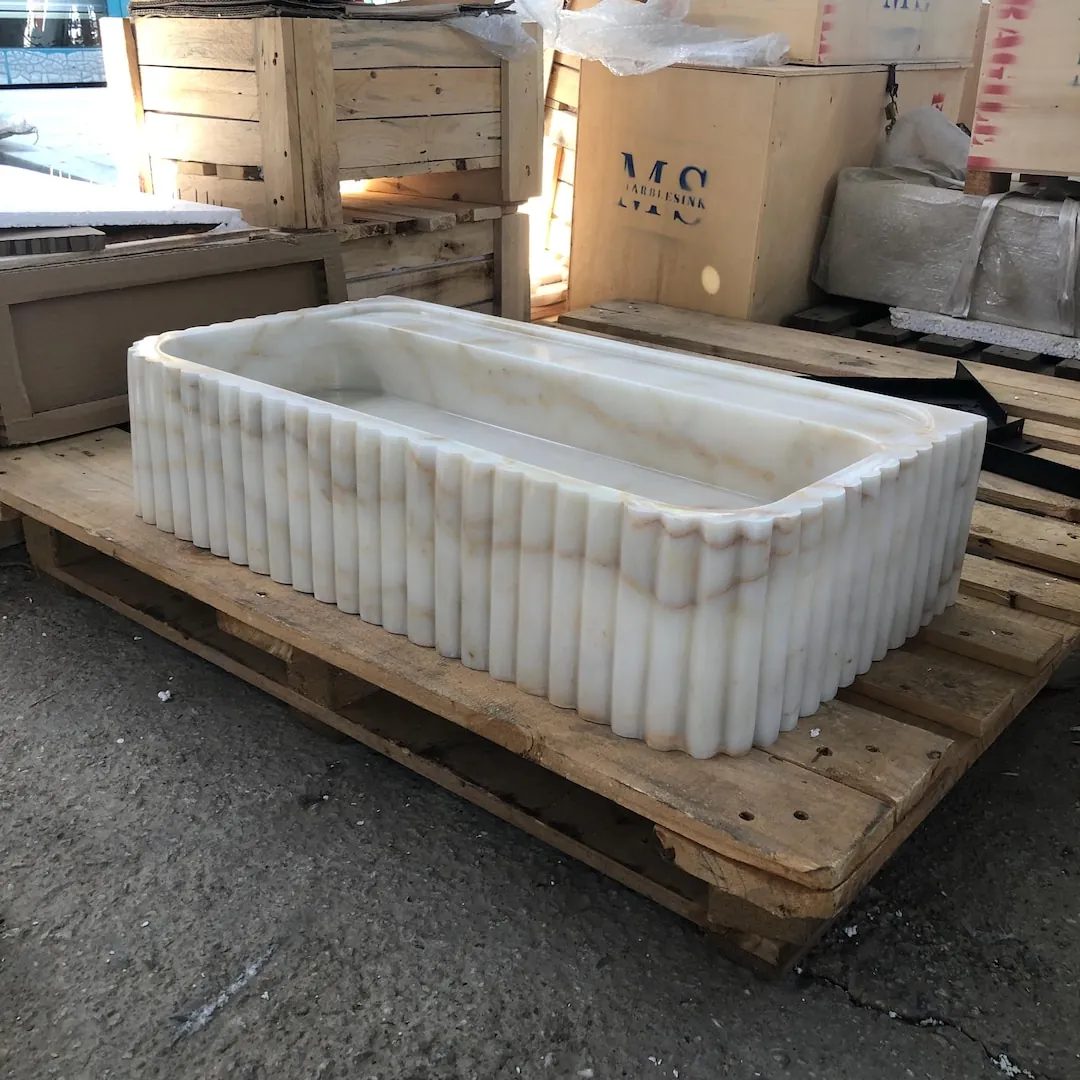
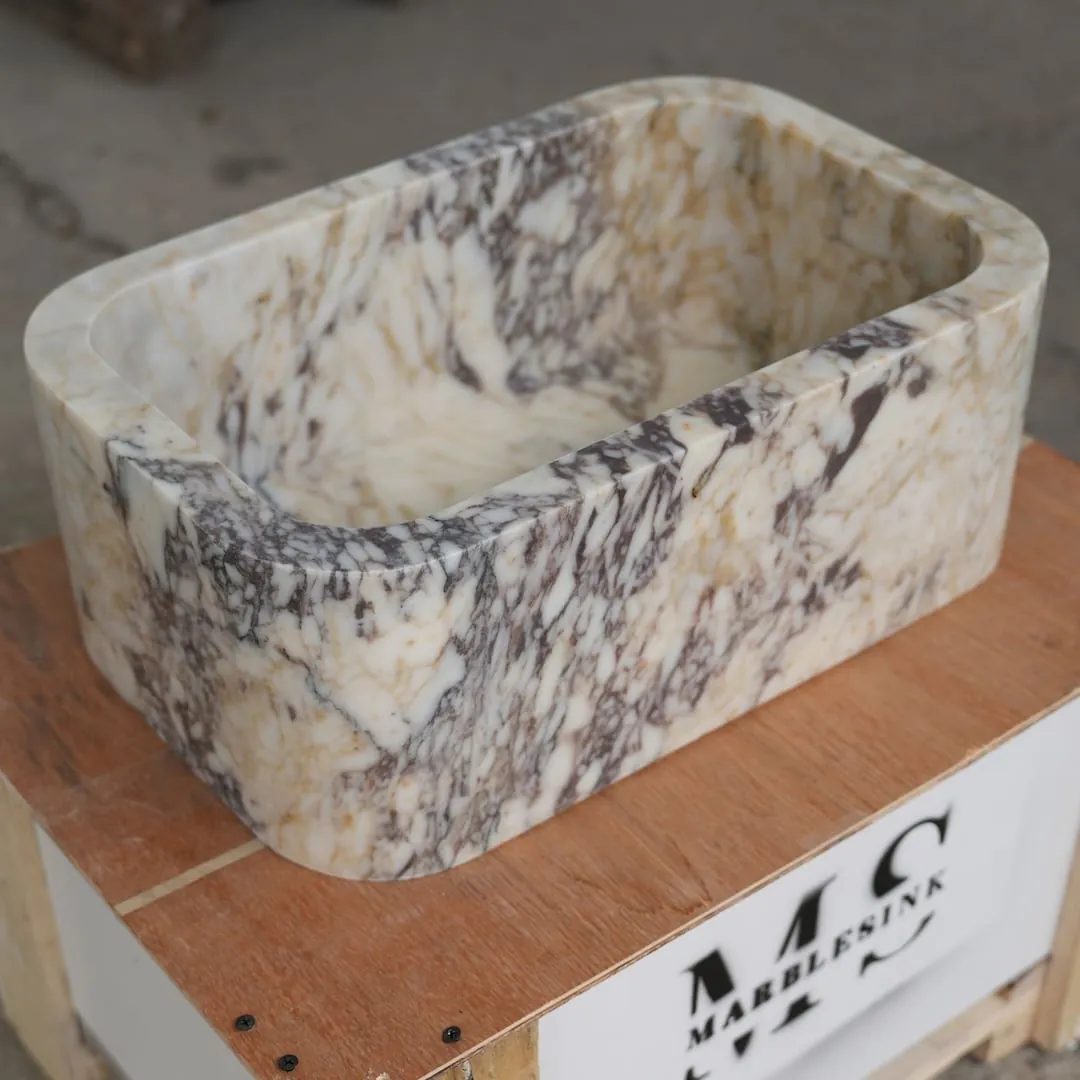
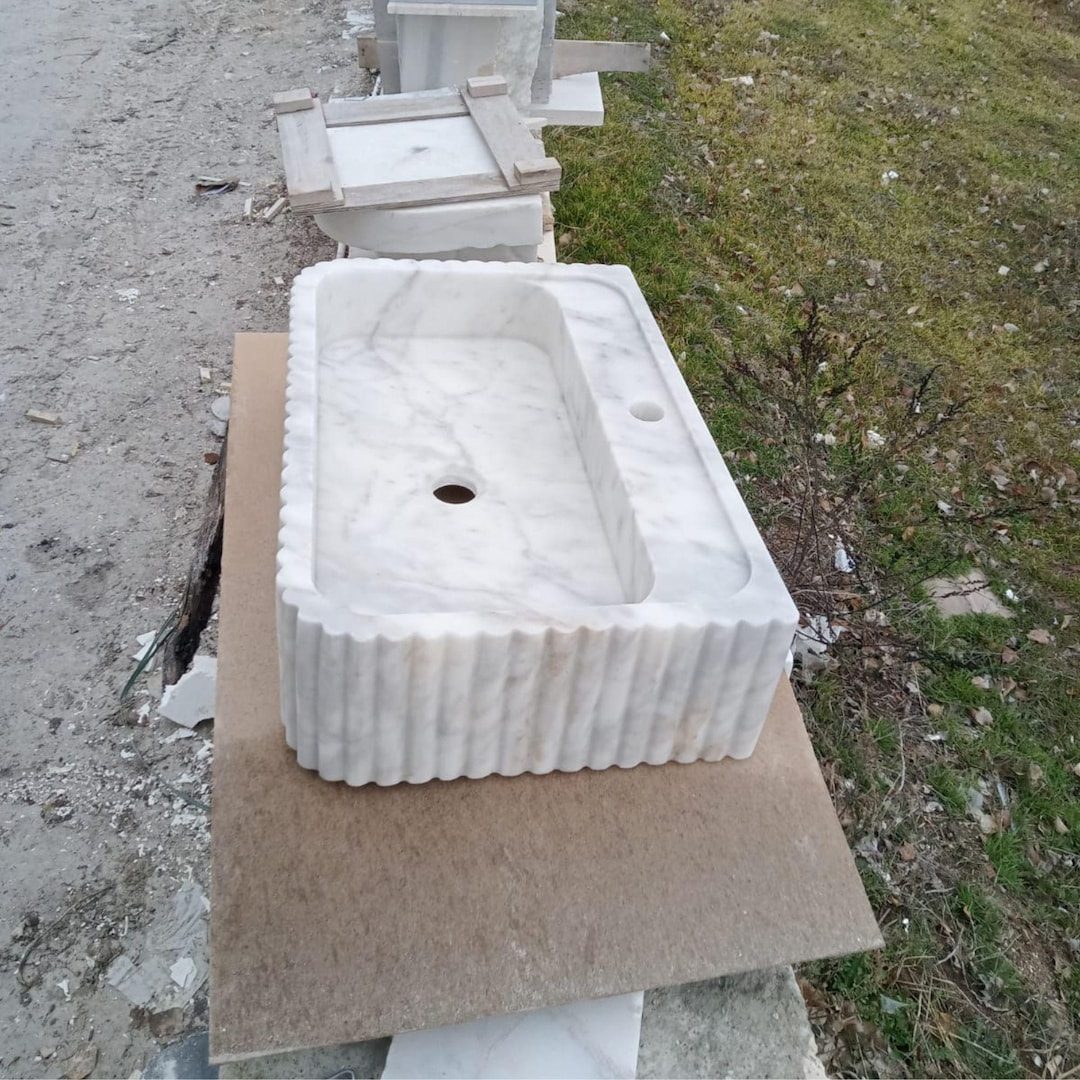
Natural marble is quarried in blocks. A marble sink is carved out of one solid piece, so the veining you see runs through the whole thickness of the stone.
Engineered quartz is manufactured. Ground quartz, about 93% by weight, is mixed with polymer resin and pigment and pressed into slabs (Stone World). It is a slab product, so in bathrooms it is used mainly as a vanity top, with a separate bowl under it.
Solid surface is a related manufactured material made from acrylic or polyester resin with 50 to 65 percent mineral filler. It is compared with stone on natural stone vs solid surface sink.
None of these is natural quartzite, which is a quarried stone.
Marble vs quartz sink comparison table
| Property | Natural marble | Engineered quartz |
|---|---|---|
| What it is | Solid natural stone, mainly calcite, carved from a block | About 93% quartz by weight, bound with resin |
| Look | Natural veining; varies in tone | Manufactured pattern, consistent within a batch |
| Uniqueness | Every piece is different | Slabs of one design match each other |
| Heat | No resin binder | Resin binder; makers advise a trivet under hot items |
| Etching from acids | Etches; dull marks from vinegar, citrus, limescale remover | Household acids do not etch it |
| Absorption | Up to 0.20% under ASTM C503; needs a penetrating sealer | Typically 0.05%; no sealer needed |
| Mohs hardness | About 3 (calcite) | 7 (the mineral quartz) |
| Repair | Can be honed out by a restorer | Heat damage cannot be refinished out |
| Shapes and sizes | Carved to order; custom sizes possible | Slab product, cut by a fabricator |
| Upkeep | Wipe dry, pH-neutral cleaner, seal about yearly | Soap and water; follow the maker’s instructions |
Which looks better, marble or quartz?
Neither looks better to everyone: marble has natural veining that differs on every piece, and engineered quartz has a manufactured, consistent pattern. This is a matter of taste, so it helps to describe the difference instead of ranking it.
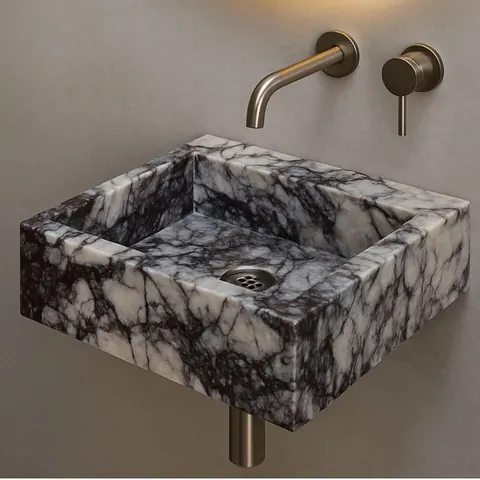
Marble varies. No two sinks match, and the piece you receive will differ from the photo in its veining. Some people buy marble for exactly that reason. Others find the uncertainty stressful.
Engineered quartz is consistent. Its shade and pattern come from added pigments, and slabs of one design match each other closely. That is a real advantage when a project needs several matching pieces. Where a quartz design shows veining, the veining is manufactured, not natural.
If you want to see what natural variation looks like across stones, browse marble sinks and compare a quiet stone such as Carrara marble with dark black marble and basalt.
Does heat damage marble or quartz in a bathroom?
Hot tap water harms neither marble nor engineered quartz. The difference is hot styling tools: engineered quartz and solid surface are bound with resin, and a Natural Stone Institute course states that the resins in engineered quartz make it susceptible to permanent damage by heat. Marble contains no resin binder.
Check the care sheet for your quartz or solid surface product, because heat limits differ between makers. With either material, the simple habit is a heat mat beside the sink.
Does marble or quartz stain and etch more?
Marble stains and etches more than engineered quartz. Marble is made mainly of calcite, a calcium carbonate mineral that reacts with acids, so vinegar and limescale removers leave dull etch marks, and the stone can absorb dye. Engineered quartz typically absorbs 0.05% water and household acids do not etch it. This is the main practical argument for quartz, and it is a fair one.
Marble is a calcium carbonate stone (Geology.com). Acids react with it and leave a dull spot called an etch. The Natural Stone Institute warns that products containing lemon, vinegar or other acids may dull or etch calcareous stones, and notes that a sealer makes stone more stain resistant, not stain proof. In a bathroom the usual causes are limescale removers, vinegar-based cleaners and citrus. Marble also absorbs a little water, up to 0.20% by weight under ASTM C503, so hair dye or makeup can stain it if left to sit. A penetrating sealer slows staining. It does not stop etching.
Engineered quartz is not sealed. It is not stain proof either: in the Natural Stone Institute course test described on the engineered quartz page, one of two samples stained from food coloring, turmeric and hot oil, and strong high-pH cleaners can weaken the resin.
If the people using the bathroom will clean with whatever is under the sink, quartz or solid surface is the safer choice. If you are willing to use a pH-neutral cleaner and wipe the bowl dry, marble behaves well. A honed finish hides light etching far better than a polished one; the natural stone sink finish guide explains why.
Which scratches more, and which can be repaired?
Engineered quartz resists scratches better than marble, and marble is easier to renew. On the Mohs hardness scale the mineral quartz is 7 and calcite, the mineral in marble, is 3, so grit and metal that would not mark quartz can scratch marble.
Repair runs the other way. Marble is the same stone all the way through, so a restorer can hone out etch marks and fine scratches and bring the finish back. Solid surface can also be sanded with abrasive pads. On engineered quartz, heat damage such as color shifts, gloss changes or local cracks cannot be refinished out.
Is a marble sink heavier than a quartz sink?
A carved marble sink is heavy, and we have no sourced weight for quartz basins or tops, so ask the maker of the quartz product. Marble weighs about 160 to 170 lb per cubic foot: the ASTM C503 specification sets a minimum of 162 lb per cubic foot (2,590 kg per cubic meter) for calcite marble, according to the Natural Stone Council fact sheet. By that arithmetic a compact vessel bowl weighs 25 to 50 lb and a mid-size rectangular basin 60 to 100 lb. Those ranges are estimates, not product weights, so ask the maker for the weight of your piece. A wall-mounted marble sink needs steel brackets fixed into solid blocking, and a vessel needs a sound counter. The guide to stone sink weight and wall support covers this.
One more difference: most carved stone bowls have no overflow, so they need a drain made for sinks without overflow.
Marble or quartz: which should you choose?
Choose marble if you want real stone, a custom size and a surface that can be refinished, and you will use a pH-neutral cleaner and reseal about once a year. Choose engineered quartz or solid surface if you want the least upkeep or need pieces that match exactly.
Choose natural marble if:
- You want real stone and like that every piece is different.
- You will use a pH-neutral cleaner and reseal about once a year.
- You want a freestanding vessel, a wall-mounted block or a custom size.
- You value being able to refinish the surface years from now.
Choose engineered quartz or solid surface if:
- You want the least possible upkeep.
- The bathroom is a family bathroom or a rental, where care rules will not be followed.
- You need several pieces that match each other.
- You want a vanity top on a standard cabinet.
How to care for each material
- Marble. Rinse and wipe dry after use. Clean with a pH-neutral stone cleaner or mild dish soap. Keep acids and abrasives away. Reseal with a penetrating sealer about once a year. The marble sink care guide and the care FAQ have the details.
- Quartz and solid surface. Clean with soap and water. Avoid strong high-pH cleaners and harsh chemicals such as paint remover and oven cleaner. Keep hot tools off the surface. Follow the manufacturer’s sheet for your product.
What does a marble sink cost compared with quartz?
We can state only our own prices. MarbleSinkCo marble sinks start at $727 in the smallest size and most cost $900 to $3,000, with a median starting price of $1,196 and about $83 per inch of width. Shipping is free by insured express courier and US import duties are included at Etsy checkout.
Quartz and solid surface prices vary by brand and by fabricator, so get a quote for the exact product. The marble sink cost guide gives our prices by size and stone.
What we make
MarbleSinkCo carves sinks from natural stone only: marble, travertine, onyx and basalt. We do not make quartz or solid surface products, so we cannot sell you the alternative. If marble is the right fit, sinks are ordered through our Etsy shop at https://marblesinkco.etsy.com and are made to order in about 2 weeks, with custom sizes on request, no returns and no warranty. The full list of trade-offs is in marble sink pros and cons, and the care routine is in the marble sink care guide.
Sources
- Geology.com, Marble and Mohs hardness scale: composition and hardness of calcite and quartz.
- Natural Stone Institute, Care and Cleaning of Natural Stone: acids, cleaners and sealers.
- Natural Stone Council, Marble material fact sheet: ASTM C503 density and absorption.
- Stone World, The differences between natural and engineered stone: composition and absorption of engineered quartz.
- Natural Stone Institute course, Natural Stone Fact vs. Myth: heat and stain tests on engineered quartz.
Frequently Asked Questions
Is marble or quartz better for a bathroom sink?+
Neither is better for everyone. Engineered quartz typically absorbs 0.05% water, needs no sealing and does not etch with household acids, so it suits people who want the least upkeep. Natural marble is solid stone with veining that is different on every piece, and its surface can be refinished, but it etches with acids and needs sealing about once a year.
Does a quartz sink stain or etch like marble?+
Much less. Engineered quartz typically absorbs 0.05% water by weight, and household acids do not etch it the way they etch marble. It is not indestructible: heat can permanently damage the resin binder, strong high-pH cleaners can weaken it, and in one Natural Stone Institute course test a sample stained from food coloring, turmeric and hot oil. Follow the manufacturer's care instructions for your product.
Can a marble sink be repaired if it gets damaged?+
Often, yes. Marble is the same material all the way through, so a stone restorer can hone out etch marks and fine scratches, then reseal the surface. Small chips can be filled with color-matched resin and refinished. A crack through the body of the sink is a different matter and often cannot be fixed reliably.
How heavy is a marble sink compared with a quartz vanity top?+
We have no sourced weight for quartz products, so ask the maker. A carved marble sink is heavy: as an estimate from stone density, a compact vessel bowl weighs 25 to 50 lb and a mid-size basin 60 to 100 lb. Wall-mounted models need steel brackets and solid blocking.
Does heat damage quartz or marble in a bathroom?+
Hot tap water harms neither. The difference shows with hot tools. Engineered quartz and solid surface contain resin, and the resin in engineered quartz is susceptible to permanent heat damage, so makers advise a trivet or hot pad under hot items. Marble contains no resin binder. Keep hot styling tools off quartz and solid surface.
Is engineered quartz the same as natural quartzite?+
No. Engineered quartz is a manufactured material made from ground quartz bound with polymer resin and pigment. Quartzite is a natural metamorphic rock quarried in blocks. Both are about 7 on the Mohs scale. If a sink or top is described as quartz, ask whether it is a manufactured product or natural stone.
Share this article